
Singapore to trial tokenized bills settled with CBDC

Quick Take The Monetary Authority of Singapore plans to trial the issuance of tokenized MAS bills to primary dealers settled with CBDC in a trial. Further details are to be released next year. MAS Managing Director Chia Der Jiun said that tokenization has moved beyond experimentation and is now used in real-world applications.
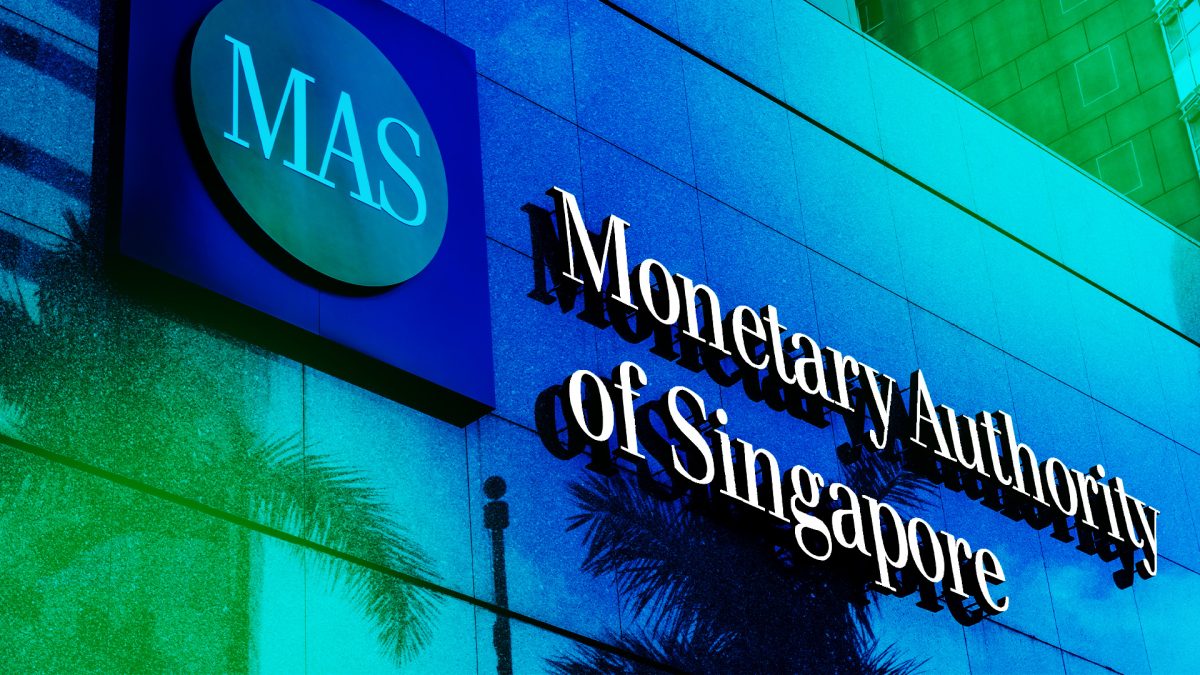
The Monetary Authority of Singapore plans to trial the issuance of tokenized MAS bills to primary dealers settled with central bank digital currency, with details to be released next year.
MAS Managing Director Chia Der Jiun said in a Thursday speech at the Singapore FinTech Festival that tokenization has matured beyond experimentation and is increasingly being deployed in commercial settings.
"Are asset-backed tokens clearly out of the lab? Without a doubt," said Chia. "But have asset-backed tokens achieved escape velocity? Not yet."
Chia noted that while tokenization promises round-the-clock settlement, reduced intermediaries, and more efficient collateral usage, the industry must still overcome structural hurdles before large-scale adoption is possible.
Tokenization, stablecoin regulations
Chia said that three Singapore banks — DBS, OCBC, and UOB — have conducted interbank overnight lending transactions using the Singapore dollar wholesale CBDC in a trial. The testing is aligned with the country's ambition to scale tokenized finance using safe settlement assets.
On stablecoins, Chia pointed out that the MAS has finalized its regulatory regime and will prepare draft legislation. "Under our regime, we have given importance to sound reserve backing and redemption reliability," he said.
The MAS classifies stablecoins as "digital payment tokens" under the Payment Services Act, and has introduced a framework in August 2023 for single-currency stablecoins pegged to the Singapore dollar or major currencies like the U.S. dollar and euro.
Chia warned that unregulated stablecoins have a "patchy record" of keeping their pegs and could trigger systemic runs similar to 2008 money market fund failures, when funds "broke the buck."
Chia also noted that the MAS has launched the BLOOM initiative to support industry experimentation with tokenized bank liabilities and regulated stablecoins for settlement.
Disclaimer: The content of this article solely reflects the author's opinion and does not represent the platform in any capacity. This article is not intended to serve as a reference for making investment decisions.
You may also like
Biotech Insider Trading in US Stocks Diverges: ImmunityBio (IBRX.US) Cashes Out the Most, Sellas (SLS.US) Director Bought In Before a 5x Surge
Insider trading in US-listed biotech companies shows divergence.
AI investment and consumer spending drive growth! UK Q3 GDP growth rate hits highest in two and a half years
As the widespread adoption of artificial intelligence (AI) continues to drive growth in corporate and consumer spending, and the economy demonstrates resilience in the face of an energy shock caused by the Iran war, the UK economy has achieved its fastest growth rate in two and a half years.

MSCI drops Strategy, Bitcoin eyes $70,000 as ETF outflows hit $300 million
AI servers + iPhone Duo dual engines drive, Foxconn Q3 net profit surges 34%, exceeding expectations
The financial report shows that Hon Hai's net profit for the third quarter reached TWD 77.5 billion, exceeding expectations, while revenue hit a record high of TWD 3.03 trillion. AI servers have become the primary growth engine, with the goal of capturing 50% of the global market share within two years and raising the gross margin to 10%. iPhone Duo sales are expected to reach up to 16 million units. Hon Hai Chairman Liu Yangwei stated that the shortage of memory chips and components will continue until 2027, and the performance forecasts for the company's four major product categories have been raised.
Crypto prices
More


