
UK Stablecoin Regulation Targets 2026 Implementation

The UK announces stablecoin regulation consultation for November 10, targeting 2026 implementation. With 7 million crypto users and 40% year-over-year stablecoin growth, major issuers prepare for regulated market entry.
The UK will launch a consultation on stablecoin regulation on November 10, aiming to implement it by late 2026 to align with US regulatory developments. The move comes as the country’s crypto user base has surged to 7 million from 2.3 million four years ago, a 204% increase.
Major stablecoin issuers, including Circle, Tether, and PayPal, are positioning themselves to enter the regulated UK market.
UK Accelerates Stablecoin Framework Amid US Competition
The UK government has confirmed plans to introduce comprehensive stablecoin regulations following the passage of the US GENIUS Act. According to officials familiar with the matter, the Bank of England will require stablecoin issuers to hold reserves in government bonds or short-term securities. The Financial Conduct Authority(FCA) has published a crypto asset roadmap outlining a phased implementation approach through 2026.
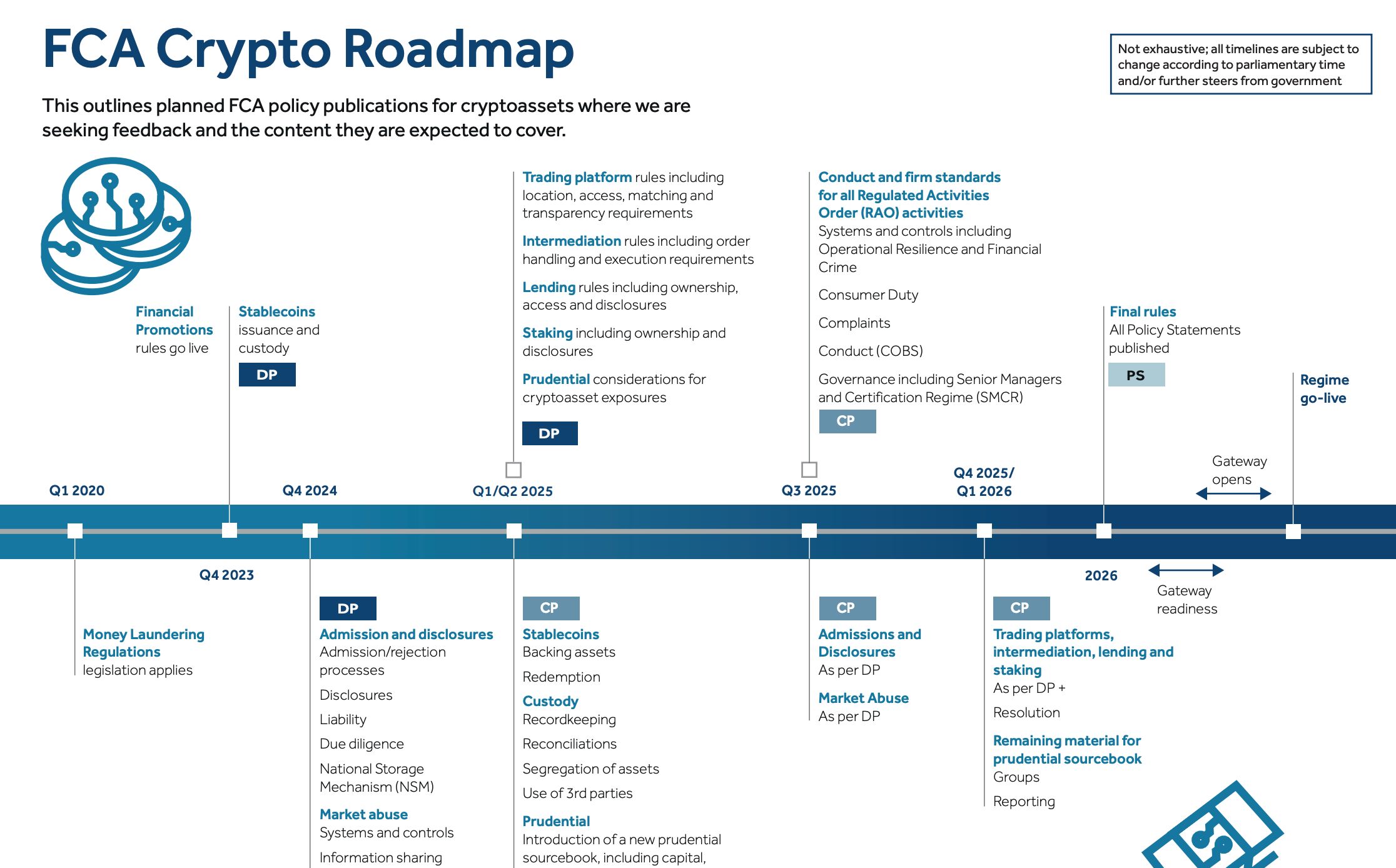 FCA Crypto roadmap: Bank of
Financial Conduct Authority
The consultation process will gather industry feedback on reserve requirements, audit procedures, and transparency standards. UK stablecoin issuance has increased 40% year-over-year, demonstrating market momentum ahead of regulatory implementation. The framework aims to balance innovation protection with consumer safeguards as the country positions itself as a competitive jurisdiction for digital asset businesses.
The 7 million UK crypto holders represent a substantial addressable market for regulated stablecoin services. Cross-border payment efficiency and integration with traditional financial infrastructure remain key priorities for both regulators and market participants as the consultation period begins.
Institutional Players Eye UK Market Entry
Circle has already secured licensing in France for both EURC and USDC under the EU’s MiCA regulation, positioning itself for broader European expansion. Tether’s USDT maintains a dominant global market share, though regulatory scrutiny has intensified regarding reserve transparency and audit practices.
PayPal’s PYUSD stablecoin holds a $2.8 billion market capitalization and has expanded to the Stellar network, targeting 170 countries. The company’s “Pay with Crypto” feature supports over 200,000 merchants that accept digital asset payments via instant stablecoin-to-fiat conversions. Traditional payment providers, including Western Union, are also exploring stablecoin offerings as regulatory clarity improves.
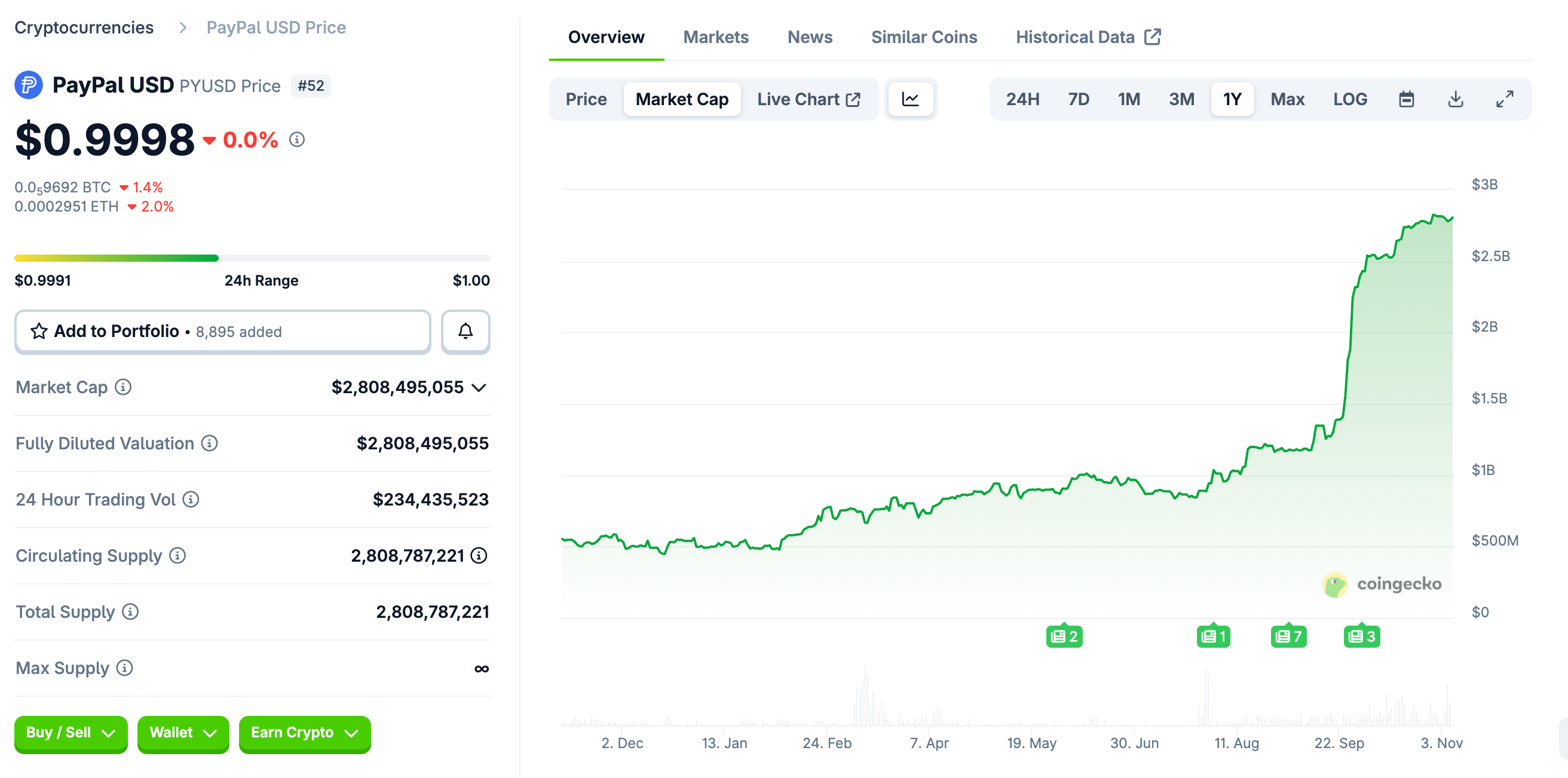 PYUSD marketcap :
Coingecko
The convergence of regulatory frameworks across the US, UK, and EU creates opportunities for standardized compliance approaches. Asset management firms are closely monitoring the UK consultation, as Bank of England reserve requirements will directly affect how institutional capital flows into stablecoin-backed assets.
Market Implications and Reserve Requirements
The Bank of England‘s mandate for government bonds or short-term securities as reserve assets establishes quality standards for stablecoin backing. This requirement affects asset managers who may serve as custodians for stablecoin reserves, creating new business opportunities within traditional finance. The approach mirrors proposals in the US GENIUS Act, facilitating potential cross-border regulatory harmonization.
Technical implementation challenges remain, particularly regarding real-time reserve verification and audit mechanisms. Industry observers note that regulatory clarity should accelerate institutional adoption while reducing risks similar to past issuance errors by other providers. The UK framework may influence global standards, given London’s position as a financial center.
The 2026 implementation timeline provides market participants with preparation time while maintaining competitive positioning against other jurisdictions. Financial institutions are expected to submit detailed feedback during the consultation period to shape final regulatory requirements that balance innovation with systemic stability.
Disclaimer: The content of this article solely reflects the author's opinion and does not represent the platform in any capacity. This article is not intended to serve as a reference for making investment decisions.
You may also like
Indian Rupee outperforms amid strong foreign inflows, shrugging off surging US Dollar
USD/JPY Price Forecast: Enters fresh upside leg on consolidation breakout

CoreWeave's quarterly report hits record highs, but Bernstein and HSBC still maintain "sell" ratings
The main concerns focus on three major issues: management claims an annual price of $20-25 million per megawatt, while actual financial data shows only $9.2 million; independent calculations by two institutions both indicate a financing gap of about $33 billion; by 2028, the market will see an influx of 55 gigawatts of new computing power, 20 times CoreWeave’s own capacity. With current debt at $46.9 billion and equity only $4 billion, and no free cash flow within this decade—the question of whether its scarce performance can last until the loans are repaid is something even strong quarterly reports cannot answer.

The AI boom may follow the path of the 19th-century railway bubble, and builders may not be the ultimate winners
Goldman Sachs analyst Bobby Molavi compared the current situation to the 19th-century British railway mania: 500 companies spent more than the nation's annual income building 8,000 miles of railway, with most early investors losing out, while the real beneficiaries were the later "passengers." He pointed out that the current AI craze is driven by both debt and momentum, and that the S&P 500’s forward P/E ratio of 18x is only "a bit cheaper." Whether the builders can retain value is uncertain, and history does not offer an optimistic answer.

Crypto prices
More


