

Author: Decentralised.Co
Translation: TechFlow
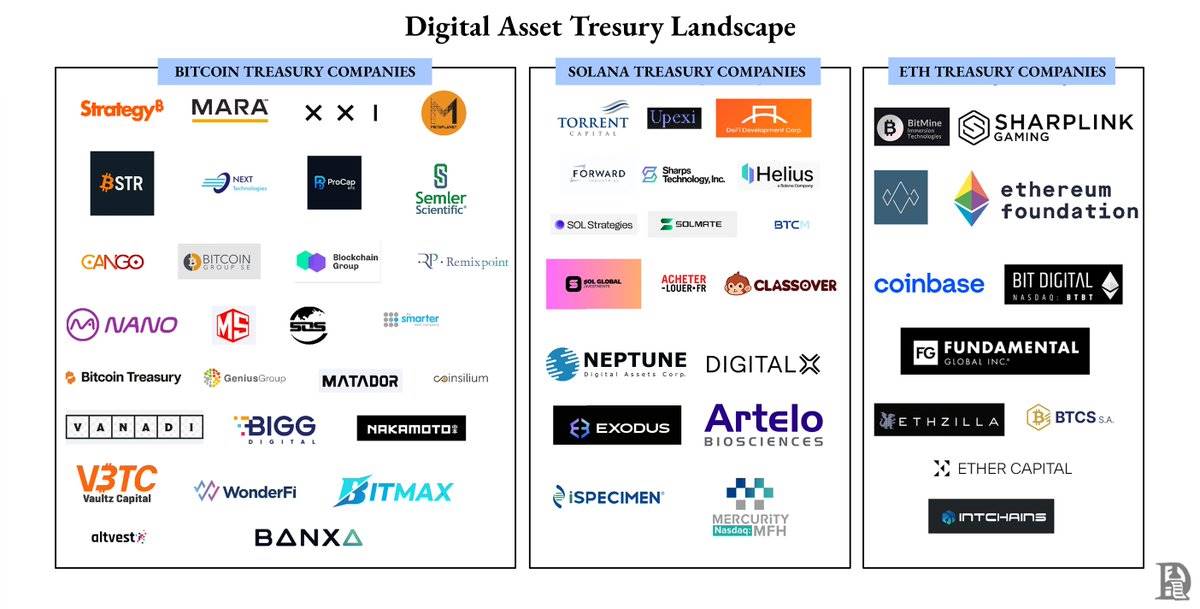
Strategy has built a $70 billion asset reserve by holding bitcoin.
Now, every token project wants to become an asset reserve company.
The problem is: a quarter of bitcoin asset reserve companies already have a market capitalization lower than the value of the assets they hold.
Here’s why most companies will fail.
Asset reserve companies have become one of the fastest-growing categories in the crypto space.
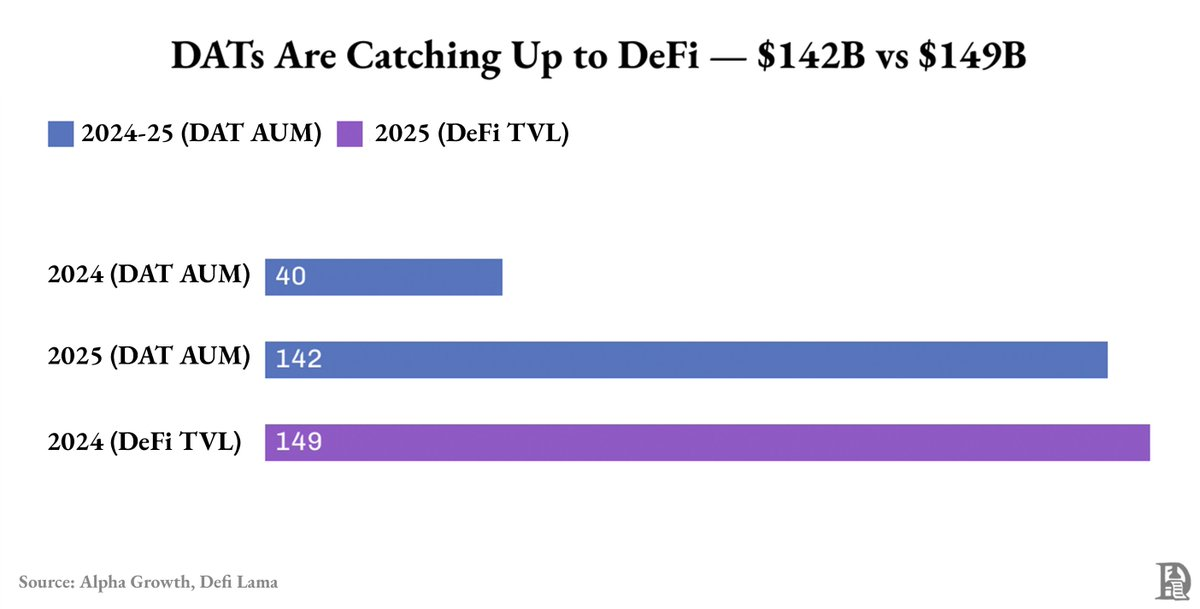
In just one year, their total asset value jumped from $40 billion to $142 billion, almost matching the total value locked (TVL) of the entire DeFi sector.
Nearly 90% of these assets are bitcoin and ethereum.
But most of this “growth” comes from the rising prices of bitcoin and ethereum, rather than business cash flow or financial engineering.
Even this growth is not evenly distributed.
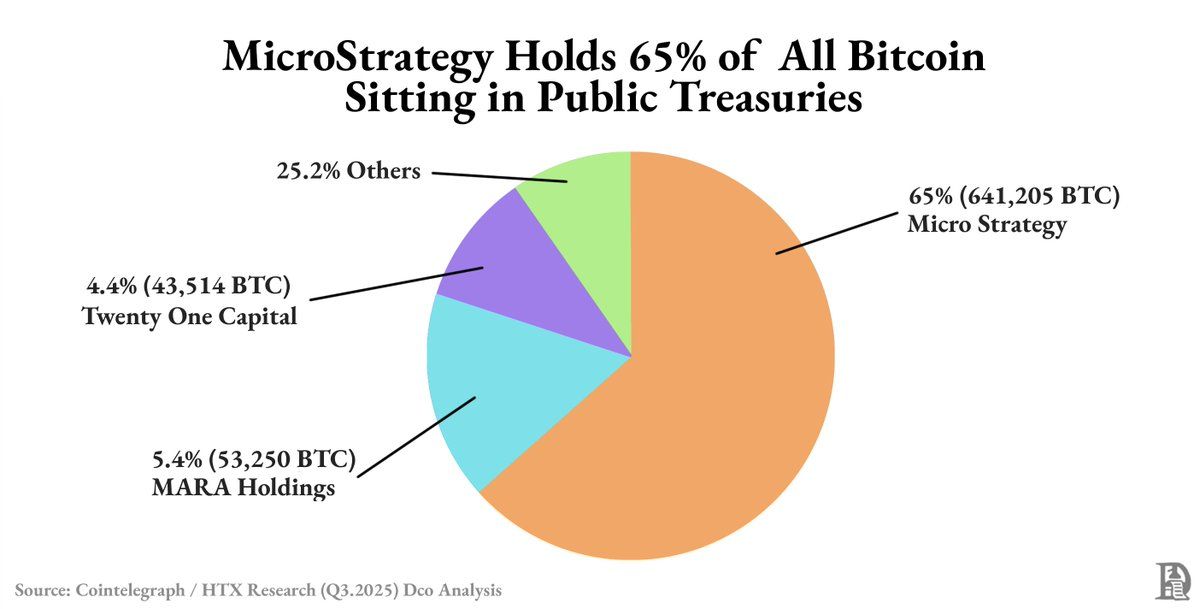
Strategy alone holds nearly 63% of all publicly reserved bitcoin. Most of the rest is controlled by the top six companies.
Outside of these giants, most digital asset reserve companies (DATs) are in a state of thin liquidity and fragile premiums, with their valuations fluctuating with the market rather than their own performance.
What’s the reason?
When the market performs strongly, asset reserve company stocks trade at a premium above asset value. The reason for this premium is that they provide investors with a compliant channel to invest in bitcoin or ethereum. Issuing new shares at this premium not only raises more funds but also increases book value.
Each round of financing brings in more crypto assets, pushing up both the total assets and the stock price. This forms a reflexive loop: price increases enable value-adding financing, the financing is used to buy more assets, valuations rise, until the premium disappears.
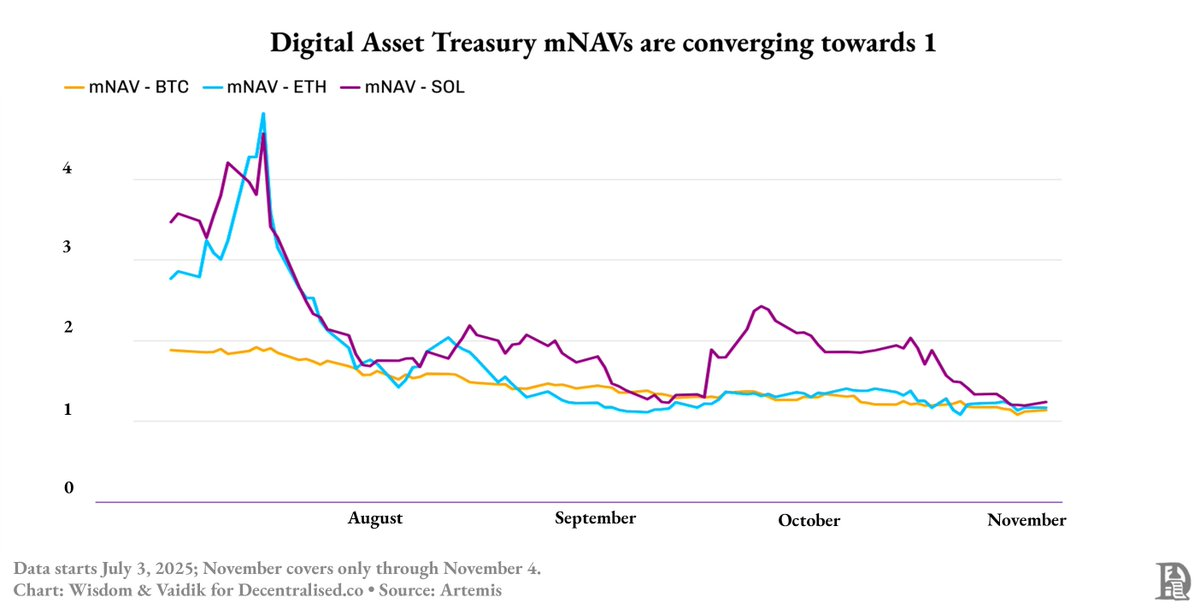
By mid-2025, this cycle was broken: the premium for bitcoin asset reserve companies dropped from 1.9x to 1.3x, while the premium for ethereum and SOL (Solana) asset reserves plummeted from 4.8x to about 1.3x in just two months.
So, how did Strategy survive?
Because it didn’t just build an asset reserve, it created a financial instrument.
While most asset reserve companies kept issuing shares to buy more crypto assets, Strategy raised $4 billion through convertible bonds and senior notes, with long-term loan rates of about 0.8%.
Its stock became a high-beta version of bitcoin. When bitcoin’s price fluctuates by 1%, its stock price amplifies the movement in the same direction. By using debt to buy bitcoin, Strategy magnified every price swing, offering investors a leveraged and compliant way to bet on bitcoin without holding it directly.
This tradable volatility attracted new investors: funds, ETFs, and even a debt market built around it.
Traders took advantage of Strategy’s volatility to earn returns. Although their capital was locked until the notes matured, they profited from the stock price fluctuations.
Since Strategy’s stock is more liquid and volatile than bitcoin, traders didn’t have to wait for the notes to mature to make profits.
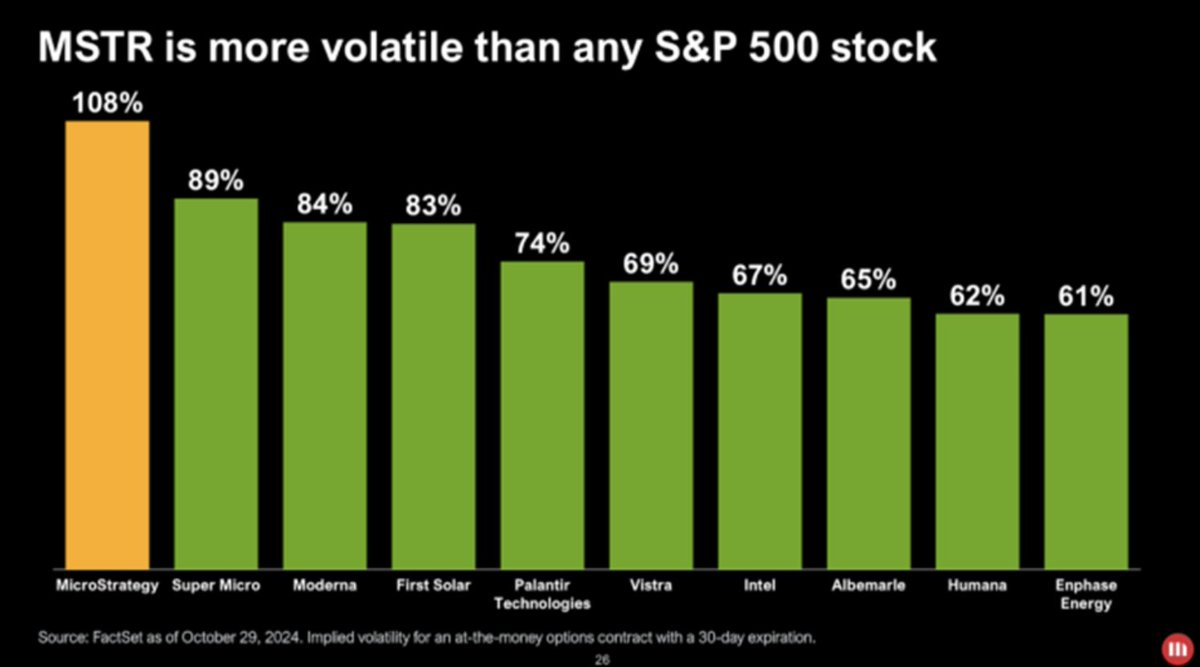
Most new asset reserve companies imitated Strategy’s model, but only copied the simple parts.
They imitated the balance sheet, but did not replicate the capital structure.
Strategy has convertible bonds, senior notes, and liquidity—these elements help it turn volatility into financing capability.
Other companies do not have such resources. They cannot raise capital and can only chase yields through staking, lending, or buying tokenized government bonds.
Replacing real financing with yield looks good when prices are rising. Yields stay high, liquidity appears strong, and the model seems effective.
But this masks reflexive risks similar to equity.
Most digital asset reserve companies (DATs) lock assets in staking or lending to earn yield, while allowing investors to freely enter and exit.
When the market cycle reverses, redemption demand rises, yields fall, and they are forced to sell those locked assets at a loss.
This is exactly what is happening now.
As market confidence weakens, stocks that once traded at 3-4x asset value premiums have collapsed to trade at par with asset value.
Even those “yield-driven” asset reserve companies based on ethereum (ETH) or Solana (SOL) are not immune, as their solvency is still closely tied to token prices.





