
The Secret Script of the Crypto Market: How Whales Manipulate 90% of Traders, and How You Can Stop Being "Liquidity"

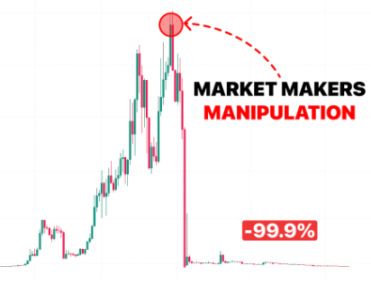
In the crypto market, most people lose money not because of poor skills, but because they fundamentally do not understand the rules of the game.
You may think the market is “freely fluctuating,” but in reality, it is a chessboard precisely manipulated by whales and institutional capital.
Understanding “manipulation” is the real dividing line between retail investors and winners.
1. The market is not chaotic, but driven
The market is not the result of random fluctuations.
Whales do not “react” to the market; they create the market.
Retail investors simply follow these fluctuations—therefore, the vast majority are destined to be on the wrong side.
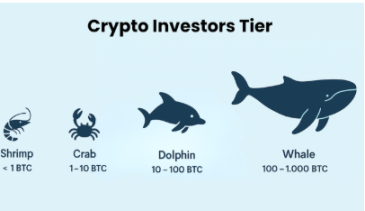
2. Whales’ strategies are simple, repetitive, and covert
Since institutional funds entered the market, their tactics have hardly changed.
They use liquidity and emotional cycles to continuously harvest followers.
As long as you learn to identify these signals, you will no longer be their “liquidity provider.”
3. The standard manipulation cycle of whales
The entire manipulation cycle usually follows four stages:
1️⃣ Silent accumulation phase: price moves sideways, low volume, cold sentiment.
2️⃣ Bull trap rally phase: large volume pushes the price up, triggering FOMO (fear of missing out).
3️⃣ Distribution phase: when retail investors rush in, whales start to offload in batches.
4️⃣ Panic dump phase: price crashes, sentiment collapses, whales buy back at low levels.
This play is performed every cycle, just with different tokens and narratives.
4. False breakouts and fake patterns: creating liquidity traps
Whales often deliberately “buy high and sell low” at key positions to create false patterns.
They do not care about technical indicators, but rather guide the public’s psychology.
When “false breakouts” trigger stop-losses and chase orders, they gain massive liquidity,
which becomes the fuel for their next real move.
5. Stop hunting: precisely targeting retail investors’ psychological lines
Big capital knows exactly where every important “stop-loss pool” is.
They only need to create a brief price shock to clear out the entire market in minutes.
This is the so-called “stop hunting”—making you panic and exit, while they accumulate positions.
6. Sideways consolidation: the cruelest psychological warfare
When the price oscillates within a range and repeatedly sweeps orders, there is only one purpose:
to make retail investors lose patience and exit voluntarily.
Once the market is cleared of weak hands, whales can build positions at low cost and drive the next trend.
7. Imbalance Zone: the real clue
When the price quickly passes through a range, it often leaves “untouched areas.”
These “gaps” are places where whales may return to fill in the future.
By analyzing volume distribution and order cluster areas (cluster analysis),
you can judge their next intentions.
8. False breakout ≠ new trend
Many traders get excited and chase long at the moment of a “breakout,” only for the market to reverse within minutes.
That’s when whales are collecting retail stop-loss liquidity.
Remember: in the crypto market, there is no real “support” or “resistance,”
only “emotional checkpoints” that have been designed.
9. Wash trading and fake depth: manipulating attention
“Wash trading” creates fake trading volume,
“spoofing” creates fake depth.
They are not just manipulating prices, but also your attention and reactions.
When you are driven by emotion, you are already in their script.
10. The real rule: whales do not predict, they control
Once you understand these logics, you no longer need to “guess the direction.”
You only need to know:
Do not buy at emotional peaks
Do not blindly add positions at “support”
Do not predict, but wait for confirmation
Because the winner is not the one who reacts fastest, but the one who waits most calmly.
Conclusion:
In this market manipulated by whales, information asymmetry is the norm.
But once you learn to identify “fake moves,” you become an observer instead of prey.
Manipulation will always exist, but being manipulated can be avoided.
Understand the essence of liquidity, the rhythm of emotions, and the structure of the market—
You do not need to become a whale, just stop being their prey.
Disclaimer: The content of this article solely reflects the author's opinion and does not represent the platform in any capacity. This article is not intended to serve as a reference for making investment decisions.
You may also like
The AI boom may follow the path of the 19th-century railway bubble, and builders may not be the ultimate winners
Goldman Sachs analyst Bobby Molavi compared the current situation to the 19th-century British railway mania: 500 companies spent more than the nation's annual income building 8,000 miles of railway, with most early investors losing out, while the real beneficiaries were the later "passengers." He pointed out that the current AI craze is driven by both debt and momentum, and that the S&P 500’s forward P/E ratio of 18x is only "a bit cheaper." Whether the builders can retain value is uncertain, and history does not offer an optimistic answer.

If Anthropic's IPO goes smoothly and the stock price rises next week, then everything remains the same for AI. Otherwise, some companies will go bankrupt.
The shrinking valuations of two major giants have triggered a chain reaction—investors are adopting more conservative revenue multiples for AI startups and are directly halting high-valuation financing for companies with zero revenue. Multiple venture capital firms have advised their portfolio companies to lower valuation expectations and to quickly build up cash reserves. Market participants warn that the outcome of Anthropic’s IPO will be a barometer for the industry: if successful, the boom will continue; if it fails, some companies may face elimination.
After the Brazilian election, political discount deepens; Morgan Stanley remains bullish on Petrobras (PBR.US), focusing on fuel pricing and dividends
Morgan Stanley still maintains its most optimistic "Overweight" rating, but has lowered its year-end 2027 target price from $31 to $25.

Corning (GLW.US) receives initial "Buy" rating from Jefferies! AI factories driving a fiber optic rush, with a potential global supply gap of up to 30%
For Corning, the recent profit growth mainly comes from the expansion of AI clusters. As the number of optical links crossing cabinets and campuses increases, customers need to deploy more optical fibers within limited conduit and cabinet space, thus driving demand for high-density optical cables and connection systems.

Crypto prices
More


