
Bitcoin falls to its lowest point since June, with the "after-effects" of October's flash crash still lingering!

Multiple negative factors are weighing on the market! Trading sentiment in the cryptocurrency market remains sluggish, and experts had previously warned of a potential 10%-15% correction risk.
On Tuesday, Bitcoin declined for the second consecutive trading day, falling below the $104,000 mark, with an intraday drop of up to 3.1%, reaching its lowest level since the end of June. Ethereum fell as much as 3.9%, and several so-called "altcoins" also experienced similar declines. Multiple indicators highlight the depressed sentiment among cryptocurrency traders.
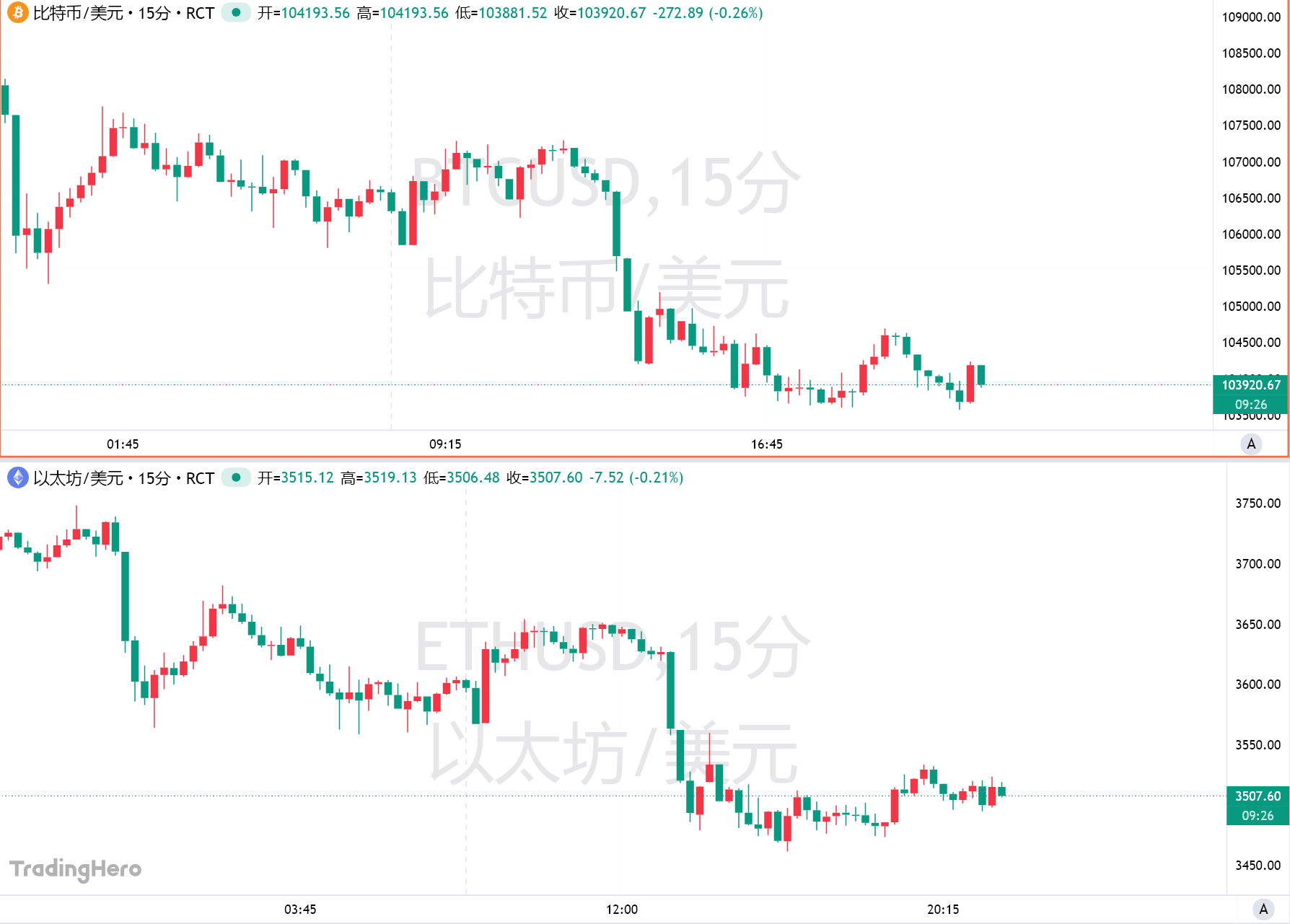
This decline occurred three weeks after a historic liquidation event—which wiped out billions of dollars in leveraged cryptocurrency positions. Since then, investors appear reluctant to bet on a rebound in Bitcoin and smaller tokens.
Cryptocurrencies are facing numerous headwinds, including ETF outflows and concerns that digital asset management firms may sell off holdings. If Bitcoin falls further, investors' attention will focus on the closely watched $100,000 level, which Bitcoin only briefly dipped below in mid-June.
Market maker Keyrock stated in a report that traders are "unwilling to reinvest large amounts of capital." Open interest in Bitcoin perpetual futures contracts is around $68 billion, down about 30% from the October peak. According to CoinGlass data, liquidations are ongoing: in just the past 24 hours, selling pressure across the entire cryptocurrency market wiped out $1.2 billion in long positions.
Meanwhile, over the past four trading days, investors have withdrawn more than $1.8 billion from spot Bitcoin and Ethereum ETFs.
The macroeconomic environment is also unfavorable. Expectations for a Federal Reserve rate cut in December have dropped sharply, meaning the high-interest-rate environment may persist for longer. XS.com market analyst Lin Tran pointed out that this "raises the opportunity cost of holding non-yielding assets like Bitcoin, while also dampening short-term speculative momentum."
Greater uncertainty comes from a crisis in the decentralized finance sector. On Monday, the Ethereum-based decentralized finance protocol Balancer suffered a hacker attack, with over $100 million in digital assets stolen. This vulnerability is the latest in a series of bearish events over the past few weeks, leaving digital asset investors on edge.
Previously, fintech expert and Concord Fintech Solutions co-founder Olena Sosiedka warned that after the rapid rise in cryptocurrency prices from September to early October, Bitcoin would enter a "correction and consolidation period." The expert predicted: "Clearly, Bitcoin will remain volatile in the coming weeks."
Sosiedka warned that if institutional interest cools significantly or the Federal Reserve shifts its policy, it could trigger a 10%-15% correction in Bitcoin prices.
She advised: "Current market sentiment is extremely sensitive, so it is important not to chase highs, but to remain calm and take strategic, gradual actions."
Disclaimer: The content of this article solely reflects the author's opinion and does not represent the platform in any capacity. This article is not intended to serve as a reference for making investment decisions.
You may also like
The AI boom may follow the path of the 19th-century railway bubble, and builders may not be the ultimate winners
Goldman Sachs analyst Bobby Molavi compared the current situation to the 19th-century British railway mania: 500 companies spent more than the nation's annual income building 8,000 miles of railway, with most early investors losing out, while the real beneficiaries were the later "passengers." He pointed out that the current AI craze is driven by both debt and momentum, and that the S&P 500’s forward P/E ratio of 18x is only "a bit cheaper." Whether the builders can retain value is uncertain, and history does not offer an optimistic answer.

If Anthropic's IPO goes smoothly and the stock price rises next week, then everything remains the same for AI. Otherwise, some companies will go bankrupt.
The shrinking valuations of two major giants have triggered a chain reaction—investors are adopting more conservative revenue multiples for AI startups and are directly halting high-valuation financing for companies with zero revenue. Multiple venture capital firms have advised their portfolio companies to lower valuation expectations and to quickly build up cash reserves. Market participants warn that the outcome of Anthropic’s IPO will be a barometer for the industry: if successful, the boom will continue; if it fails, some companies may face elimination.
After the Brazilian election, political discount deepens; Morgan Stanley remains bullish on Petrobras (PBR.US), focusing on fuel pricing and dividends
Morgan Stanley still maintains its most optimistic "Overweight" rating, but has lowered its year-end 2027 target price from $31 to $25.

Corning (GLW.US) receives initial "Buy" rating from Jefferies! AI factories driving a fiber optic rush, with a potential global supply gap of up to 30%
For Corning, the recent profit growth mainly comes from the expansion of AI clusters. As the number of optical links crossing cabinets and campuses increases, customers need to deploy more optical fibers within limited conduit and cabinet space, thus driving demand for high-density optical cables and connection systems.

Crypto prices
More


