
Custodia ruling a 'speed bump' not a roadblock for crypto banks, says TD Cowen

Quick Take Last week, the U.S. Court of Appeals for the Tenth Circuit certified a previous decision made by a district court in Wyoming that said the Federal Reserve does not have to give Custodia access to a master account. “We see this as a speed bump rather than a road block for crypto Master Accounts,” said TD Cowen’s Washington Research Group, led by Jaret Seiberg in a note.
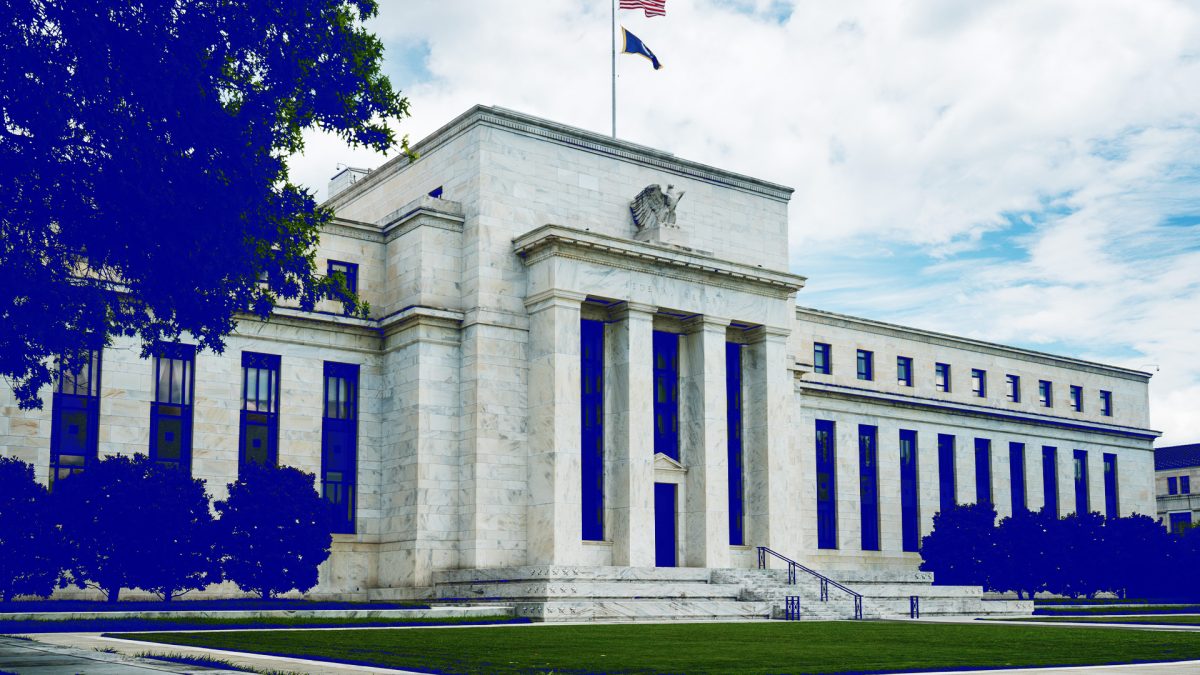
An appeals court ruling last week declaring that Custodia is not entitled to a Federal Reserve mast account is not the end of the road for crypto banks to get access to the central bank, said a TD Cowen analyst on Monday.
"We see this as a speed bump rather than a road block for crypto Master Accounts," said TD Cowen’s Washington Research Group, led by Jaret Seiberg, in a note.
"We view this as a temporary setback for what over time will be the merging of traditional finance with crypto," Seiberg added. "The Trump administration and its regulators back the merging of these sectors. It is hard to see how it does not happen."
On Oct. 31, the U.S. Court of Appeals for the Tenth Circuit certified a previous decision made by a district court in Wyoming that said the Federal Reserve does not have to give Custodia access to a master account and that the central bank has discretion over who is or isn't granted access.
A master account allows institutions direct access to the Fed's payment systems and provides the most direct access to the United States' money supply available to financial institutions.
The most likely route for crypto is what Federal Reserve Governor Christopher Waller called "skinny master account," Seiberg said. Waller proposed the idea last month for the limited account and said it would provide access to the central bank's "payment rails while controlling for various risks to the Federal Reserve and the payment system."
"The limited nature of the accounts would give the Federal Reserve more leeway to approve institutions even though only entities eligible for full Master Accounts could get skinny Master Accounts," Seiberg said on Monday. "We expect a proposal in the coming months to establish these skinny Master Accounts."
The Fed, though, is unlikely to reconsider the parameters for issuing master accounts and will still be cautious, Seiberg added.
Other crypto firms are also vying to get a national trust bank charter through the Office of the Comptroller of the Currency. The list includes Crypto.com, Coinbase , Bridge , Paxos , Ripple , Circle , and BitGo .
"We also believe the door is open to crypto-related entities obtaining national bank trust charters. Crypto firms already are pursuing this option," Seiberg said. "We expect Comptroller Jonathan Gould will be supportive despite pushback from the banking sector."
Disclaimer: The content of this article solely reflects the author's opinion and does not represent the platform in any capacity. This article is not intended to serve as a reference for making investment decisions.
You may also like
The AI boom may follow the path of the 19th-century railway bubble, and builders may not be the ultimate winners
Goldman Sachs analyst Bobby Molavi compared the current situation to the 19th-century British railway mania: 500 companies spent more than the nation's annual income building 8,000 miles of railway, with most early investors losing out, while the real beneficiaries were the later "passengers." He pointed out that the current AI craze is driven by both debt and momentum, and that the S&P 500’s forward P/E ratio of 18x is only "a bit cheaper." Whether the builders can retain value is uncertain, and history does not offer an optimistic answer.

If Anthropic's IPO goes smoothly and the stock price rises next week, then everything remains the same for AI. Otherwise, some companies will go bankrupt.
The shrinking valuations of two major giants have triggered a chain reaction—investors are adopting more conservative revenue multiples for AI startups and are directly halting high-valuation financing for companies with zero revenue. Multiple venture capital firms have advised their portfolio companies to lower valuation expectations and to quickly build up cash reserves. Market participants warn that the outcome of Anthropic’s IPO will be a barometer for the industry: if successful, the boom will continue; if it fails, some companies may face elimination.
After the Brazilian election, political discount deepens; Morgan Stanley remains bullish on Petrobras (PBR.US), focusing on fuel pricing and dividends
Morgan Stanley still maintains its most optimistic "Overweight" rating, but has lowered its year-end 2027 target price from $31 to $25.

Corning (GLW.US) receives initial "Buy" rating from Jefferies! AI factories driving a fiber optic rush, with a potential global supply gap of up to 30%
For Corning, the recent profit growth mainly comes from the expansion of AI clusters. As the number of optical links crossing cabinets and campuses increases, customers need to deploy more optical fibers within limited conduit and cabinet space, thus driving demand for high-density optical cables and connection systems.

Crypto prices
More


