
Bull trap? Bear trap? The truth may be more complex: After the Federal Reserve's rate cut, the crypto market is entering a new liquidity cycle.

The recent performance of the crypto market has been perplexing:
Some people firmly believe this is just a "bull trap,"
while others are calling it a "bear trap."
However, after 19 hours of systematic research on macro data, on-chain capital flows, and market structure, one conclusion can be drawn:
The market is not a trap, but rather is nurturing the starting point of a new growth cycle.
1. Fed Rate Cuts: Liquidity is Restarting
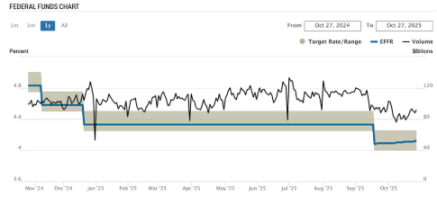
Yesterday, the Federal Reserve announced another rate cut.
Historical experience tells us—cheap money will eventually flow into risk assets.
2021 is the best example:
Every rate-cutting cycle has brought a large influx of liquidity, and crypto assets are often the first sector to react.
Ignoring changes in macro liquidity is equivalent to missing the start of a market trend.
2. Easing China-US Relations, Declining Risk Premium
The latest tariff reduction is about 10%, which is equivalent to releasing billions of dollars in international trade space.
This macro easing not only boosts corporate confidence but also revives risk appetite for capital.
In the pricing logic of risk assets, "certainty" itself is value.
The easing of trade frictions means more capital will return to investment channels, and the crypto market is one of the most obvious beneficiaries.

3. Fear Fades, Market Confidence Recovers
The extreme panic from a few weeks ago did not trigger a deeper sell-off.
This "panic without a crash" structure is actually a positive signal—
Institutional funds are using fear to accumulate positions.
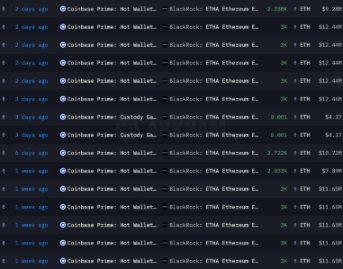
On-chain data shows that after the drop on October 10, large institutions (including BlackRock) began to increase their holdings of ETH and other major assets at low levels.
Smart money never acts loudly, but it is always one step ahead.
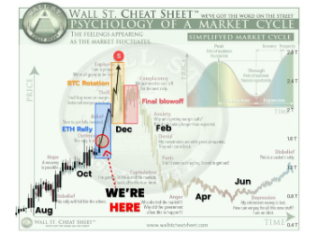
4. Price Structure of the Interest Rate Cycle: From False Breakouts to Real Trends
The market reaction to rate cuts usually occurs in three steps:
Initial rebound (pump)
Correction and shakeout (liquidity grab)
Second strong breakout (new highs)
Currently, we are just in the first stage.
The real trend has not yet unfolded.
5. Liquidity Return Path: BTC → Major Coins → Altcoins
Capital inflow will not happen overnight.
The first step is for Bitcoin (BTC), as "digital gold," to regain favor with capital;
Next comes Ethereum and major L1s;
Only then will it be the turn of high-risk, high-reward small and mid-cap altcoins (Low caps).
The market frenzy has not yet begun, but the window for positioning is rapidly narrowing.
6. Altseason Signal: Neutral Zone Means Potential
The Altseason index is currently in the neutral range, which is not uncommon.
In the early stages of every bull market, BTC always starts ahead of altcoins,
then liquidity gradually spreads, and the altcoin sector can erupt within just a few days.
According to historical data, Altseason often occurs "1-2 weeks after BTC stabilizes."
This means the prelude to the next phase of capital rotation is approaching.
7. Market Opportunity: Entry Value During the Quiet Period
The most dangerous moment has passed.
The smartest investors often buy when the market is quiet and reap rewards amid the noise.
Those waiting for "confirmation signals" always rush into the market only after confirmation.
But by then, the best prices have already been taken by others.
Conclusion:
The market is not a trap, but a structural restart.
The liquidity brought by Fed rate cuts, the easing of macro relations, and the return of institutional capital—
These signals all point to one fact: a new upward cycle has already begun.
The real risk is not a sharp drop, but missing the opportunity to build positions during the restart phase.
When the market becomes noisy again, the best entry window will be gone.
Disclaimer: The content of this article solely reflects the author's opinion and does not represent the platform in any capacity. This article is not intended to serve as a reference for making investment decisions.
You may also like
The AI boom may follow the path of the 19th-century railway bubble, and builders may not be the ultimate winners
Goldman Sachs analyst Bobby Molavi compared the current situation to the 19th-century British railway mania: 500 companies spent more than the nation's annual income building 8,000 miles of railway, with most early investors losing out, while the real beneficiaries were the later "passengers." He pointed out that the current AI craze is driven by both debt and momentum, and that the S&P 500’s forward P/E ratio of 18x is only "a bit cheaper." Whether the builders can retain value is uncertain, and history does not offer an optimistic answer.

If Anthropic's IPO goes smoothly and the stock price rises next week, then everything remains the same for AI. Otherwise, some companies will go bankrupt.
The shrinking valuations of two major giants have triggered a chain reaction—investors are adopting more conservative revenue multiples for AI startups and are directly halting high-valuation financing for companies with zero revenue. Multiple venture capital firms have advised their portfolio companies to lower valuation expectations and to quickly build up cash reserves. Market participants warn that the outcome of Anthropic’s IPO will be a barometer for the industry: if successful, the boom will continue; if it fails, some companies may face elimination.
After the Brazilian election, political discount deepens; Morgan Stanley remains bullish on Petrobras (PBR.US), focusing on fuel pricing and dividends
Morgan Stanley still maintains its most optimistic "Overweight" rating, but has lowered its year-end 2027 target price from $31 to $25.

Corning (GLW.US) receives initial "Buy" rating from Jefferies! AI factories driving a fiber optic rush, with a potential global supply gap of up to 30%
For Corning, the recent profit growth mainly comes from the expansion of AI clusters. As the number of optical links crossing cabinets and campuses increases, customers need to deploy more optical fibers within limited conduit and cabinet space, thus driving demand for high-density optical cables and connection systems.

Crypto prices
More


