
Bitcoin's 4-year cycle isn't dead, expect a 70% drop next downturn: VC

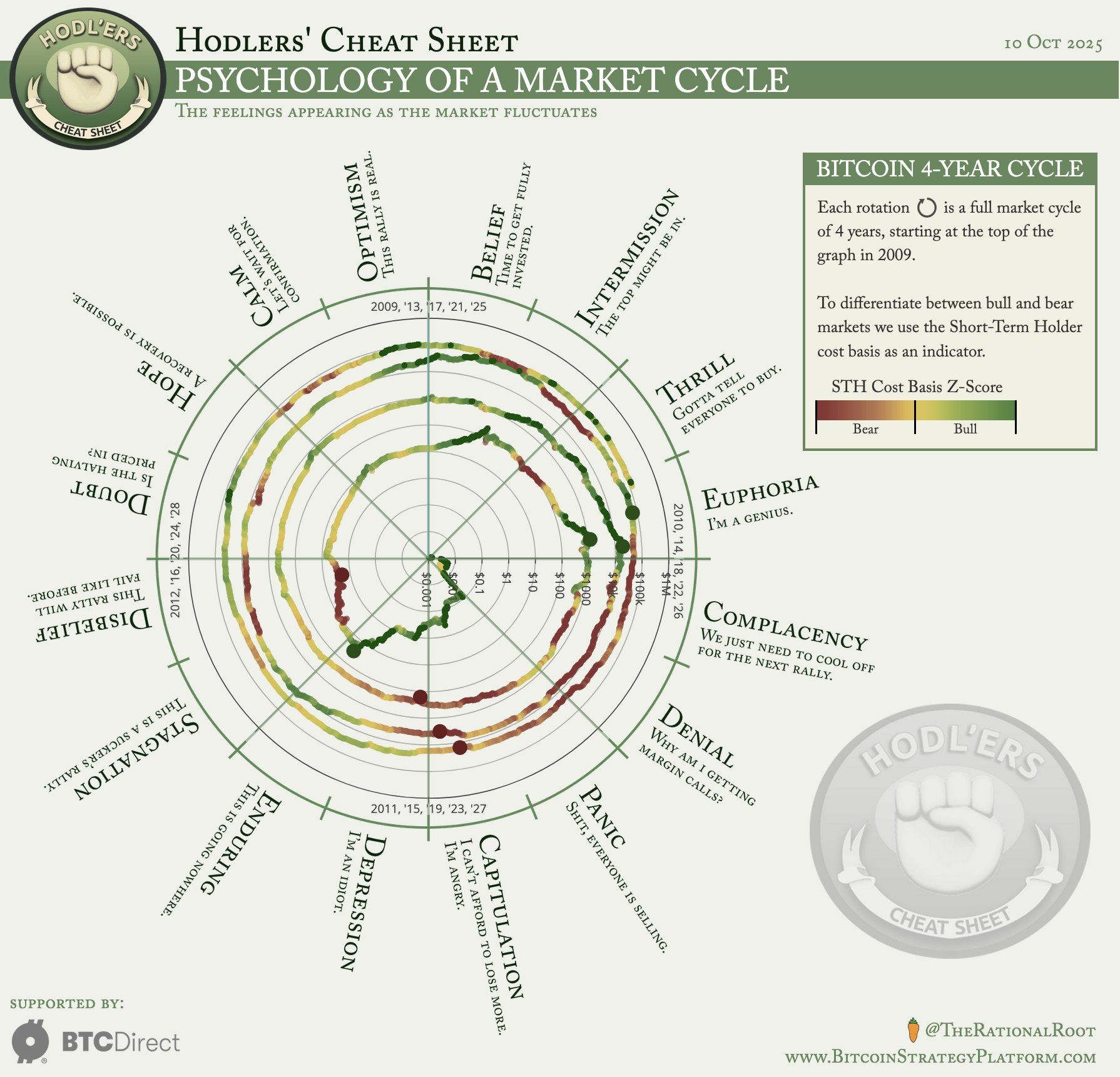
The price of Bitcoin (BTC) will continue to experience cyclical booms and busts, resulting in a drawdown of up to 70% during the next market downturn, according to Vineet Budki, CEO of venture firm Sigma Capital.
There will be a BTC retracement of 65% to 70% in the next two years because traders do not understand the asset they are holding, Budki told Cointelegraph at the Global Blockchain Congress 2025 in Dubai, UAE. He said:
“Bitcoin will not lose its utility if it comes down to $70,000. The problem is that people don't know its utility, and when people buy assets that they don't know and understand, they sell them first; that is where the selling pressure comes from.”
Despite this, Budki still forecasts that Bitcoin will reach $1 million or more per coin within the next 10 years and stated that user adoption will grow from a combination of price speculation and, more importantly, real-world BTC use cases.
Analysts, industry executives and investors continue to forecast when Bitcoin will reach a seven-figure price tag and whether the market dynamics that have defined BTC cycles since its inception in 2009 remain valid in 2025.
Related: Bitcoin white paper turns 17 as first red October in 7 years looms for BTC
Has Bitcoin outgrown the four-year cycle?
The four-year Bitcoin cycle is dead, according to Arthur Hayes, market analyst and co-founder of the BitMEX crypto exchange.
Bitcoin’s price is influenced more by macroeconomic factors, such as interest rates and the growth of the money supply, and less by cyclical patterns, Hayes said.
Other analysts point to growing institutional adoption and the presence of these financial institutions as a stabilizing force that reduces price volatility and calms the markets.
Financial institutions, including governments, digital asset treasury companies’ exchange-traded funds (ETFs) and cryptocurrency exchanges collectively hold over 4 million BTC, nearly 20% of Bitcoin’s total supply, according to BitcoinTreasuries.NET.
However, Seamus Rocca, the CEO of crypto-friendly bank Xapo Bank, told Cointelegraph that the four-year cycle remains in play because investors currently view BTC as a risk-on asset, despite its store-of-value properties.
Magazine: Bitcoin to see ‘one more big thrust’ to $150K, ETH pressure builds: Trade Secrets
Disclaimer: The content of this article solely reflects the author's opinion and does not represent the platform in any capacity. This article is not intended to serve as a reference for making investment decisions.
You may also like
The AI boom may follow the path of the 19th-century railway bubble, and builders may not be the ultimate winners
Goldman Sachs analyst Bobby Molavi compared the current situation to the 19th-century British railway mania: 500 companies spent more than the nation's annual income building 8,000 miles of railway, with most early investors losing out, while the real beneficiaries were the later "passengers." He pointed out that the current AI craze is driven by both debt and momentum, and that the S&P 500’s forward P/E ratio of 18x is only "a bit cheaper." Whether the builders can retain value is uncertain, and history does not offer an optimistic answer.

If Anthropic's IPO goes smoothly and the stock price rises next week, then everything remains the same for AI. Otherwise, some companies will go bankrupt.
The shrinking valuations of two major giants have triggered a chain reaction—investors are adopting more conservative revenue multiples for AI startups and are directly halting high-valuation financing for companies with zero revenue. Multiple venture capital firms have advised their portfolio companies to lower valuation expectations and to quickly build up cash reserves. Market participants warn that the outcome of Anthropic’s IPO will be a barometer for the industry: if successful, the boom will continue; if it fails, some companies may face elimination.
After the Brazilian election, political discount deepens; Morgan Stanley remains bullish on Petrobras (PBR.US), focusing on fuel pricing and dividends
Morgan Stanley still maintains its most optimistic "Overweight" rating, but has lowered its year-end 2027 target price from $31 to $25.

Corning (GLW.US) receives initial "Buy" rating from Jefferies! AI factories driving a fiber optic rush, with a potential global supply gap of up to 30%
For Corning, the recent profit growth mainly comes from the expansion of AI clusters. As the number of optical links crossing cabinets and campuses increases, customers need to deploy more optical fibers within limited conduit and cabinet space, thus driving demand for high-density optical cables and connection systems.

Crypto prices
More


