
Shared power banks in South Korea can now mine on-chain

The Korean DePIN project Piggycell recently launched its TGE and was listed on Binance Alpha.
The Korean DePIN project Piggycell recently launched its TGE and was listed on Binance Alpha.
Written by: Nicky, Foresight News
On October 28, the Korean shared power bank project Piggycell officially launched its TGE, and its token PIGGY has been listed on Binance Alpha and OKX perpetual contract markets. Trading data shows that since the opening price of $1.178 on the 28th, PIGGY quickly surged, reaching a high of $2.724 on the 29th, an increase of over 130%, and is currently fluctuating around $2.
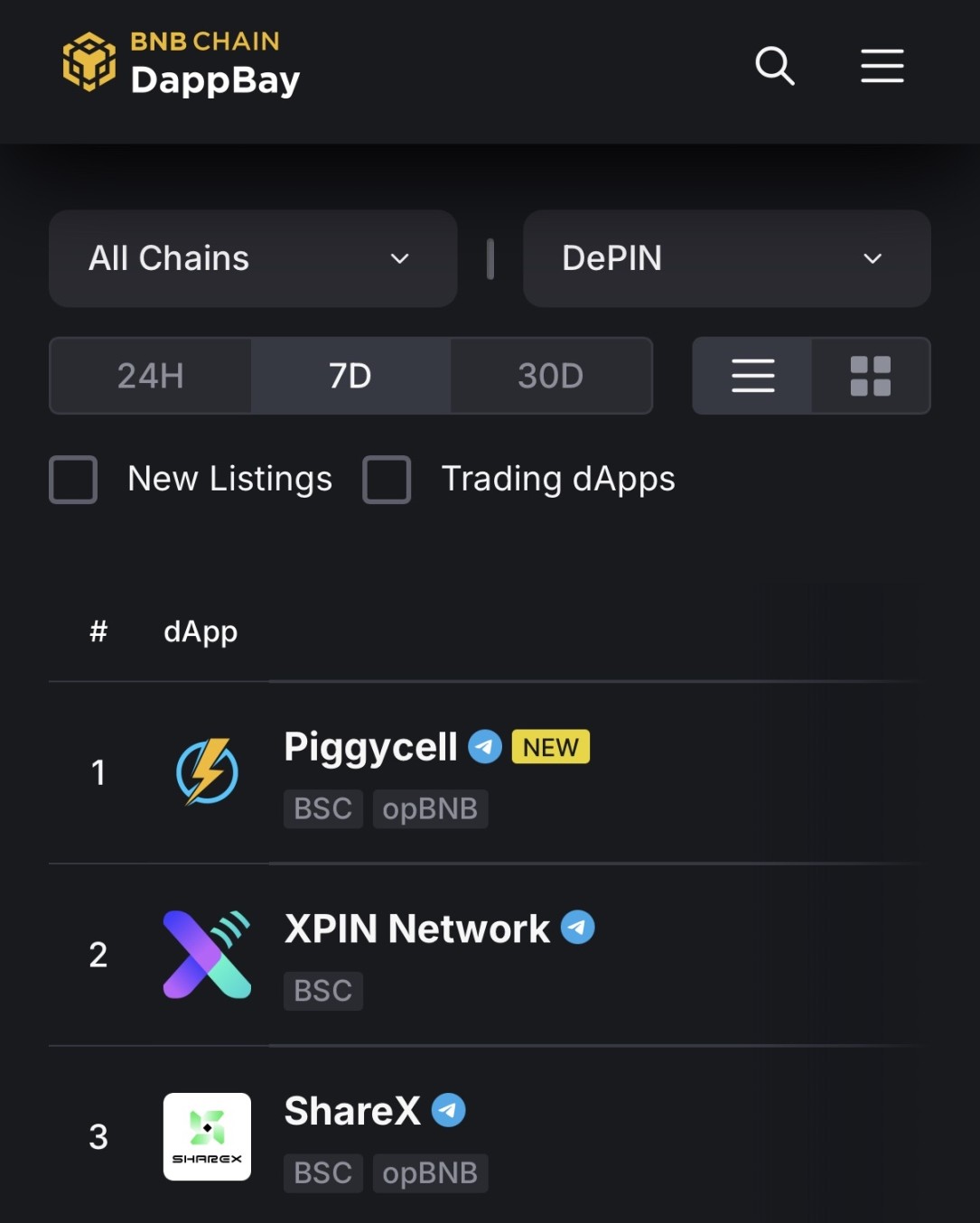
The project currently ranks first on the seven-day popularity chart in the DePIN section of BNB Chain DappBay.
Project Positioning
Piggycell is a shared power bank service provider with over 95% market share in Korea, deploying more than 14,000 charging stations nationwide, operating over 100,000 charging devices, and having 4 million paying users. The project combines physical charging infrastructure with tokenomics through blockchain technology, positioning itself as a combination of Real World Assets (RWA) and Decentralized Physical Infrastructure Network (DePIN).
Its core logic is "real usage data on-chain": by recording high-frequency data such as user charging behavior and device operating status on-chain, it transforms charging services into quantifiable digital assets. This model solves the information asymmetry problem in traditional sharing economies—users can see how their usage behavior translates into earnings, and investors can track the actual operation of underlying assets.
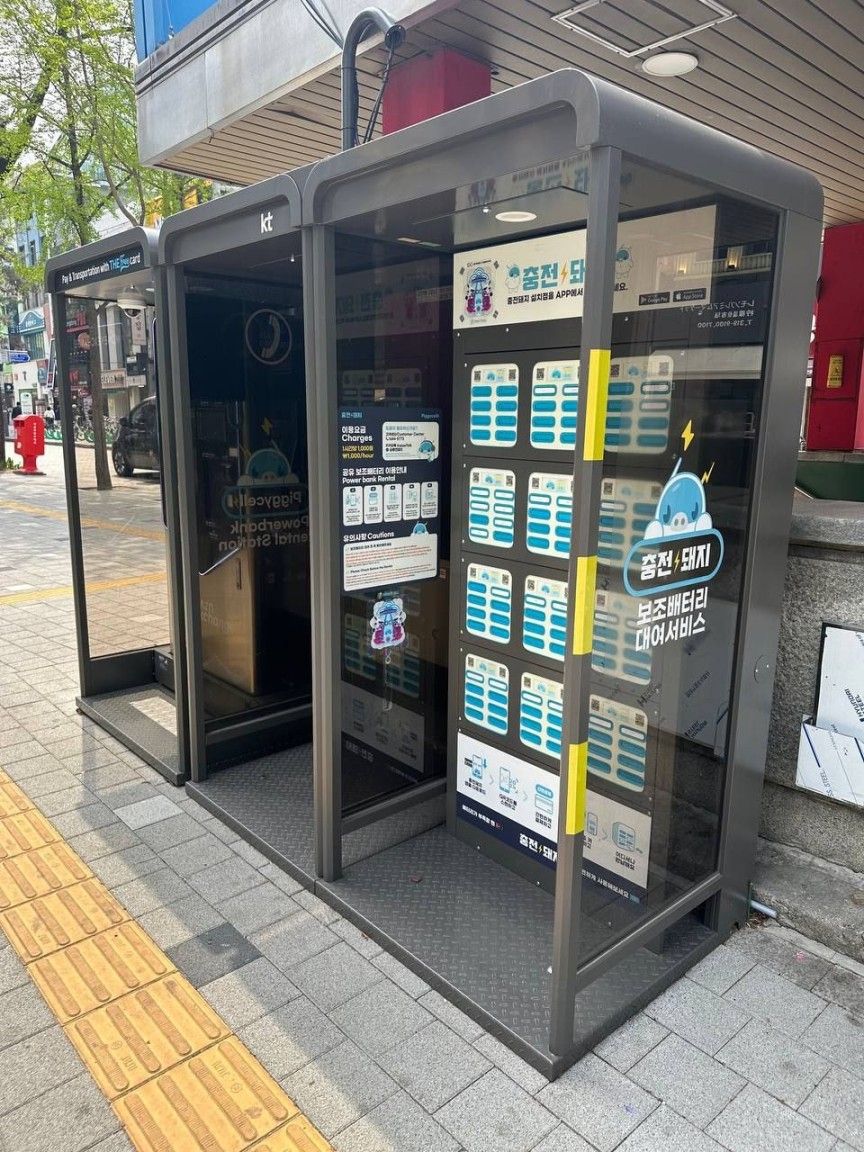
The core models of the project include "Charge-to-Earn" and "Dominate-to-Earn". The former allows users to earn token rewards when renting power banks, while the latter enables holders to share infrastructure revenue through regional device NFTs.
Specifically, "Charge-to-Earn" allows users to earn PIGGY token rewards directly by borrowing power banks and charging based on duration, turning daily consumption into asset accumulation; "Dominate-to-Earn" allows users to purchase NFTs bound to physical devices, becoming "shareholders" of regional infrastructure and sharing the revenue generated by the devices proportionally.
Funding Background and Team Information
In February 2025, Piggycell announced the completion of a $10 million seed round. Investors include Animoca Brands, ICP HUBS, as well as traditional Korean financial institutions such as Shinhan Financial Group and Hana Financial Group. DWF Labs also participated as a public partner.
Piggycell's core team is led by co-founder John Lee, who has extensive experience in the Web2 infrastructure sector and previously successfully operated Korea's portable charging network Chungjeondwaeji. Under his leadership, the company has successfully transitioned from a traditional Web2 business to a Web3 platform.
Tokenomics
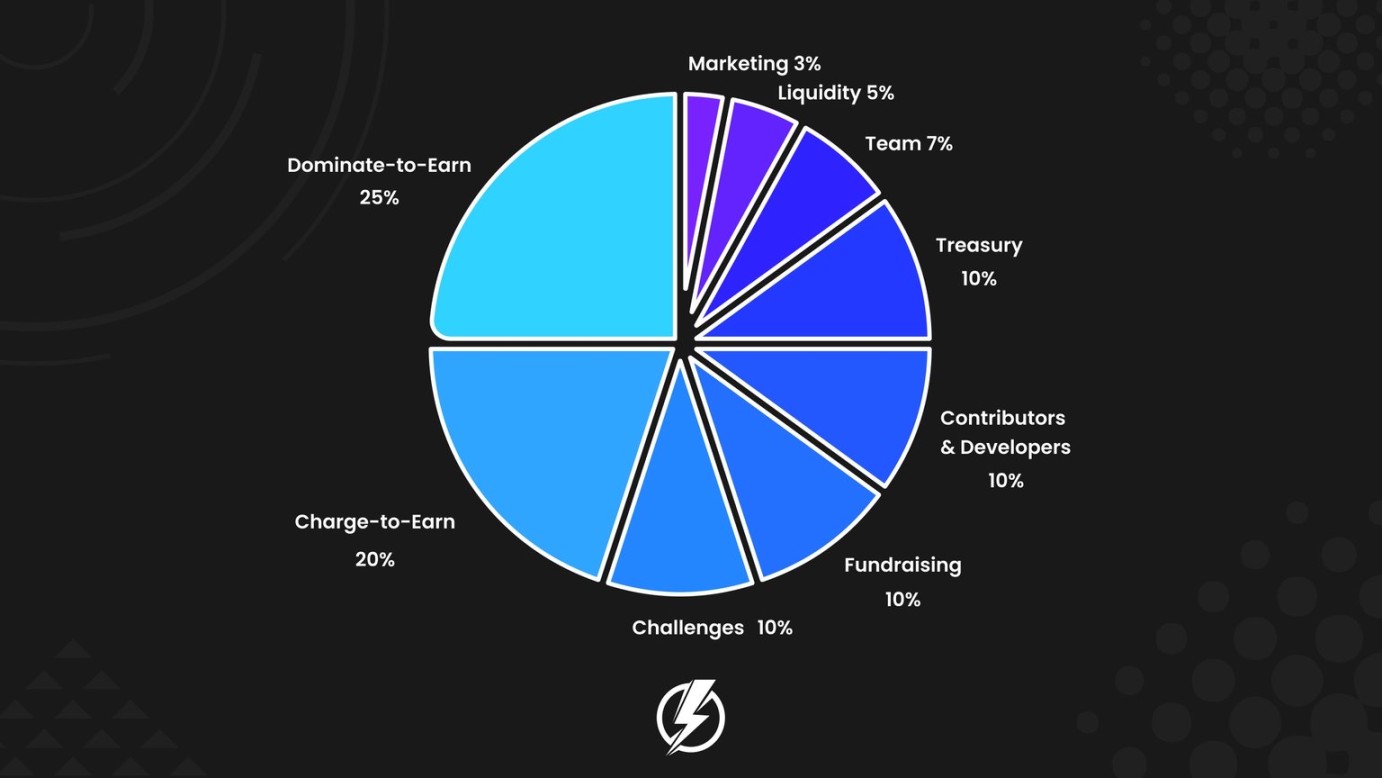
The project token adopts a dual-chain architecture, with 80% of the tokens deployed on BNB Chain and 20% on the ICP network.
The total supply of PIGGY is 100 million tokens, with allocations covering institutions, team, community incentives, and more: institutions account for 10%, team 7%, treasury 10%, user holdings 25%, charging behavior rewards 20%, task challenges 10%, partners 10%, liquidity 5%, and marketing 3%. The current circulating supply is about 7.2458 million tokens.
Despite the strong market performance of the token, the community has noted that Piggycell's airdrop and Galxe rewards have not yet been distributed, drawing attention from some users.
User Experience and Future Plans
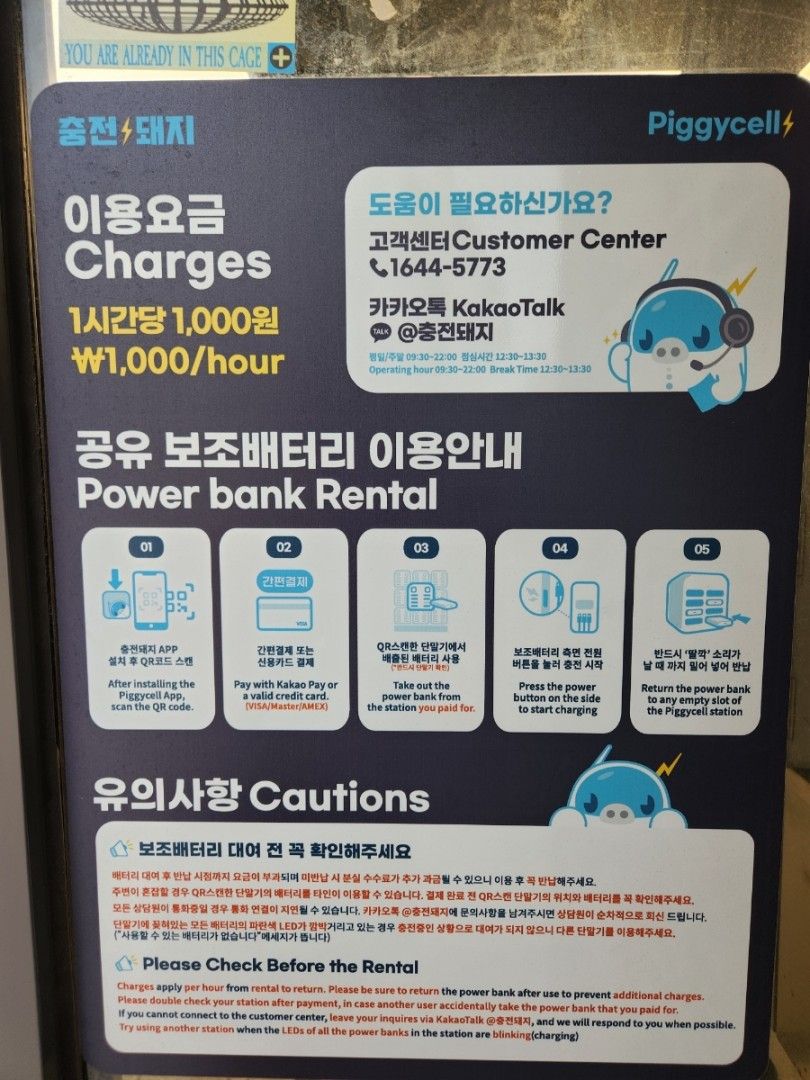
Unlike most Web3 applications with complex operations, Piggycell maintains Web2-level convenience: users can borrow power banks by simply scanning a QR code, supports local payment tools such as Kakao Pay, and there are no restrictions on where to return the devices. The charging standard is 1,000 KRW per hour.
In the future, Piggycell plans to launch an "Energy as a Service" (EaaS) platform, allowing individuals or merchants to register and lease energy devices (such as portable power banks and wall chargers), with automated revenue distribution via smart contracts. In addition, leveraging on-chain data, the platform will also explore carbon credit issuance and ESG compliance solutions, further expanding RWA application scenarios.
Disclaimer: The content of this article solely reflects the author's opinion and does not represent the platform in any capacity. This article is not intended to serve as a reference for making investment decisions.
You may also like
The AI boom may follow the path of the 19th-century railway bubble, and builders may not be the ultimate winners
Goldman Sachs analyst Bobby Molavi compared the current situation to the 19th-century British railway mania: 500 companies spent more than the nation's annual income building 8,000 miles of railway, with most early investors losing out, while the real beneficiaries were the later "passengers." He pointed out that the current AI craze is driven by both debt and momentum, and that the S&P 500’s forward P/E ratio of 18x is only "a bit cheaper." Whether the builders can retain value is uncertain, and history does not offer an optimistic answer.

If Anthropic's IPO goes smoothly and the stock price rises next week, then everything remains the same for AI. Otherwise, some companies will go bankrupt.
The shrinking valuations of two major giants have triggered a chain reaction—investors are adopting more conservative revenue multiples for AI startups and are directly halting high-valuation financing for companies with zero revenue. Multiple venture capital firms have advised their portfolio companies to lower valuation expectations and to quickly build up cash reserves. Market participants warn that the outcome of Anthropic’s IPO will be a barometer for the industry: if successful, the boom will continue; if it fails, some companies may face elimination.
After the Brazilian election, political discount deepens; Morgan Stanley remains bullish on Petrobras (PBR.US), focusing on fuel pricing and dividends
Morgan Stanley still maintains its most optimistic "Overweight" rating, but has lowered its year-end 2027 target price from $31 to $25.

Corning (GLW.US) receives initial "Buy" rating from Jefferies! AI factories driving a fiber optic rush, with a potential global supply gap of up to 30%
For Corning, the recent profit growth mainly comes from the expansion of AI clusters. As the number of optical links crossing cabinets and campuses increases, customers need to deploy more optical fibers within limited conduit and cabinet space, thus driving demand for high-density optical cables and connection systems.

Crypto prices
More


