
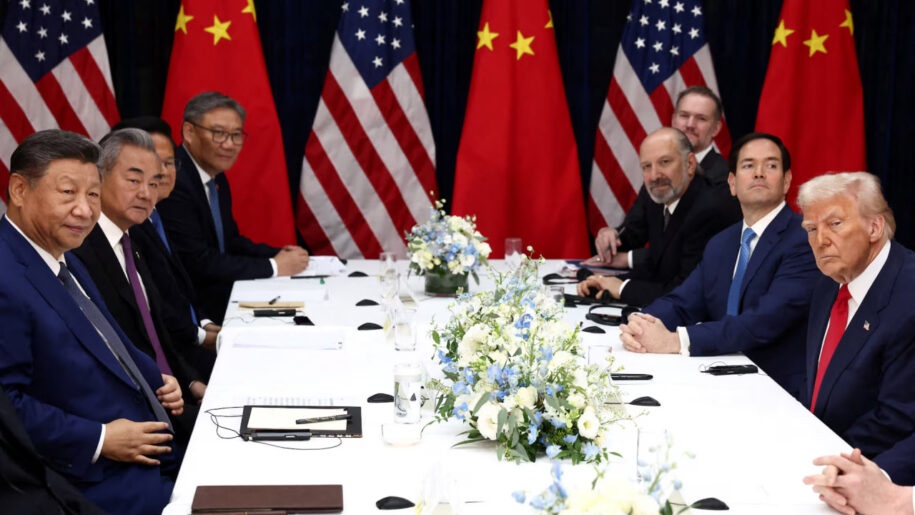
U.S. President Donald Trump and Chinese President Xi Jinping reached a long-awaited understanding on Thursday that could reshape the global trade landscape.
Following their first in-person talks since 2019, held in Busan, South Korea, both leaders agreed to lower tariffs and strengthen cooperation on key economic and security fronts.
The meeting concluded with Trump announcing a reduction in tariffs on Chinese imports—from 57% to 47%—including a sharp cut in levies on fentanyl precursor chemicals from 20% to 10%. In return, Beijing committed to stricter enforcement against illicit fentanyl exports, resumed large-scale U.S. soybean purchases, and guaranteed continued exports of rare earth materials critical to high-tech industries. Trump praised the meeting as “12 out of 10,” calling it a turning point in U.S.–China relations.
Trade Relief, Market Caution
Despite the breakthrough, global markets reacted cautiously. Asian indexes fluctuated as the details emerged, with the Shanghai Composite falling from a decade high and U.S. soybean futures dipping slightly. Analysts suggested that the deal was largely anticipated, limiting the market’s reaction.
“Investors were hoping for a full removal of fentanyl-related tariffs,” said Kyle Rodda of Capital.com. “That explains the muted price action.”
The agreement, sealed during the APEC summit, also postpones the U.S. plan for 100% tariffs on Chinese goods and delays China’s proposed export restrictions on rare earth elements—a vital step for industries from electric vehicles to defense manufacturing. Only India and Brazil remain under higher tariff rates among major U.S. trade partners.
After the Fed’s Rate Cut: What This Means for Crypto
The diplomatic breakthrough comes just one day after the Federal Reserve ended its quantitative tightening (QT) cycle and delivered a long-expected rate cut. Together, the easing of trade tensions and the Fed’s dovish turn could inject fresh liquidity into global markets—conditions that historically favor risk assets like Bitcoin and Ethereum.
Lower tariffs may ease inflationary pressures, giving central banks more room to maintain looser monetary policy. This, in turn, often leads to weaker dollar momentum and renewed appetite for alternative stores of value, including digital assets. Crypto markets, which initially wobbled after the Fed decision, could soon benefit from improved global sentiment and capital flows shifting toward speculative assets.
Analysts note that the trade truce and monetary easing align with a broader “risk-on” environment reminiscent of early bull-market phases. If the rare earth and technology supply chains stabilize, it could also support blockchain infrastructure growth, given the sector’s dependence on advanced hardware and energy inputs.
Strategic and Geopolitical Balancing
While Trump celebrated the meeting’s success, experts cautioned that both nations remain rivals in technology and manufacturing. Xi described the frictions as “normal,” emphasizing that cooperation must continue despite underlying competition. Beijing is also pushing for fewer restrictions on U.S. tech exports and relief from new port fees targeting its maritime sector, while Washington continues forging alternative rare earth alliances with Japan and Southeast Asia.
The pair avoided direct discussion on chip exports, with Trump clarifying that no new support was promised for Nvidia’s AI hardware shipments. Still, the symbolism of renewed dialogue between the world’s two largest economies signals a potential thaw after years of escalating trade wars.
A Cautious Optimism Ahead
Investors are now weighing whether this trade detente will last longer than previous ceasefires. If Beijing follows through on its commitments and Washington maintains tariff relief, global supply chains could stabilize, boosting industrial demand and market confidence heading into 2026.
For crypto traders, the timing is critical. With QT officially over and geopolitical risk easing, digital assets could see renewed institutional interest—especially if liquidity expands and inflation expectations fall. The coming weeks may reveal whether Bitcoin and other major tokens can capitalize on this new macro tailwind.





