
Federal Reserve Lowers Interest Rates, Ends Balance Sheet Reduction

The Federal Reserve cut rates by 25 bps to 3.75–4.00% and ended QT early, signaling cautious easing amid rising labor market risks.
The Federal Reserve lowered its benchmark interest rate by 25 basis points to 3.75–4.00% on Wednesday, marking its second rate cut this year.
The central bank said economic growth remains moderate while job gains have slowed and unemployment has edged up. Inflation, however, remains “somewhat elevated,” keeping the Fed cautious about further policy easing.
Fed Balances Inflation and Labor Market Risks
The decision also confirmed that the Fed will end quantitative tightening on December 1, effectively pausing its balance sheet reduction earlier than expected.
The statement highlighted growing downside risks to employment, a shift from prior meetings that focused mainly on inflation.
The Fed said it will assess future policy “based on incoming data” and the “balance of risks” to its dual mandate.
Chair Jerome Powell and most committee members backed the move, while two dissented. Stephen Miran supported a deeper 50 bps cut, citing weaker job data.
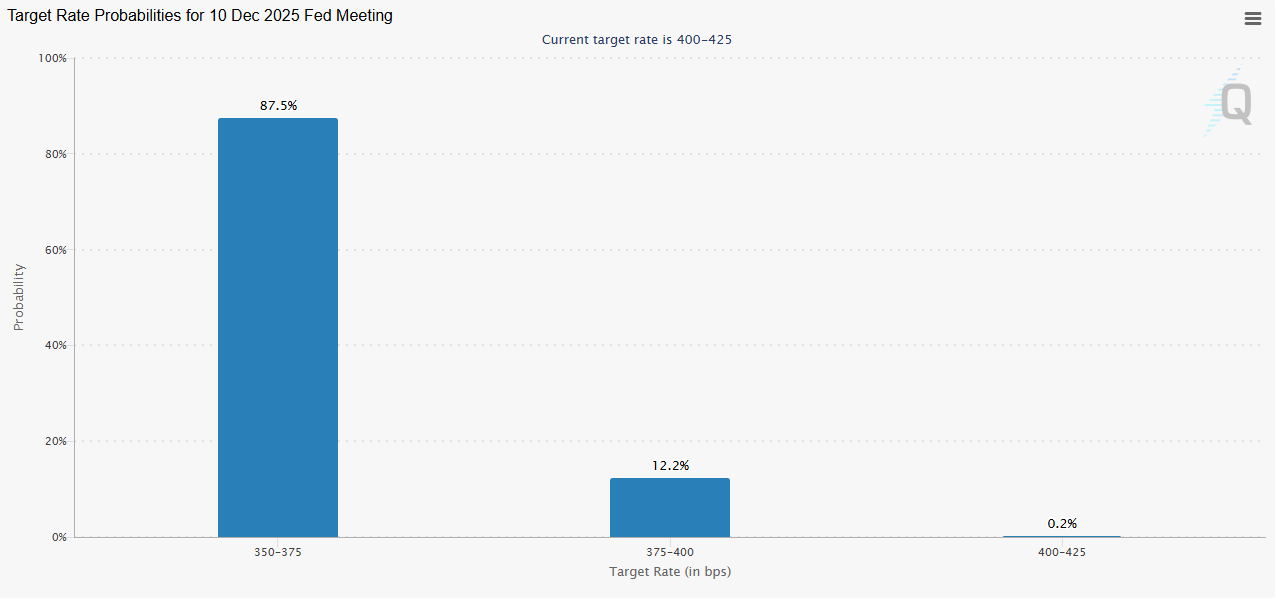 Market Expectations For December Rate Cuts. Source:
Economic Context
Available indicators show that growth continues at a moderate pace, but key labor measures are softening. The unemployment rate remains low, though the Fed acknowledged it has risen slightly since the summer.
Inflation has picked up since early 2025, reinforcing concerns that prices could stay above the 2% target longer than expected.
Futures markets now price a 70% chance of another 25 bps cut in December.
However, Powell is expected to stress a data-driven approach at the press conference.
Outlook for Crypto Markets
The policy shift may bolster risk appetite in the short term. Bitcoin and major altcoins often benefit when liquidity expands and bond yields fall.
Major KOLs such as MicroStrategy’s Michael Saylor and Robert Kiosaki earlier predicted Bitcoin price to go beyond $150,000 by the end of 2025.
However, persistent inflation could limit broader enthusiasm. If inflation expectations rise again, risk assets—including crypto—may face renewed pressure from stronger dollar flows.
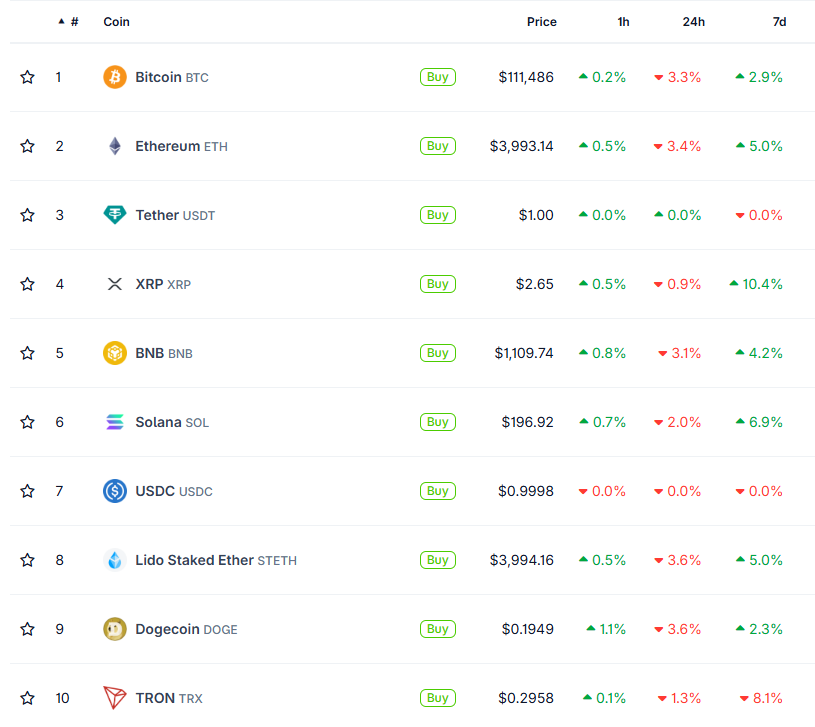 Crypto Market Remains Unresponsive To the Expected Rate Cuts. Source:
Analysts say the balance between easing and inflation will define the next phase of the crypto market.
Sustained liquidity support could lift Bitcoin above key resistance levels, while a hawkish tone in December may reverse those gains.
Disclaimer: The content of this article solely reflects the author's opinion and does not represent the platform in any capacity. This article is not intended to serve as a reference for making investment decisions.
You may also like
The AI boom may follow the path of the 19th-century railway bubble, and builders may not be the ultimate winners
Goldman Sachs analyst Bobby Molavi compared the current situation to the 19th-century British railway mania: 500 companies spent more than the nation's annual income building 8,000 miles of railway, with most early investors losing out, while the real beneficiaries were the later "passengers." He pointed out that the current AI craze is driven by both debt and momentum, and that the S&P 500’s forward P/E ratio of 18x is only "a bit cheaper." Whether the builders can retain value is uncertain, and history does not offer an optimistic answer.

If Anthropic's IPO goes smoothly and the stock price rises next week, then everything remains the same for AI. Otherwise, some companies will go bankrupt.
The shrinking valuations of two major giants have triggered a chain reaction—investors are adopting more conservative revenue multiples for AI startups and are directly halting high-valuation financing for companies with zero revenue. Multiple venture capital firms have advised their portfolio companies to lower valuation expectations and to quickly build up cash reserves. Market participants warn that the outcome of Anthropic’s IPO will be a barometer for the industry: if successful, the boom will continue; if it fails, some companies may face elimination.
After the Brazilian election, political discount deepens; Morgan Stanley remains bullish on Petrobras (PBR.US), focusing on fuel pricing and dividends
Morgan Stanley still maintains its most optimistic "Overweight" rating, but has lowered its year-end 2027 target price from $31 to $25.

Corning (GLW.US) receives initial "Buy" rating from Jefferies! AI factories driving a fiber optic rush, with a potential global supply gap of up to 30%
For Corning, the recent profit growth mainly comes from the expansion of AI clusters. As the number of optical links crossing cabinets and campuses increases, customers need to deploy more optical fibers within limited conduit and cabinet space, thus driving demand for high-density optical cables and connection systems.

Crypto prices
More


