
OceanPal’s $120 Million NEAR Push Sends Stock Plummeting By Nearly 21%

OceanPal’s $120 million NEAR bet marks a bold shift toward digital assets and AI infrastructure, but the sharp drop in its stock price shows investors remain wary of its high-stakes strategy.
OceanPal Inc. announced that it has raised $120 million to launch its digital asset treasury strategy, centered on the NEAR Protocol’s native token. The Nasdaq-listed shipping firm becomes the latest traditional company to diversify into digital assets, reflecting a broader trend of corporate adoption across the crypto sector.
Still, OceanPal’s shares fell following the announcement, highlighting possible investor skepticism about its pivot toward blockchain-based holdings.
OceanPal Dives into Digital Assets with $120 Million NEAR Bet
According to the press release, OceanPal closed its $120 million private investment in public equity (PIPE) to fund SovereignAI Services LLC. It is a subsidiary tasked with commercializing the NEAR Protocol.
SovereignAI’s treasury goal is to acquire at least 10% of NEAR’s token supply, making it one of the leading institutional holders of this asset.
“As a result of this transaction, OP, through SovereignAI, is expected to serve as the leading public investment vehicle to gain exposure to NEAR, the NEAR Protocol’s native token, and the foundational AI infrastructure needed to enable agentic commerce,” the press release reads.
The company also plans to leverage the capital generated through its treasury management strategy to develop a confidential AI cloud infrastructure built on NVIDIA technology and powered by NEAR.
Notable investors backed the transaction, including Kraken, Proximity, Fabric Ventures, and the G20 Group. OceanPal also announced new executive appointments to bolster the digital asset venture.
Sal Ternullo joins as co-CEO, and David Schwed is COO. The advisory board features NEAR CEO Illia Polosukhin and advisors from OpenAI and Fabric Ventures.
“This is a public company launching as an active, strategic partner with the NEAR Foundation to advance a shared vision of universal AI sovereignty by leveraging the NEAR Protocol’s vertically integrated AI products and rails, which were purpose-built for these exact use cases. We plan to use this decentralized, confidential compute infrastructure to capitalize on the explosive demand for privacy-first, regulatory compliant AI across enterprise markets including finance, healthcare, and media while enabling businesses and consumers to maintain control and ownership,” Ternullo said.
Market Reaction and Stock Performance
While OceanPal pursues its new crypto and AI strategy, it says global shipping operations will continue. Yet, recent financial results point to challenges.
As of June 2025, revenue was $3.08 million, down 54.3% year over year. The company’s net loss was $5.22 million, and its profit margin was -169.53%.
Meanwhile, Google Finance data showed that OceanPal’s latest announcement caused the stock prices to drop. OP closed at $1.74, down 20.91%. Overall, the stock has faced a tough time this year, decling 94% year-to-date.
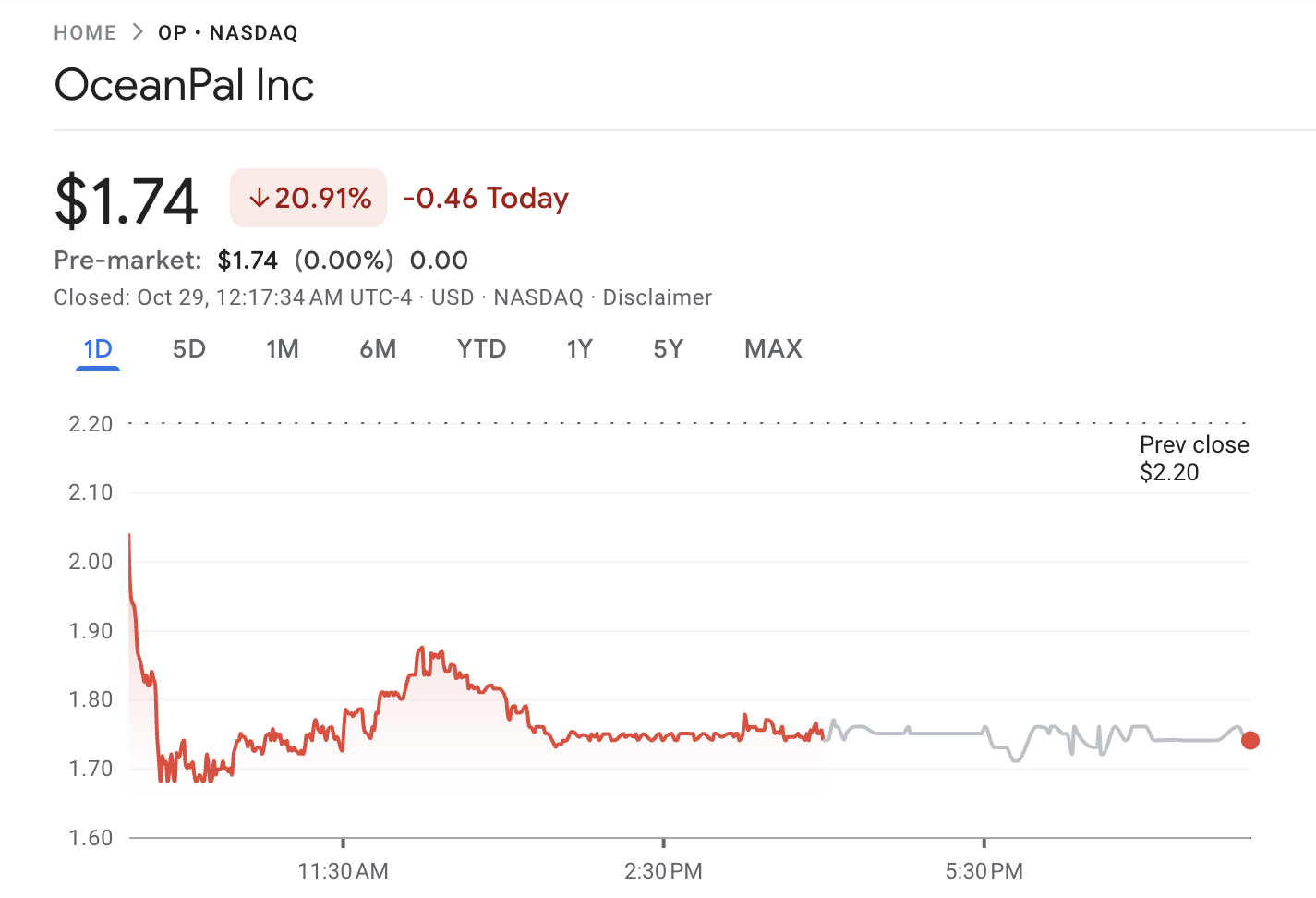 OceanPal Stock Performance. Source:
Google Finance
NEAR Protocol’s native token has also declined alongside OceanPal’s stock. According to BeInCrypto Markets data, NEAR traded at $2.24 at press time, showing a 4.37% loss over the past 24 hours and a 20.7% decline over the month.
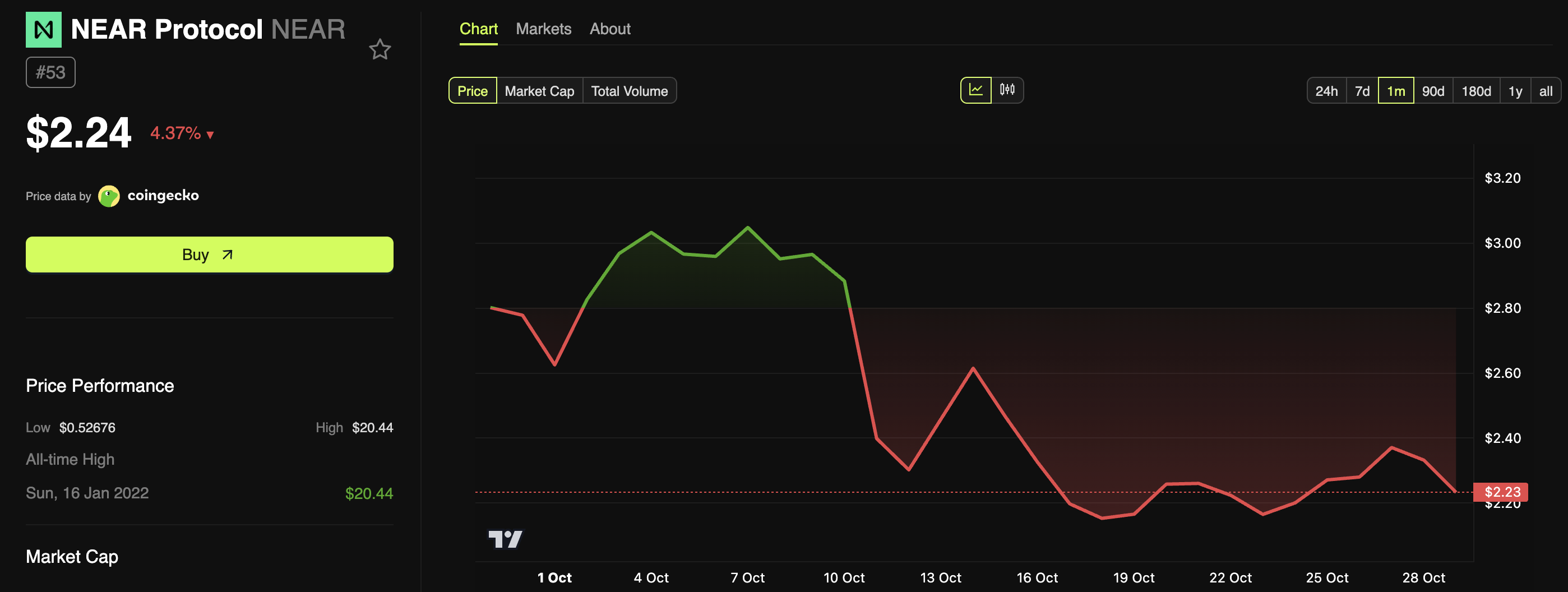 NEAR Token Price Performance. Source:
BeInCrypto Markets
As both OceanPal and NEAR face market headwinds, the success of this ambitious pivot into blockchain-powered AI remains to be seen.
Disclaimer: The content of this article solely reflects the author's opinion and does not represent the platform in any capacity. This article is not intended to serve as a reference for making investment decisions.
You may also like
The AI boom may follow the path of the 19th-century railway bubble, and builders may not be the ultimate winners
Goldman Sachs analyst Bobby Molavi compared the current situation to the 19th-century British railway mania: 500 companies spent more than the nation's annual income building 8,000 miles of railway, with most early investors losing out, while the real beneficiaries were the later "passengers." He pointed out that the current AI craze is driven by both debt and momentum, and that the S&P 500’s forward P/E ratio of 18x is only "a bit cheaper." Whether the builders can retain value is uncertain, and history does not offer an optimistic answer.

If Anthropic's IPO goes smoothly and the stock price rises next week, then everything remains the same for AI. Otherwise, some companies will go bankrupt.
The shrinking valuations of two major giants have triggered a chain reaction—investors are adopting more conservative revenue multiples for AI startups and are directly halting high-valuation financing for companies with zero revenue. Multiple venture capital firms have advised their portfolio companies to lower valuation expectations and to quickly build up cash reserves. Market participants warn that the outcome of Anthropic’s IPO will be a barometer for the industry: if successful, the boom will continue; if it fails, some companies may face elimination.
After the Brazilian election, political discount deepens; Morgan Stanley remains bullish on Petrobras (PBR.US), focusing on fuel pricing and dividends
Morgan Stanley still maintains its most optimistic "Overweight" rating, but has lowered its year-end 2027 target price from $31 to $25.

Corning (GLW.US) receives initial "Buy" rating from Jefferies! AI factories driving a fiber optic rush, with a potential global supply gap of up to 30%
For Corning, the recent profit growth mainly comes from the expansion of AI clusters. As the number of optical links crossing cabinets and campuses increases, customers need to deploy more optical fibers within limited conduit and cabinet space, thus driving demand for high-density optical cables and connection systems.

Crypto prices
More


