
HYPE Price Downtrend Deepens As Funding Rate Collapses To 6-Month Low

HYPE faces heavy selling as Futures traders bet against recovery. Holding $38.9 support is crucial to avoid a drop toward $35.7 in the near term.
Hyperliquid (HYPE) continues to face strong selling pressure as its price trend remains firmly bearish. The altcoin has struggled to regain momentum following last week’s market correction.
A growing bearish sentiment in the Futures market is amplifying the decline, with traders actively betting against a price recovery.
Hyperliquid Traders Are Bearish
The funding rate for Hyperliquid has dropped to a six-month low, signaling a sharp rise in bearish sentiment. The funding rate measures the balance between long and short positions in the Futures market. A negative funding rate indicates that short contracts dominate — a scenario now clearly visible with HYPE.
This trend suggests that Futures traders are expecting the token’s value to fall further and are positioning themselves to profit from the decline. The sustained dominance of shorts over longs highlights a lack of confidence in a near-term recovery.
Want more token insights like this? Sign up for Editor Harsh Notariya’s Daily Crypto Newsletter here.
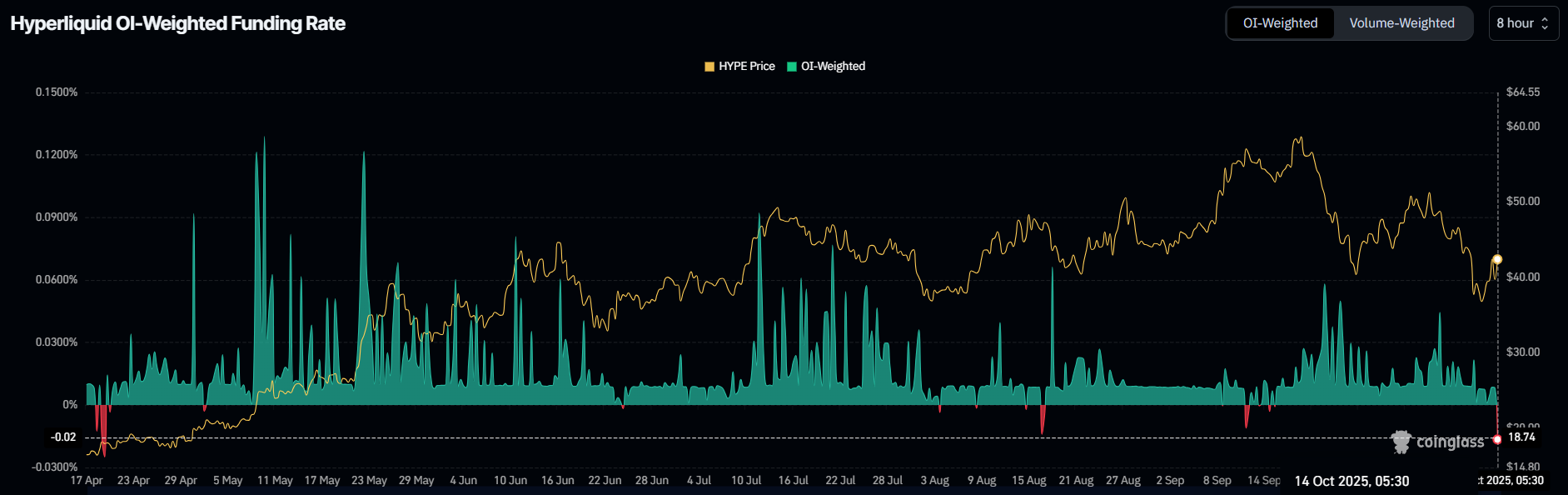 HYPE Open Interest. Source:
Coinglass
On the macro level, the Moving Average Convergence Divergence (MACD) indicator recently showed potential signs of a bullish crossover. However, the signal failed to materialize as selling momentum intensified, pushing the indicator deeper into the negative territory.
The increasing divergence between the MACD lines suggests further downside ahead. Unless momentum shifts meaningfully in favor of buyers, Hyperliquid may continue to struggle. The altcoin’s declining volume also supports this outlook.
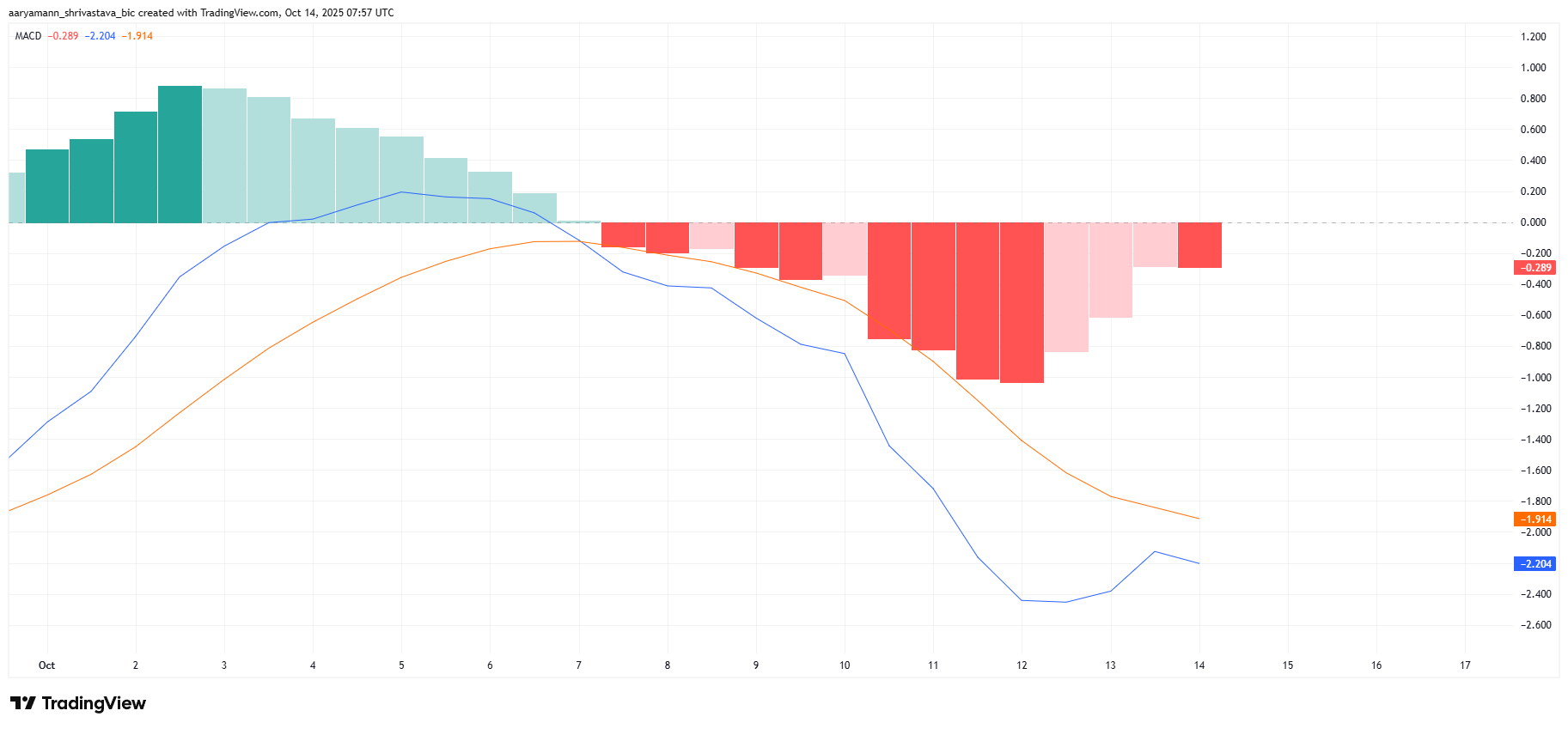 HYPE MACD. Source:
TradingView
HYPE Price Downtrend Strengthens
HYPE is trading at $38.8 at the time of writing, just below the critical $38.9 support level. The current downtrend suggests the potential for another leg lower in the near term.
In the short-term timeframe, HYPE could drop toward the $36.7 support level. Losing this line of defense may trigger additional selling, pushing prices further down to $35.7 if bearish sentiment persists among investors.
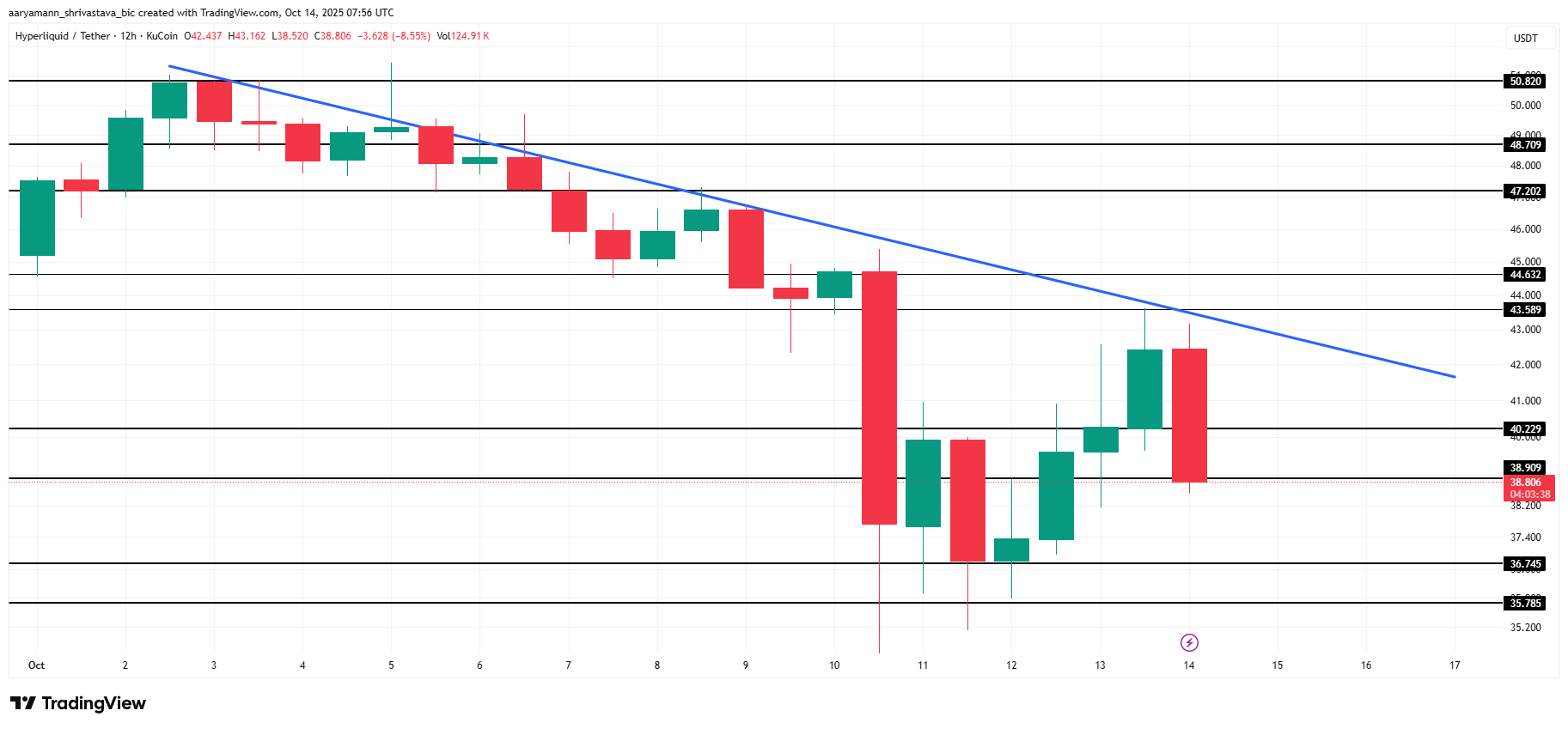 HYPE Price Analysis. Source:
TradingView
Conversely, if HYPE manages to hold above $38.9 and attract renewed buying activity, it could rise past $40.2 and challenge the downtrend. A decisive breakout above $43.5 would invalidate the bearish thesis and potentially signal a trend reversal.
Disclaimer: The content of this article solely reflects the author's opinion and does not represent the platform in any capacity. This article is not intended to serve as a reference for making investment decisions.
You may also like

Wall Street giants collectively raise rate hike forecasts, US Treasury futures continue to fall, gold drops over 1% to break 4000
After the US October CPI exceeded expectations, Goldman Sachs and Nomura added a forecast for an interest rate hike in March next year, while Deutsche Bank included a forecast for a rate hike in January next year. Currently, the market has fully priced in a 25 basis point rate hike in December, with a 13% probability for a 50 basis point hike. On Wednesday, the US Treasury spot market was closed, but Treasury futures continued to fall, with corresponding yields rising by about 2 to 4 basis points, and spot gold came under pressure, dropping by 1.1%.

No Need to Worry About the Cooling Down of AI Data Center Construction? The US Import Boom Is Unlikely to Subside in the Short Term, Real Impact May Come in 2029
It takes an average of 4.8 years from finalizing investment to starting construction of a data center project, and an additional 2.6 years from construction start to becoming operational. Servers usually cannot be installed until after the building structure and racks are completed. For trade partners such as Taiwan (China), South Korea, and Mexico who rely on US data center supply chain demand, the inertia in construction timelines provides at least a one- to two-year buffer for future exports.

Federal Reserve Major Debate: When Should the Tenure of “Number Three” Williams End?
The main point of contention is whether Williams should step down in June 2028, upon completing a full 10-year term, or in June 2027, when he reaches the mandatory retirement age of 65. Analysts point out that the Federal Reserve Board holds ultimate discretion; if he leaves early, Fed Chair Waller would be able to assert greater control over the appointment to this critical position. However, forcing Williams to shorten his term could easily be interpreted as political manipulation. Williams himself is expected to serve until June 2028.

Crypto prices
More


