
What should we know behind the $2 billion liquidation?

When the harsh reality of leverage becomes apparent, every participant must remember: risk management is always more important than chasing returns.
When the brutality of leverage becomes undeniable, every participant must remember: risk control is always more important than chasing returns.
Source: cryptoslate
Compiled by: Blockchain Knight
On October 10, 2025, the cryptocurrency market experienced an epic deleveraging storm.
As fervent bullish traders were forced to confront the iron laws of the market, over 20 billions USD in leveraged positions were liquidated within an hour. Bitcoin plunged 15% in a single day, altcoin liquidity nearly dried up, and even seasoned players were caught off guard by the bloodbath.
This massacre was triggered by multiple macro-level bearish factors: escalating trade tensions sparked panic selling of risk assets.
Bitcoin plummeted 13% within an hour, with altcoins suffering even more severe slippage. Tokens like ATOM nearly approached zero on exchanges lacking liquidity; although some losses were later recovered, the market had already been severely damaged.
Total liquidations across centralized and decentralized platforms exceeded 20 billions USD, setting a new record for the largest single-day liquidation in cryptocurrency history.
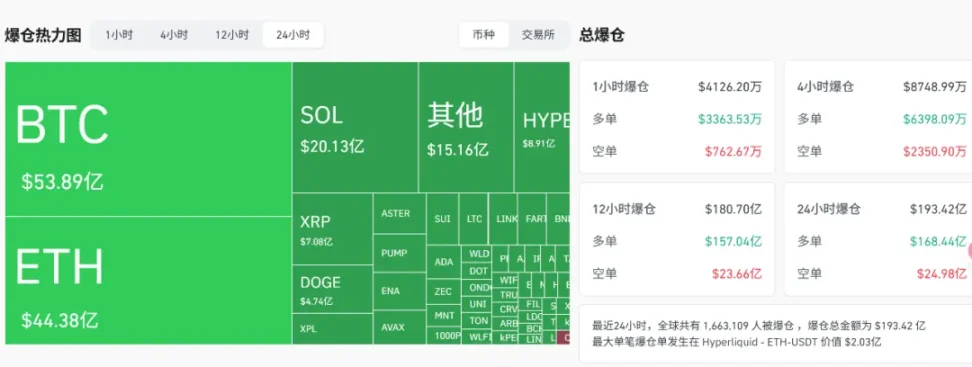
This was not a mild, gradual decline—weeks of bullish sentiment and high open interest evaporated overnight. 65 billions USD in open positions disappeared from the system, and the market structure instantly reverted to levels from several months prior.
On the surface, it appeared to be a "retail defeat," but Scott Melker of "The Wolf of Wall Street" and several analysts pointed out the truth: "Those liquidated were not retail investors, but crypto-native traders using leverage on decentralized exchanges. This was a leverage purge of the most steadfast holders."
The data confirms this: new market entrants mainly allocated funds to spot ETFs or mainstream assets, thus avoiding the impact of DeFi leverage mechanisms. The real victims were high-leverage perpetual contract players, primarily crypto veterans rather than novices.
According to Bitwise fund manager Jonathan's review, the root cause lies in market structure flaws. Perpetual contracts are a zero-sum game, and when the losing side's ability to pay collapses, systemic risk is triggered.
Soaring volatility led liquidity providers to withdraw, thin order books for altcoins caused price collapses, and automatic deleveraging mechanisms even mistakenly affected profitable positions.
Platforms like Hyperliquid profited in reverse through on-chain liquidity pools, buying assets at a discount during forced liquidations. By the close, even market-neutral sophisticated strategies were hit by operational delays and collateral liquidation issues.
Centralized exchanges, especially those with long-tail tokens, became disaster zones, while DeFi demonstrated resilience thanks to strict collateral standards and hard-coded price mechanisms.
For example, protocols like Aave require high-quality collateral to avoid death spirals triggered by stablecoin depegging. However, pain points remain: on some exchanges, USDe fell to $0.65, instantly wiping out related margin positions.
Price differences of up to $300 between exchanges created opportunities for arbitrageurs, but what is more alarming is that while 20 billions USD evaporated, spot buying remained stable.
Prices rebounded from extreme lows, and excess leverage was forcibly cleared from the market. As Jonathan said, the key to survival is not just directional judgment, but also operational capability and the art of liquidity management.
Bitwise CEO Hunter Horsley commented: "The largest single-day liquidation in Bitcoin history resulted in only a 15% drop, highlighting its inherent strength. This train is unstoppable."
The increasing correlation between cryptocurrencies and the macro environment means that such deleveraging events are not only inevitable market adjustment mechanisms, but also necessary pains for reshaping a healthy ecosystem.
When the brutality of leverage becomes undeniable, every participant must remember: risk control is always more important than chasing returns.
Disclaimer: The content of this article solely reflects the author's opinion and does not represent the platform in any capacity. This article is not intended to serve as a reference for making investment decisions.
You may also like

Wall Street giants collectively raise rate hike forecasts, US Treasury futures continue to fall, gold drops over 1% to break 4000
After the US October CPI exceeded expectations, Goldman Sachs and Nomura added a forecast for an interest rate hike in March next year, while Deutsche Bank included a forecast for a rate hike in January next year. Currently, the market has fully priced in a 25 basis point rate hike in December, with a 13% probability for a 50 basis point hike. On Wednesday, the US Treasury spot market was closed, but Treasury futures continued to fall, with corresponding yields rising by about 2 to 4 basis points, and spot gold came under pressure, dropping by 1.1%.

No Need to Worry About the Cooling Down of AI Data Center Construction? The US Import Boom Is Unlikely to Subside in the Short Term, Real Impact May Come in 2029
It takes an average of 4.8 years from finalizing investment to starting construction of a data center project, and an additional 2.6 years from construction start to becoming operational. Servers usually cannot be installed until after the building structure and racks are completed. For trade partners such as Taiwan (China), South Korea, and Mexico who rely on US data center supply chain demand, the inertia in construction timelines provides at least a one- to two-year buffer for future exports.

Federal Reserve Major Debate: When Should the Tenure of “Number Three” Williams End?
The main point of contention is whether Williams should step down in June 2028, upon completing a full 10-year term, or in June 2027, when he reaches the mandatory retirement age of 65. Analysts point out that the Federal Reserve Board holds ultimate discretion; if he leaves early, Fed Chair Waller would be able to assert greater control over the appointment to this critical position. However, forcing Williams to shorten his term could easily be interpreted as political manipulation. Williams himself is expected to serve until June 2028.

Crypto prices
More


