
Bitget executive predicts: There will be no "altcoin season" in this bull market—data and structural signals are confirming it

The COO of Bitget recently made a public statement:
“There will not be a traditional Altseason in this cycle.”
This is the first mainstream exchange to publicly deny the arrival of an Altseason, sparking heated discussion in the industry.
However, when we closely examine on-chain data and market structure, we may find—he might be right.
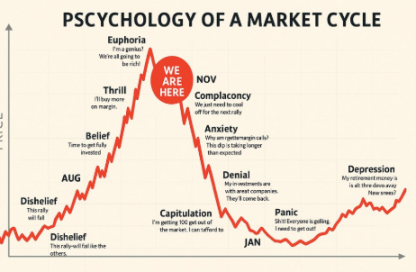
🔹1. No New Narrative Fuel
Every bull market has been driven by a new “narrative engine”:
2017: ICO frenzy
2021: DeFi and NFT
But in 2025, the market has yet to see innovations or trends of similar scale.
Although sectors like AI, RWA, and DePIN are each exciting in their own way, they have not formed a unified market consensus and lack the effect of “mass mania.”
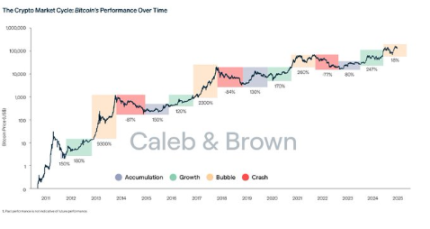
🔹2. Liquidity Remains Locked in BTC and ETH
Currently, market dominance is still firmly held by bitcoin and ethereum.
BTC Dominance remains high, and the ETH/BTC structure has not shown a clear breakout signal.
This means that market funds are mainly concentrated in “core assets,”
and the space for liquidity rotation among altcoins has been greatly compressed.
The premise of previous Altseasons was BTC moving sideways, ETH strengthening, and funds spilling over to small-cap assets,
but at present, this structure has not appeared.
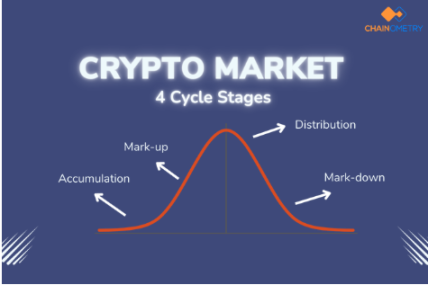
🔹3. Retail Investor Enthusiasm Is Absent
The 2021 Altseason was ignited by retail FOMO.
But now, after experiencing the last crash, retail investors are more cautious.
Social media sentiment indices are sluggish, and the growth of active on-chain wallets is slow,
indicating that **“mass sentiment” has yet to be reignited**.
🔹4. Institutional Fund Allocation Logic Has Changed
Driven by ETFs, institutional funds have shifted their focus to BTC and ETH.
The volatility and liquidity of small and mid-cap tokens
make them “not worth the risk” in institutional portfolios.
This means that the main source of funds in this bull market is completely different from 2021—
more rational, more concentrated, and less favorable for a broad altcoin rally.
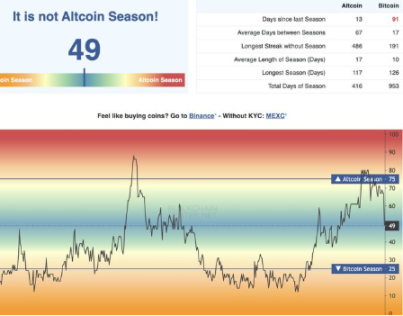
🔹5. Technicals and Volume Confirm: Lack of Systematic Breakthrough
From a trading structure perspective:
Most mainstream altcoins are still hovering below key resistance zones;
DEX trading volume is slowly climbing, but far from explosive;
On-chain capital flows do not show signs of widespread rotation.
In other words, what we are seeing now is only localized speculation and structural rebounds,
not a fully launched Altseason.
Conclusion:
The Bitget COO’s “no Altseason theory” is not alarmist.
Against the backdrop of limited macro liquidity, rational institutional allocation, and unrecovered retail confidence,
this cycle looks more like a “Bitcoin-Dominant Cycle”
rather than the all-out altcoin frenzy of 2021.
However, this does not mean there are no opportunities.
On the contrary, it means:
Funds will concentrate on a few projects that truly have narrative, technology, and liquidity support.
In the coming months,
investors should shift from “chasing pumps” to “selecting quality sectors,”
and look for strong coins with sustainability in a structural market.
✅ In one sentence:
“This is not an Altseason where everyone can make money, but a structural bull market where only a few understand rotation.”
Disclaimer: The content of this article solely reflects the author's opinion and does not represent the platform in any capacity. This article is not intended to serve as a reference for making investment decisions.
You may also like

Wall Street giants collectively raise rate hike forecasts, US Treasury futures continue to fall, gold drops over 1% to break 4000
After the US October CPI exceeded expectations, Goldman Sachs and Nomura added a forecast for an interest rate hike in March next year, while Deutsche Bank included a forecast for a rate hike in January next year. Currently, the market has fully priced in a 25 basis point rate hike in December, with a 13% probability for a 50 basis point hike. On Wednesday, the US Treasury spot market was closed, but Treasury futures continued to fall, with corresponding yields rising by about 2 to 4 basis points, and spot gold came under pressure, dropping by 1.1%.

No Need to Worry About the Cooling Down of AI Data Center Construction? The US Import Boom Is Unlikely to Subside in the Short Term, Real Impact May Come in 2029
It takes an average of 4.8 years from finalizing investment to starting construction of a data center project, and an additional 2.6 years from construction start to becoming operational. Servers usually cannot be installed until after the building structure and racks are completed. For trade partners such as Taiwan (China), South Korea, and Mexico who rely on US data center supply chain demand, the inertia in construction timelines provides at least a one- to two-year buffer for future exports.

Federal Reserve Major Debate: When Should the Tenure of “Number Three” Williams End?
The main point of contention is whether Williams should step down in June 2028, upon completing a full 10-year term, or in June 2027, when he reaches the mandatory retirement age of 65. Analysts point out that the Federal Reserve Board holds ultimate discretion; if he leaves early, Fed Chair Waller would be able to assert greater control over the appointment to this critical position. However, forcing Williams to shorten his term could easily be interpreted as political manipulation. Williams himself is expected to serve until June 2028.

Crypto prices
More


