Bitget App
Trade smarter
Buy cryptoMarketsTradeFuturesStocksEarnInstitutionAI & More
Trump's Trade War Resumes: Analysis of the Macroeconomic Factors Behind the Simultaneous Decline in Crypto and Stocks

Trump's Trade War Resumes: Analysis of the Macroeconomic Factors Behind the Simultaneous Decline in Crypto and Stocks

深潮深潮2025/10/15 03:20
Show original
By:深潮TechFlow

Tariffs = stock market/cryptocurrency plunge, but today is far more than that.

Tariffs = Stock Market/Cryptocurrency Crash, but today it's far more than that.

Author: Spicy Rich

Translation: TechFlow

Why did the stock market and cryptocurrencies crash today? — Bitcoin, Dow Jones Index, S&P 500 Index, and Nasdaq Index all plummeted.

The worst day since April.

Here are the main reasons behind the current market pain.

Main Triggers

US President Trump posted on the social platform Truth Social, mentioning the possibility of imposing "massive" new tariffs on goods from China.

At first, I thought all of this was over.

We all know, tariffs = stock market/cryptocurrency crash.

But unfortunately, it’s not over yet.

Tariffs are like an extra tax on imported goods, which makes it more expensive for American consumers to buy products.

Trump stated that these tariffs could reach as high as 60%, and even up to 100% for certain goods. He also mentioned the possibility of canceling a meeting with Chinese President Xi Jinping.

This news frightened investors, as it sounded like the start of another major trade war between the US and China.
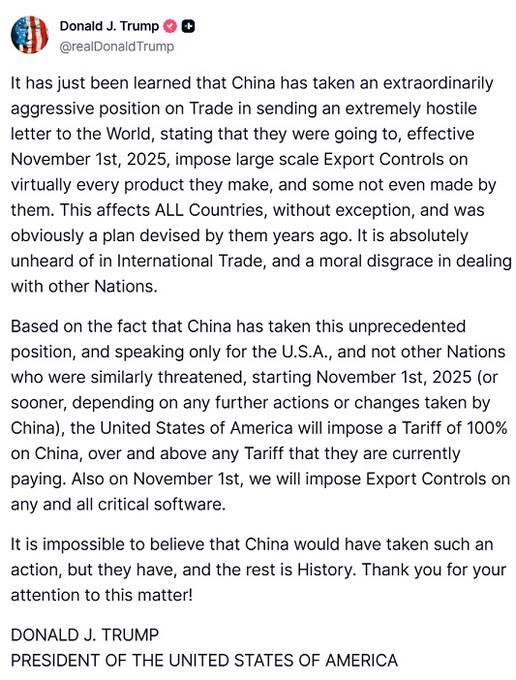
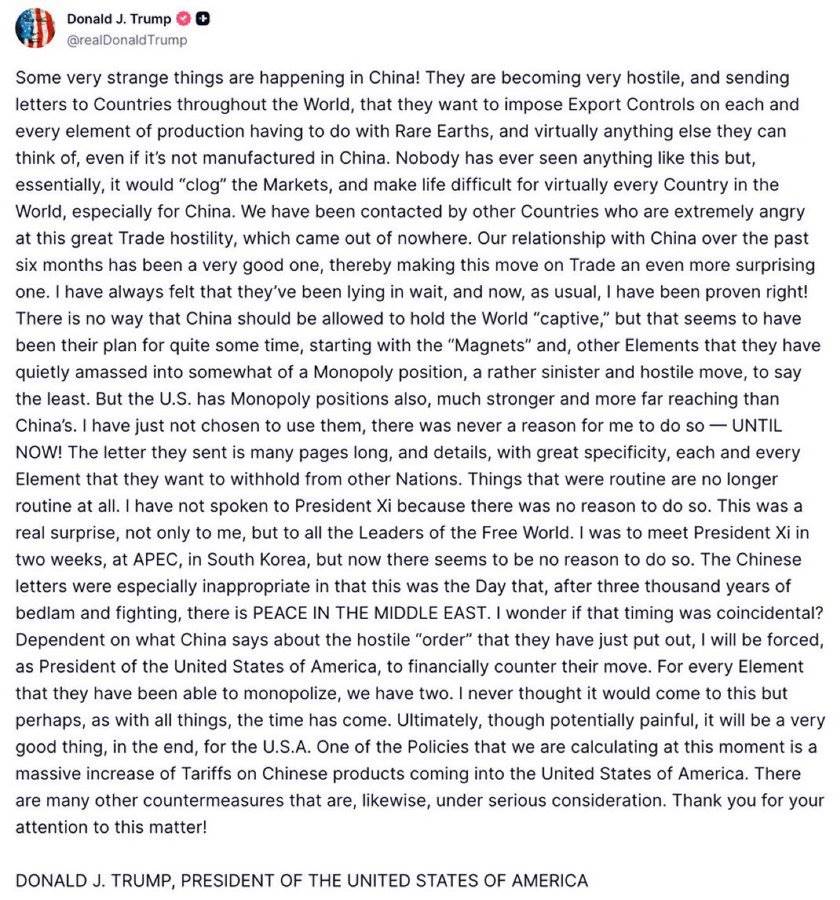
Trump's Trade War Resumes: Analysis of the Macroeconomic Factors Behind the Simultaneous Decline in Crypto and Stocks image 0

Trump's Trade War Resumes: Analysis of the Macroeconomic Factors Behind the Simultaneous Decline in Crypto and Stocks image 1

Why did Trump say this?

This is a response to actions taken by China.

China has introduced new regulations restricting the export of rare earth minerals—these rare earths are crucial materials for manufacturing tech products such as computer chips, electric vehicle batteries, and even weapons.

Additionally, since October 14, China has imposed fees on US ships docking at its ports, launched an antitrust investigation into Qualcomm, and stopped purchasing US soybeans.

These moves have made US companies worry that their supply chains could be affected.

Many US tech companies rely on Chinese components to produce products like smartphones, computers, and electric vehicles.

If rare earth minerals become harder to obtain, production will slow down, costs will rise, and innovation will be hampered.

This has made investors worry about future profits, leading them to sell off stocks in these industries.

Broader Economic Impact

Tariffs could trigger inflation—because companies will pass on the extra costs to consumers, causing prices to rise.

If trade shrinks, companies may reduce hiring or investment, and economic growth could slow down.

In the worst-case scenario, if the situation escalates, it could lead to a recession.
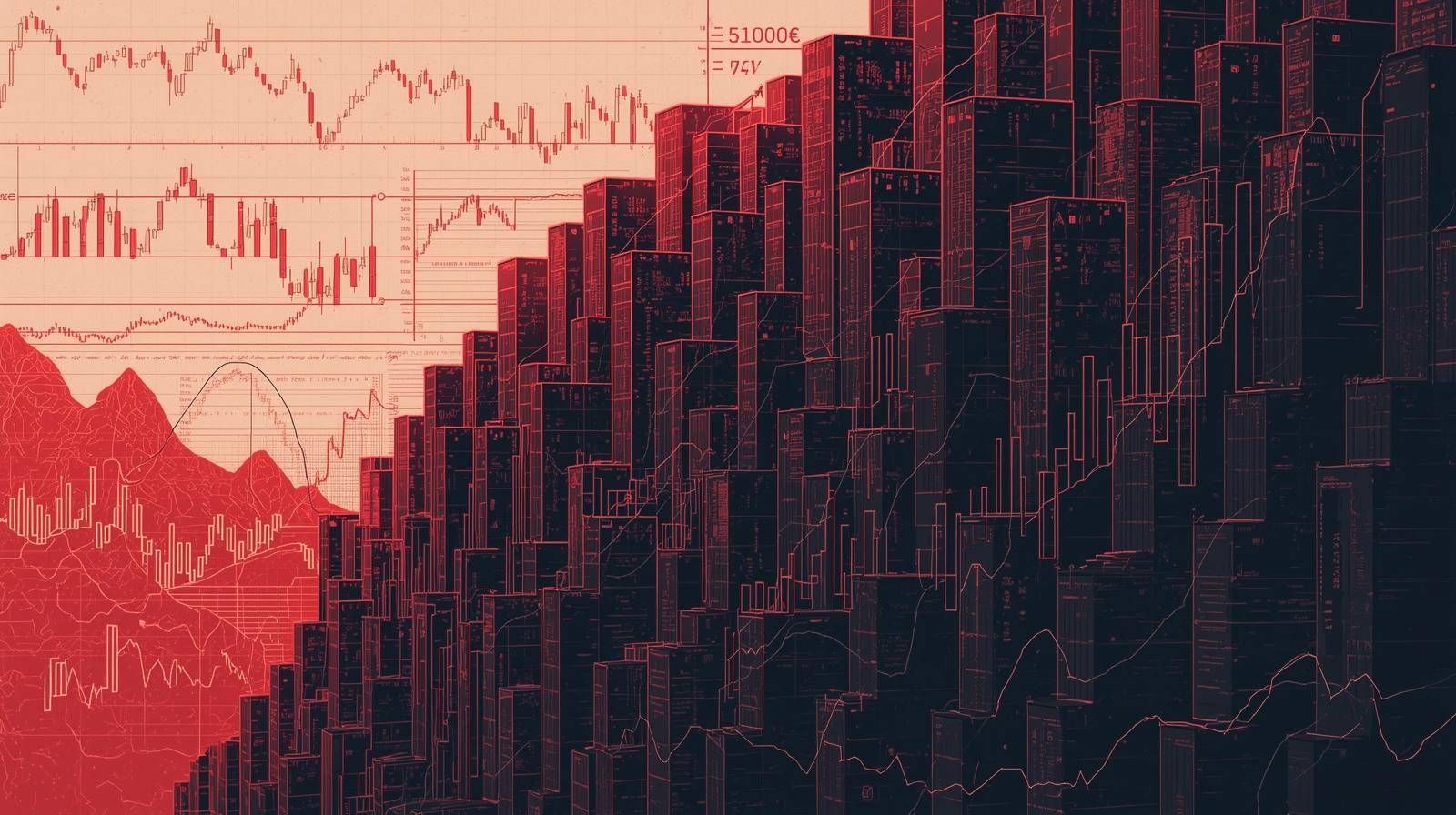
Trump's Trade War Resumes: Analysis of the Macroeconomic Factors Behind the Simultaneous Decline in Crypto and Stocks image 2

Another Contributing Factor

The US government shutdown has entered its 10th day, which also adds to the uncertainty.

Without funding, key services are forced to pause, and important economic data (such as employment reports) will also be delayed.

This makes it difficult for investors and the Federal Reserve to make informed decisions, further exacerbating overall concerns.
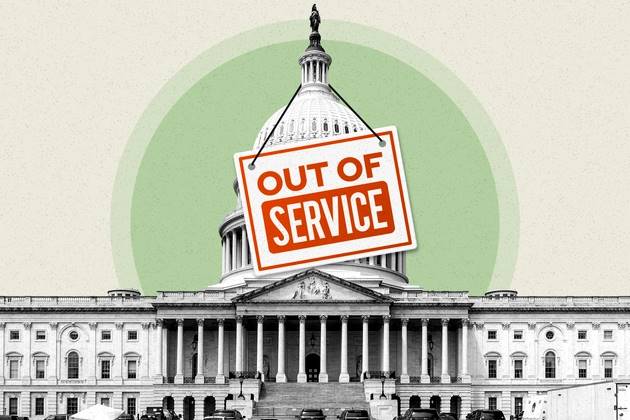
Trump's Trade War Resumes: Analysis of the Macroeconomic Factors Behind the Simultaneous Decline in Crypto and Stocks image 3

Why This Drop Was Especially Severe

Trading mechanisms played a role in this.

When bad news arrives, automated trading systems and large investors quickly start selling.

This triggers "stop-loss orders"—automatic sell orders used to limit losses—which then causes a chain reaction, amplifying the market decline.

Short selling increased, algorithms triggered stop-loss orders, and options expiration further intensified the drop.

The rapid unwinding of concentrated positions in tech stocks—a classic momentum reversal—occurred after the post-election market surge.
Trump's Trade War Resumes: Analysis of the Macroeconomic Factors Behind the Simultaneous Decline in Crypto and Stocks image 4

What Happens Next?

This could be a negotiation tactic ahead of the leaders' meeting.

If the issues are resolved, the market may rebound.

But if tensions persist, expect continued market volatility, rising costs affecting everyone, and pressure on global economic growth.


0
0

Disclaimer: The content of this article solely reflects the author's opinion and does not represent the platform in any capacity. This article is not intended to serve as a reference for making investment decisions.

Understand the market, then trade.
Bitget offers one-stop trading for cryptocurrencies, stocks, and gold.
Trade now!

You may also like

Wall Street giants collectively raise rate hike forecasts, US Treasury futures continue to fall, gold drops over 1% to break 4000

After the US October CPI exceeded expectations, Goldman Sachs and Nomura added a forecast for an interest rate hike in March next year, while Deutsche Bank included a forecast for a rate hike in January next year. Currently, the market has fully priced in a 25 basis point rate hike in December, with a 13% probability for a 50 basis point hike. On Wednesday, the US Treasury spot market was closed, but Treasury futures continued to fall, with corresponding yields rising by about 2 to 4 basis points, and spot gold came under pressure, dropping by 1.1%.

华尔街见闻•2026/11/11 21:18
Wall Street giants collectively raise rate hike forecasts, US Treasury futures continue to fall, gold drops over 1% to break 4000

No Need to Worry About the Cooling Down of AI Data Center Construction? The US Import Boom Is Unlikely to Subside in the Short Term, Real Impact May Come in 2029

It takes an average of 4.8 years from finalizing investment to starting construction of a data center project, and an additional 2.6 years from construction start to becoming operational. Servers usually cannot be installed until after the building structure and racks are completed. For trade partners such as Taiwan (China), South Korea, and Mexico who rely on US data center supply chain demand, the inertia in construction timelines provides at least a one- to two-year buffer for future exports.

华尔街见闻•2026/11/11 21:18
No Need to Worry About the Cooling Down of AI Data Center Construction? The US Import Boom Is Unlikely to Subside in the Short Term, Real Impact May Come in 2029

Federal Reserve Major Debate: When Should the Tenure of “Number Three” Williams End?

The main point of contention is whether Williams should step down in June 2028, upon completing a full 10-year term, or in June 2027, when he reaches the mandatory retirement age of 65. Analysts point out that the Federal Reserve Board holds ultimate discretion; if he leaves early, Fed Chair Waller would be able to assert greater control over the appointment to this critical position. However, forcing Williams to shorten his term could easily be interpreted as political manipulation. Williams himself is expected to serve until June 2028.

华尔街见闻•2026/11/11 21:18
Federal Reserve Major Debate: When Should the Tenure of “Number Three” Williams End?

