
Has Bitcoin's Four-Year Cycle Ended? From Halving to a Five-Year Macro Cycle Shift

In the cryptocurrency market, the "four-year cycle" is a rule almost every investor is familiar with: from halving to halving, prices go through initiation, frenzy, collapse, and accumulation. However, the latest market data and structural changes indicate that this model is being completely reshaped.
Through in-depth research on the bitcoin halving mechanism, global liquidity trends, and macro policies, it can be found that the market has gradually transitioned to a "five-year cycle," driven by the involvement of traditional financial forces and the dominance of macroeconomic variables.
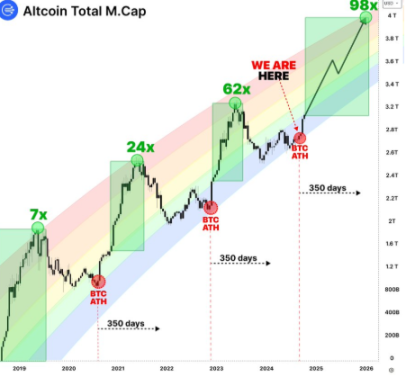
1. The Failure of the Four-Year Model
The traditional view holds that the bitcoin cycle is strongly correlated with halving. After each reduction in output, supply and demand imbalance triggers a price surge. However, since the entry of ETFs and institutional capital, market trends have clearly deviated from the "halving-driven" model. Now, macroeconomics and capital flows are the key drivers of price volatility.
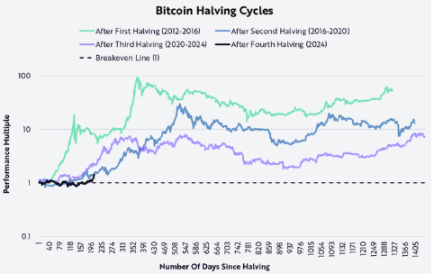
2. Macroeconomic Variables Dominate the Market
Unlike in the past, the market is now more influenced by the following indicators:
Federal Reserve interest rate policy
Inflation and employment data
M2 broad money supply
The role of halving still exists, but it is no longer the sole trigger. Macro liquidity expansion and contraction directly determine bitcoin's trend.
3. ETFs Change the Game
The emergence of ETFs is the watershed of this cycle's turning point.
In the early stages, the market was frenzied due to expectations of new liquidity.
Subsequently, ETF funds showed a dependence on the macro environment, freezing the market that was previously dominated by sentiment.
This change in capital structure has shifted the market rhythm from a "fast-paced four-year cycle" to a "longer, more stable five-year cycle."
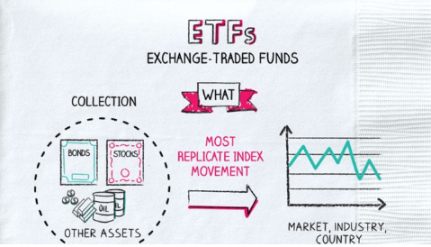
4. The Logic of the Five-Year Cycle
This shift is rooted in traditional finance: the average maturity of U.S. Treasury bonds is about five years, thus extending the capital allocation cycle. The capital brought by traditional investors is more stable and slower, thereby lengthening the rise and adjustment rhythm of the crypto market.
5. High Correlation with Traditional Finance
Multiple indicators have verified the deep connection between the crypto market and traditional finance:
M2 is highly correlated with BTC: M2 leads bitcoin's trend and is suitable as a mid-term trading reference.
The U.S. Dollar Index (DXY) is negatively correlated with BTC: when DXY falls, BTC rises; the logic is that when the dollar depreciates, risk assets become more attractive.
6. Impact on Altcoins
Currently, the altcoin market is still in a delayed slump. The preference for ETFs has caused BTC to absorb most of the liquidity, resulting in a postponed altcoin cycle.
However, historical experience shows that as long as the market enters the later rotation stage, altcoin rallies will not be absent, just delayed.
Conclusion
The "four-year cycle" of bitcoin is no longer a market iron law. With the deep involvement of ETFs and macro capital, the cycle has gradually extended to a five-year cycle and is closely tied to the fluctuations of the global financial system.
In the future, investors need to adapt to this new reality:
No longer rely solely on halving as a market guide;
Pay more attention to macro indicators such as interest rates, inflation, and liquidity;
Prepare in advance for the delayed altcoin market.
This shift, although causing analytical discomfort, also signals the potential for a larger-scale and more sustained bull market.
Disclaimer: The content of this article solely reflects the author's opinion and does not represent the platform in any capacity. This article is not intended to serve as a reference for making investment decisions.
You may also like

Wall Street giants collectively raise rate hike forecasts, US Treasury futures continue to fall, gold drops over 1% to break 4000
After the US October CPI exceeded expectations, Goldman Sachs and Nomura added a forecast for an interest rate hike in March next year, while Deutsche Bank included a forecast for a rate hike in January next year. Currently, the market has fully priced in a 25 basis point rate hike in December, with a 13% probability for a 50 basis point hike. On Wednesday, the US Treasury spot market was closed, but Treasury futures continued to fall, with corresponding yields rising by about 2 to 4 basis points, and spot gold came under pressure, dropping by 1.1%.

No Need to Worry About the Cooling Down of AI Data Center Construction? The US Import Boom Is Unlikely to Subside in the Short Term, Real Impact May Come in 2029
It takes an average of 4.8 years from finalizing investment to starting construction of a data center project, and an additional 2.6 years from construction start to becoming operational. Servers usually cannot be installed until after the building structure and racks are completed. For trade partners such as Taiwan (China), South Korea, and Mexico who rely on US data center supply chain demand, the inertia in construction timelines provides at least a one- to two-year buffer for future exports.

Federal Reserve Major Debate: When Should the Tenure of “Number Three” Williams End?
The main point of contention is whether Williams should step down in June 2028, upon completing a full 10-year term, or in June 2027, when he reaches the mandatory retirement age of 65. Analysts point out that the Federal Reserve Board holds ultimate discretion; if he leaves early, Fed Chair Waller would be able to assert greater control over the appointment to this critical position. However, forcing Williams to shorten his term could easily be interpreted as political manipulation. Williams himself is expected to serve until June 2028.

Crypto prices
More


