
When liquidity returns on-chain, Aster ignites a new cycle for BSC

In the highly competitive DEX market, the rapid rise of Aster not only demonstrates innovation in incentive structures but also reveals a renewed market preference for decentralized liquidity.
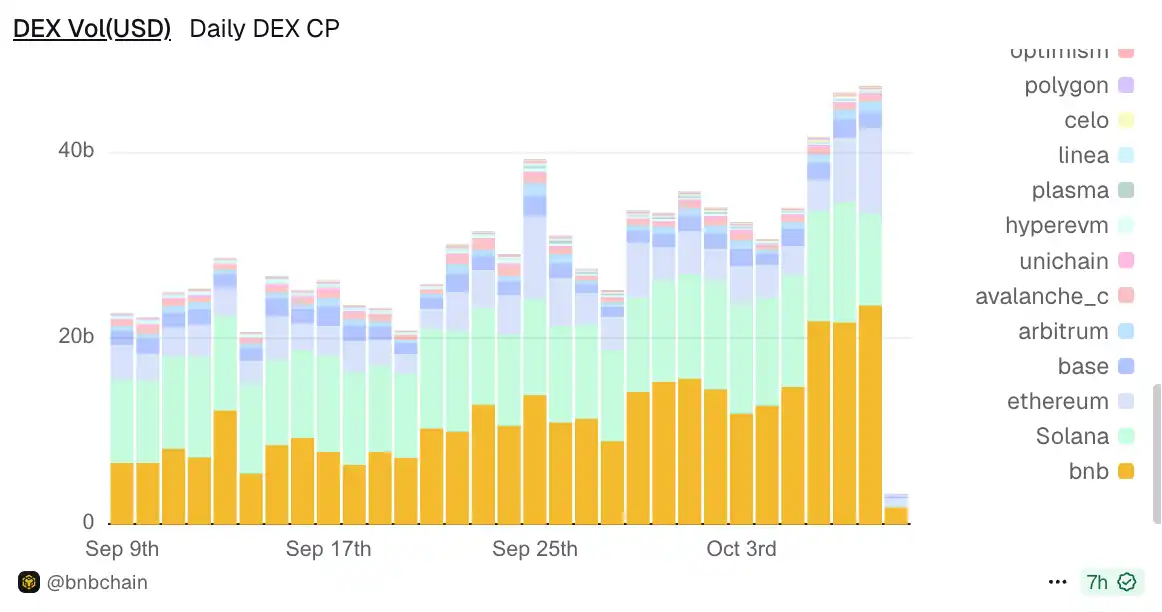
The heat of the BSC ecosystem is experiencing an outward diffusion. Since Aster completed its TGE in mid-September and launched the second phase of Genesis, both trading activity and on-chain liquidity across the ecosystem have risen significantly. With the launch of the "Aster Dawn" phase, this momentum has been further amplified—not only driving the concentrated listing of multiple BNB meme coins, but also bringing decentralized trading back into the market spotlight.
As of October 9, the spot trading volume of Aster DEX saw $4/USDT reach $45.88 million within 24 hours, second only to the mainstream pair $ASTER/USDT, making it one of the most prominent emerging assets on the platform. For a decentralized trading platform that has just entered the third phase of its incentive cycle, such trading activity is enough to reflect its driving force in terms of market sentiment and liquidity.
From "Incentive Mining" to "Capital Efficiency": A New Paradigm for DEX Growth
After entering the "Aster Dawn" phase, the Aster platform introduced a multidimensional points system, comprehensively considering factors such as trading volume, holding duration, asset types (such as asBNB, USDF), actual profit and loss, and team contributions. Compared to traditional incentive methods that use trading volume or TVL as a single standard, this system encourages users to engage in deeper and more sustained trading behaviors.
From a strategic perspective, this means Aster is attempting to find a balance between "high-frequency trading" and "long-term contribution." As a result, the platform's liquidity utilization rate has significantly improved, and the trader structure has become more diverse, forming a trading ecosystem that can accommodate both short-term speculative demand and long-term incentive stickiness.
Even though $ASTER's market cap is still lower than many mature projects, Aster's capital efficiency (volume/TVL ratio) ranks among the industry's top, demonstrating a tighter capital cycle and active trading structure.
Unlike most emerging DEXs, Aster's growth is not driven solely by single-point incentives, but rather by a natural amplification effect formed through the resonance of the Meme sector and on-chain liquidity. In just the past two days, Aster has listed several BSC ecosystem memes, including CSXH, PUP, SZN, DUST, and others. Several trading pairs have seen daily trading volumes exceed $1 million, reflecting a concentrated influx of market capital.
The Decentralized Shift of the BNB Ecosystem
From a macro perspective, the popularity of Aster is not just a phenomenon of a single platform, but more like a signal of a turning point for the BNB Chain ecosystem. In the past week, the initial liquidity of several new tokens within the BNB ecosystem has chosen to deploy on Aster first, before spreading to other platforms. This "on-chain first, then spillover" model shows that both the capital and trading sides are beginning to favor native on-chain scenarios.
In recent years, BNB Chain has continuously strengthened its DEX ecosystem layout. With the dual push of official resources and community support, Aster has become an important carrier of on-chain trading activity. Its continuous listing pace, incentive activities, and multidimensional points system are gradually establishing a cyclical system capable of absorbing new traffic within the ecosystem.
In the process of liquidity gradually decentralizing, Aster has played the role of the "BNB flagship DEX." It not only provides high-multiplier rewards and diversified trading pairs, but also attracts a large number of quantitative teams and community-based traders through its team bonus mechanism and open points system.
After entering the third phase "Dawn," Aster has systematically upgraded its overall incentive system. The platform has introduced a more layered bonus mechanism—some spot and perpetual contract trading pairs can receive extra points rewards to encourage active trading behaviors; the team incentive rules have changed from weekly resets to covering the entire phase, strengthening long-term collaboration and cumulative effects; at the same time, for the referral program, Aster allows users who reach a certain trading volume threshold to apply for a higher rebate ratio, further incentivizing high-frequency users and community traders to participate.
These designs make Aster's incentive structure closer to a model that combines "gamification + quantitative incentives," no longer relying solely on short-term mining stimulation. Notably, the platform also offers dual reward options for participants in the second phase—either directly claim the $ASTER airdrop or refund all trading fees, achieving "zero-fee trading."
This flexibility reduces the exit risk for speculators and also enhances the stickiness of long-term traders. In other words, Aster is transforming "short-term mining activities" into "sustained trading behaviors" through institutional design.
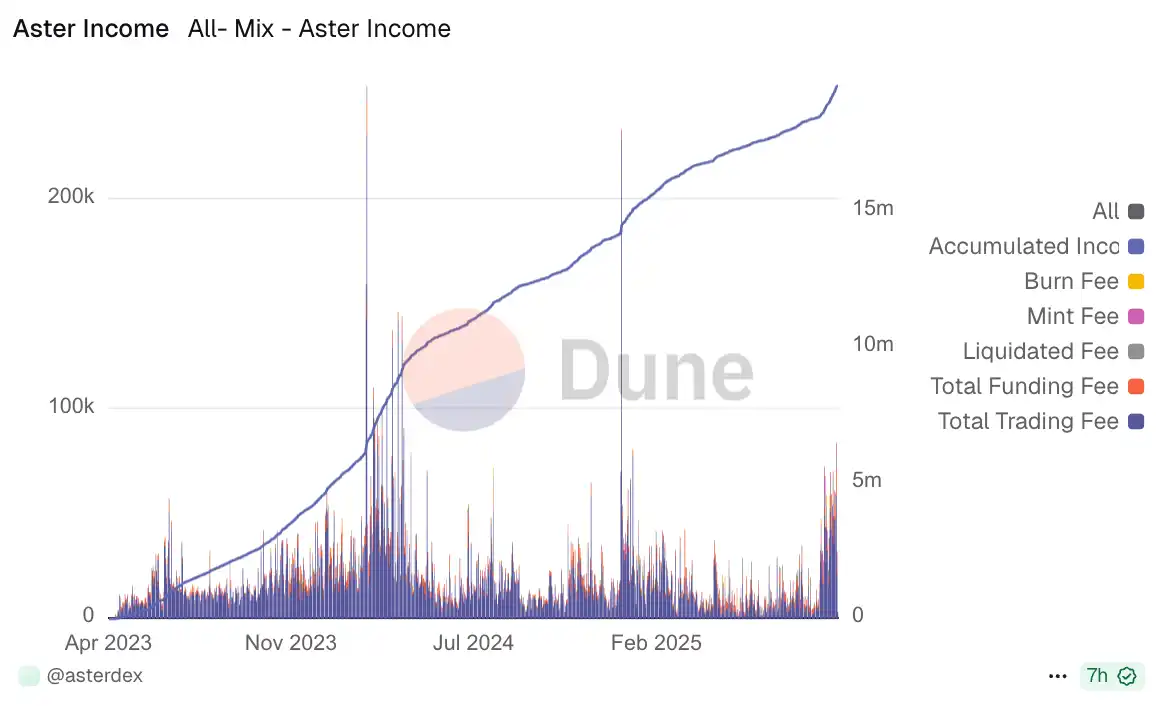
In the fiercely competitive DEX market, Aster's rapid rise not only reflects innovation in incentive structures but also reveals a trend of decentralized liquidity regaining market favor. For BNB Chain, Aster has become one of its strongest indicators of "on-chain activity." The user migration brought about by its phased activities is driving systemic changes in the trading data and liquidity structure of the entire ecosystem.
In the coming weeks, the points system and liquidity changes during the "Aster Dawn" phase will remain key indicators to watch. Regardless of the outcome, Aster has already provided a clear signal for the DEX track—liquidity is returning on-chain, and the narrative of decentralized trading is being redefined.
Disclaimer: The content of this article solely reflects the author's opinion and does not represent the platform in any capacity. This article is not intended to serve as a reference for making investment decisions.
You may also like

Wall Street giants collectively raise rate hike forecasts, US Treasury futures continue to fall, gold drops over 1% to break 4000
After the US October CPI exceeded expectations, Goldman Sachs and Nomura added a forecast for an interest rate hike in March next year, while Deutsche Bank included a forecast for a rate hike in January next year. Currently, the market has fully priced in a 25 basis point rate hike in December, with a 13% probability for a 50 basis point hike. On Wednesday, the US Treasury spot market was closed, but Treasury futures continued to fall, with corresponding yields rising by about 2 to 4 basis points, and spot gold came under pressure, dropping by 1.1%.

No Need to Worry About the Cooling Down of AI Data Center Construction? The US Import Boom Is Unlikely to Subside in the Short Term, Real Impact May Come in 2029
It takes an average of 4.8 years from finalizing investment to starting construction of a data center project, and an additional 2.6 years from construction start to becoming operational. Servers usually cannot be installed until after the building structure and racks are completed. For trade partners such as Taiwan (China), South Korea, and Mexico who rely on US data center supply chain demand, the inertia in construction timelines provides at least a one- to two-year buffer for future exports.

Federal Reserve Major Debate: When Should the Tenure of “Number Three” Williams End?
The main point of contention is whether Williams should step down in June 2028, upon completing a full 10-year term, or in June 2027, when he reaches the mandatory retirement age of 65. Analysts point out that the Federal Reserve Board holds ultimate discretion; if he leaves early, Fed Chair Waller would be able to assert greater control over the appointment to this critical position. However, forcing Williams to shorten his term could easily be interpreted as political manipulation. Williams himself is expected to serve until June 2028.

Crypto prices
More


