

Solana captured roughly 95.6% of all tokenized stock trading volume in the past 30 days, asserting clear dominance over rivals like Gnosis and Ethereum. This lead is driven by $2B in new stablecoin inflows, major upgrades (Alpenglow, Firedancer) and sharply higher trading throughput and lower fees.
-
Market share: Solana holds ~95.6% of tokenized stock trading volume.
-
Drivers: $2B stablecoin inflows, Alpenglow and Firedancer upgrades, and record trading volumes.
-
Competitors: Gnosis ~1.98%, Ethereum ~1.8% (Source: Solana Floor, Vaneck, Token Terminal).
Solana tokenized stock trading dominance leads markets; learn why SOL surged and what comes next — read on for data-backed analysis and action items.
How dominant is Solana in tokenized stock trading?
Solana dominance in tokenized stock trading is pronounced: Solana accounted for approximately 95.6% of tokenized-stock trading volume over the last 30 days, with daily market share rarely dipping below 89% aside from a brief 26 September drop. That share outpaces Gnosis and Ethereum by a wide margin.
What drove Solana’s lead in tokenized assets?
Multiple measurable factors propelled Solana ahead. The network saw roughly $2 billion in new stablecoin inflows in September, lifting stablecoin balances to about $14.3 billion and capturing a 60% share of tokenized stock trades, according to Vaneck and on-chain tallies.
Technical upgrades — notably Alpenglow and Firedancer — increased throughput and stability, improving settlement times and reducing fees. These operational gains attracted institutional liquidity and high-frequency trading activity, reflected in multi-month highs for SOL trading volume (Source: Token Terminal).
Solana Floor data shows SOL’s tokenized-stock share stayed above 89% on most days, underscoring persistent trader preference for speed and low-cost execution over alternative chains in this specific market niche.
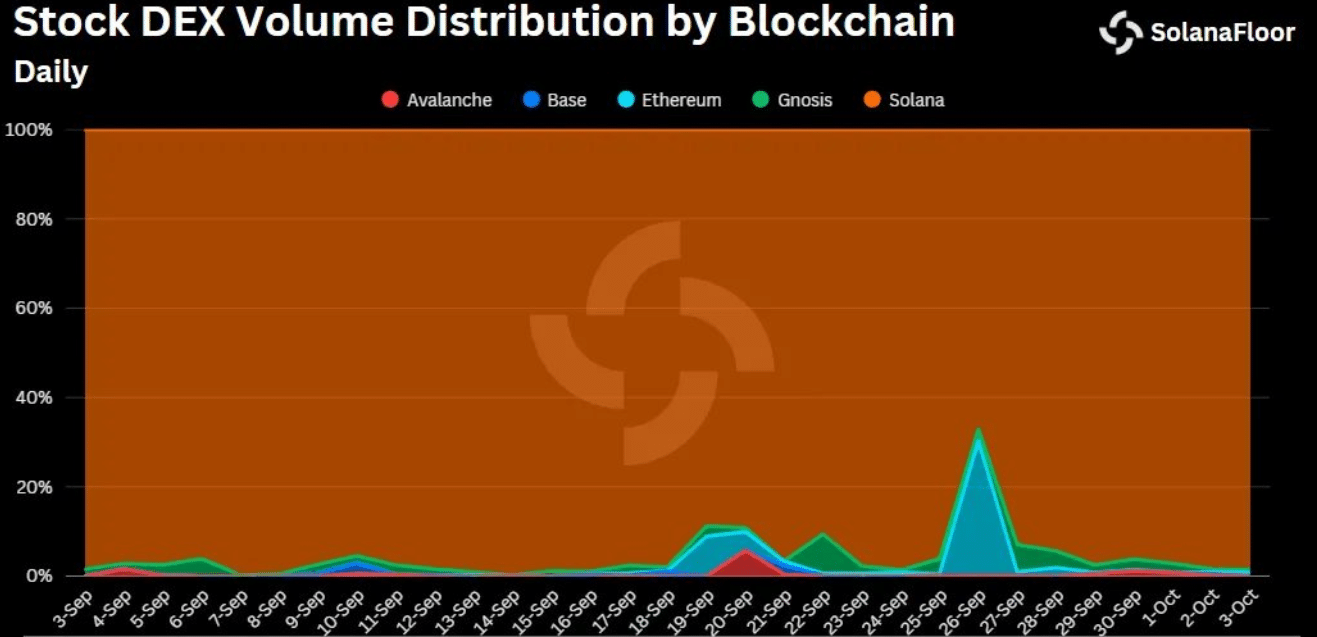
Source: Solana Floor
A standout September for Solana
September’s inflows and network upgrades were central. Vaneck’s September analysis and on-chain reports both highlighted Solana’s outsized gains in tokenized equities issuance and trading activity.
Stablecoin inflows of ~$2 billion in a single month increased liquidity available for tokenized stock trades and helped push Solana’s total tokenized-stablecoin pool to about $14.3 billion. That liquidity concentration supports deeper order books and tighter spreads for tokenized assets.
Upgrades like Alpenglow (throughput optimizations) and Firedancer (performance improvements) targeted reliability and latency — two attributes large traders prioritize for high-volume derivatives and tokenized-equity operations.
Trading volumes climb to multi-month high
On-chain metrics and exchange-level reporting show SOL trading volumes reached multi-month highs during this period. Lower transaction fees and faster settlement times contributed to renewed investor confidence.
Developers and market participants cited improved infrastructure and reduced friction as reasons for increased listing and trading activity in tokenized securities markets. Market watchers emphasize that execution quality and cost remain decisive variables for liquidity migration between chains.
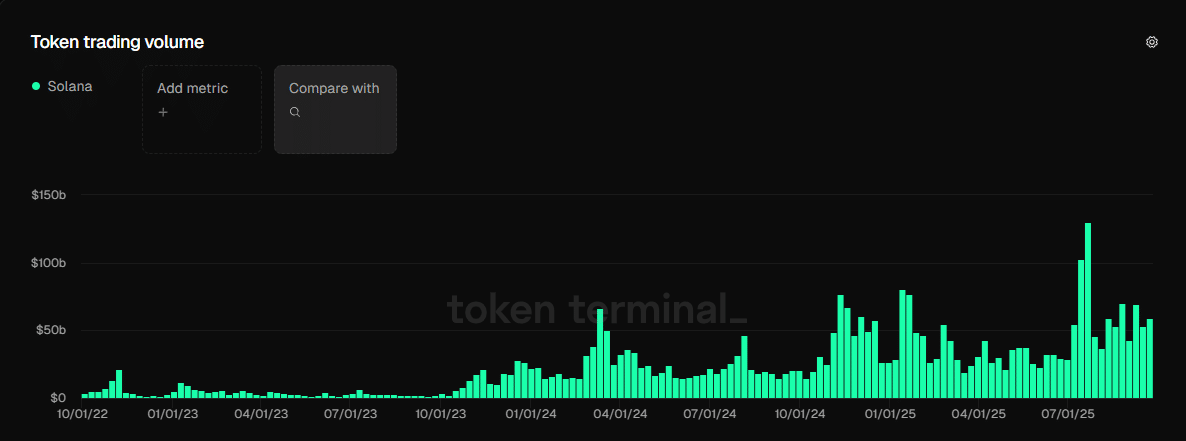
Source: Token Terminal
What’s next for SOL?
Solana’s near-term outlook in tokenized equities is tied to continued liquidity flows, issuer adoption and maintenance of low-cost, high-throughput execution. If stablecoin liquidity and trading activity persist, demand for SOL could remain elevated for network fees and staking-related utility.
Rivals such as Ethereum and Gnosis retain development roadmaps aimed at scaling and cost reduction. Planned Ethereum scaling upgrades and cross-chain liquidity solutions could reduce Solana’s advantage over time, so continued technical iteration will be critical for SOL’s market position.
Frequently Asked Questions
How does Solana’s market share compare to Ethereum and Gnosis?
Solana’s ~95.6% share eclipses Gnosis (~1.98%) and Ethereum (~1.8%) in tokenized stock trading volume for the past 30 days, per Solana Floor and supplementary market reports.
Why did stablecoin inflows matter for tokenized stocks?
Stablecoin inflows provide the settlement medium and liquidity for tokenized-stock trading. The influx of ~$2B in September increased available capital and improved depth, reducing slippage for large trades.
Key Takeaways
- Dominant market share: Solana reached ~95.6% of tokenized-stock trading volume over 30 days.
- Liquidity and upgrades: ~$2B stablecoin inflows and upgrades (Alpenglow, Firedancer) strengthened network appeal.
- Outlook: Sustained liquidity and ongoing technical iteration are required for Solana to maintain this lead as competitors scale.
Conclusion
Solana’s dominant position in tokenized stock trading is supported by measurable liquidity gains and targeted performance upgrades. While current data points to SOL’s strength in this niche, continued monitoring of stablecoin flows, upgrade rollouts and competitor scaling efforts is essential. COINOTAG will track developments and report updates as new data becomes available.





