
Pi Coin Price Shows First Signs Of Recovery Since All-Time Low

Pi Coin shows its first recovery signs since the 47% crash. Rising inflows and bullish signals may fuel a rebound if $0.256 support holds.
Pi Coin continues to struggle after its recent crash, with the altcoin unable to break free from its persistent downtrend. The cryptocurrency suffered heavy losses in recent weeks, driven by weak market momentum and declining investor confidence.
However, improving sentiment across the broader crypto market this week could offer Pi Coin a chance to recover.
Pi Coin Investors Continue To Pour Money
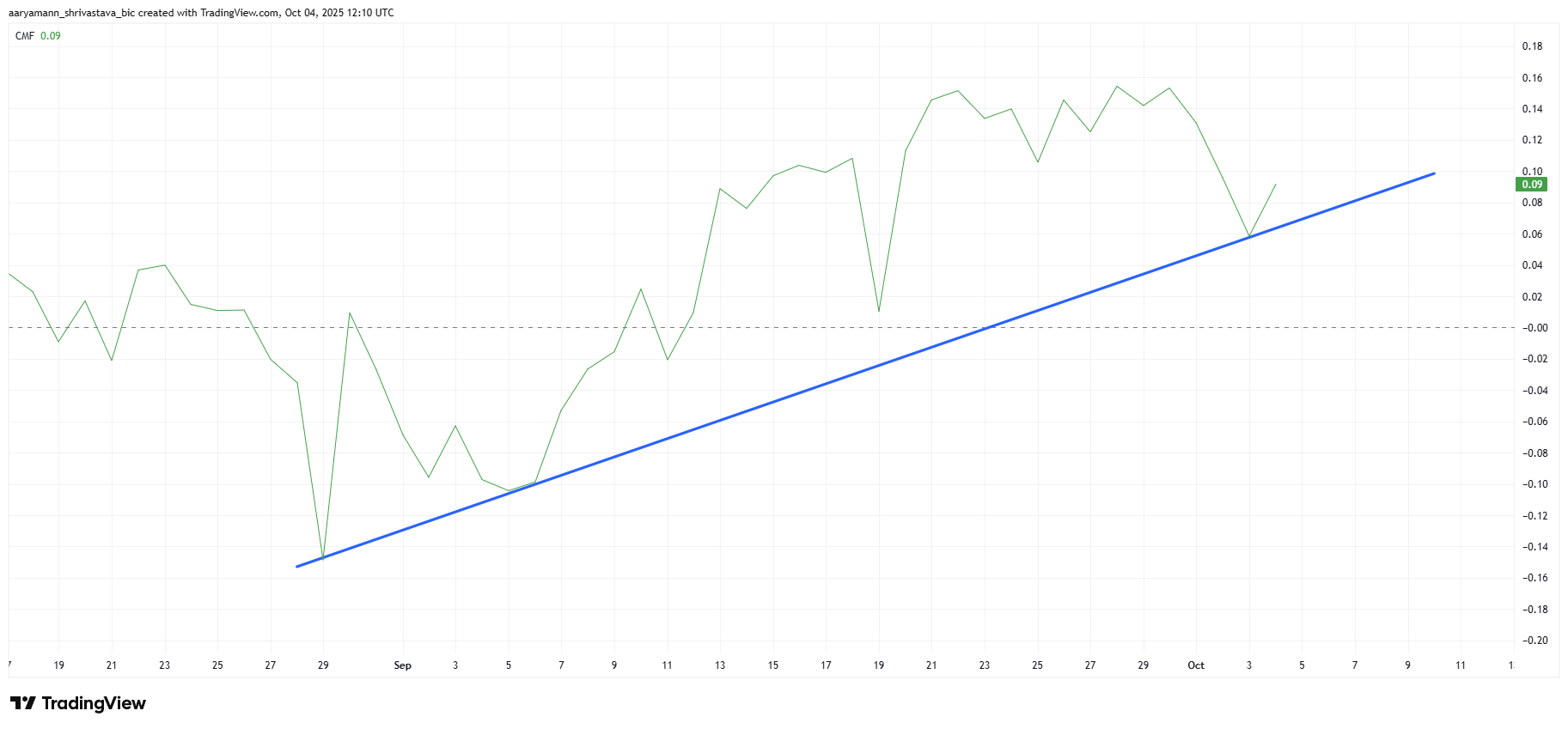
The Chaikin Money Flow (CMF) indicator is currently showing a noticeable uptick, signaling rising inflows into Pi Coin. This trend suggests that investors are regaining confidence and injecting capital back into the asset.
Sustained inflows are essential for fueling upward price movement, particularly after prolonged selling pressure.
The improvement in CMF highlights that Pi Coin may be regaining traction among traders looking to buy the dip.
As new capital enters the market, it could provide the liquidity necessary to stabilize the price and initiate a steady rebound from current levels, provided momentum remains consistent.
Want more token insights like this? Sign up for Editor Harsh Notariya’s Daily Crypto Newsletter.
 Pi Coin CMF. Source:
TradingView
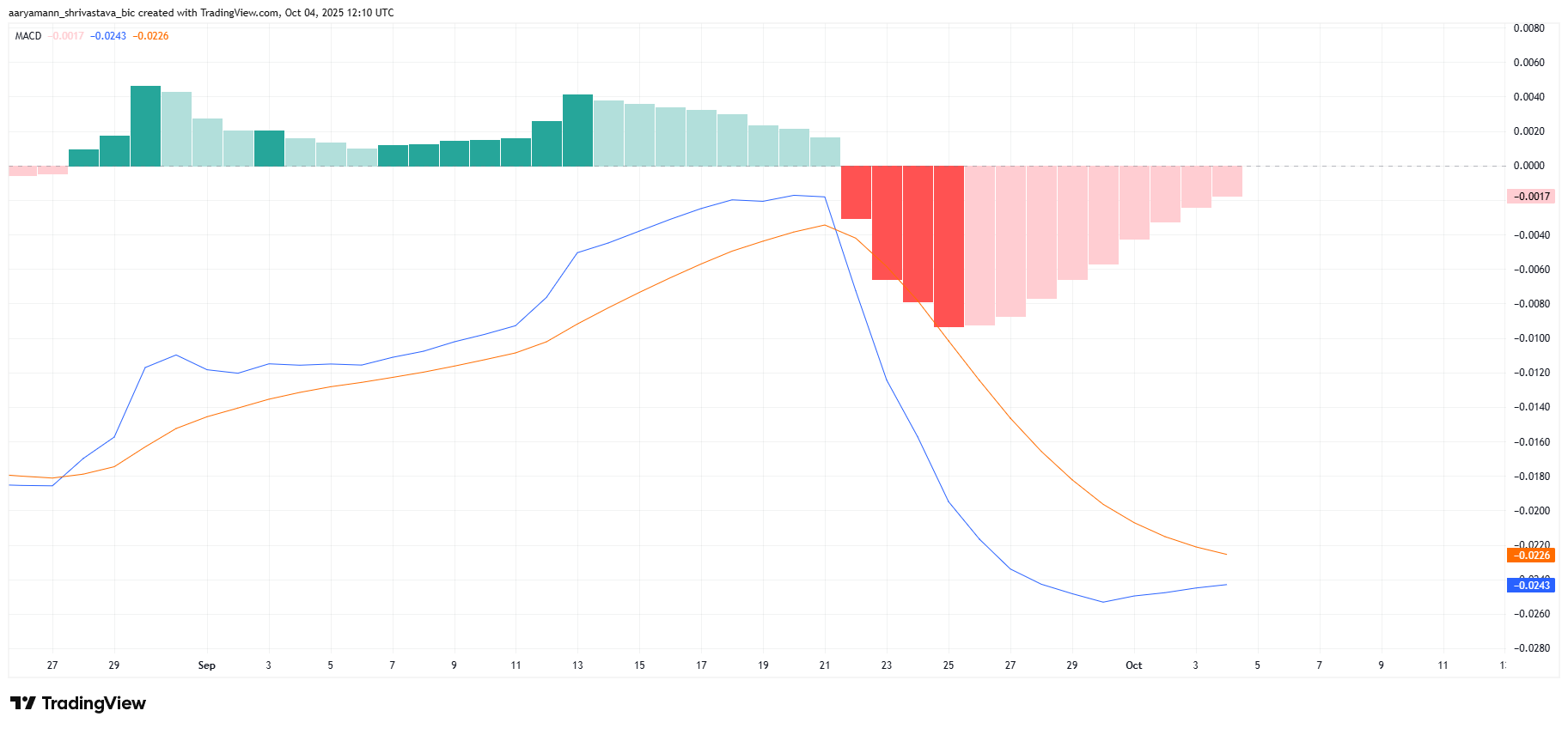
On the technical front, the Moving Average Convergence Divergence (MACD) indicator points to a potential bullish crossover. The indicator line is nearing the signal line, and a crossover would confirm a shift toward positive momentum.
Historically, such movements have preceded recoveries for Pi Coin, signaling possible short-term strength.
If confirmed, this crossover could attract additional investor interest, reinforcing confidence in Pi Coin’s ability to recover. While the broader market’s volatility remains a risk, a sustained bullish signal from MACD would strengthen the case for gradual appreciation over the coming weeks.
 Pi Coin MACD. Source:
TradingView
PI Price Needs A Push
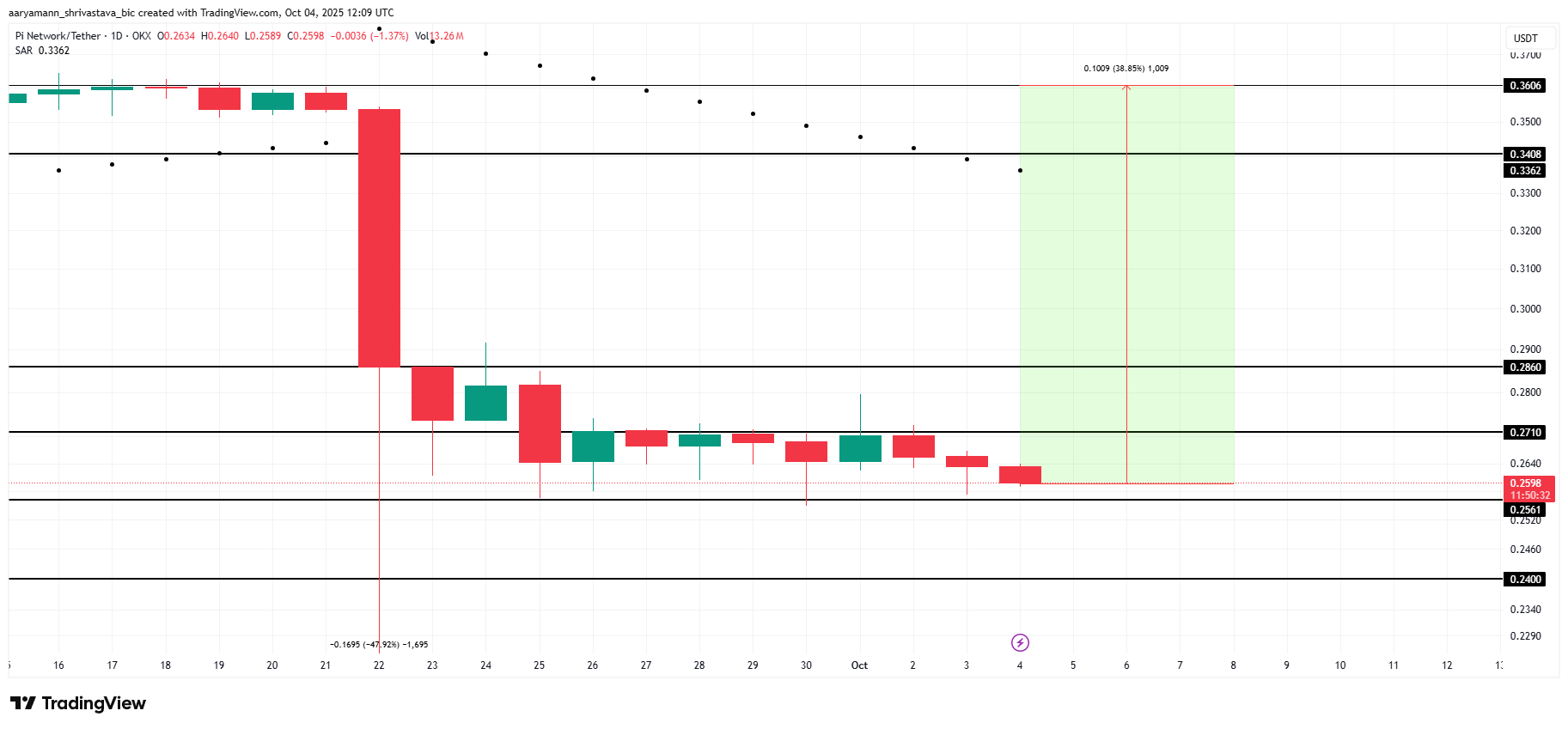
At the time of writing, Pi Coin is trading at $0.259, just above the critical support level of $0.256. This zone has acted as a key foundation for the token, preventing further declines during recent market turbulence.
To fully recover from its 47% crash, Pi Coin must rally by approximately 38.8%. While this target remains ambitious, rising inflows and improving technical indicators could gradually push the token toward recovery if current conditions persist.
 Pi Coin Price Analysis. Source:
TradingView
A sustained uptrend could help Pi Coin break through resistance levels at $0.271 and $0.286.
However, failure to maintain bullish momentum could send it below $0.256, with potential losses extending to $0.240, invalidating the current optimistic outlook.
Disclaimer: The content of this article solely reflects the author's opinion and does not represent the platform in any capacity. This article is not intended to serve as a reference for making investment decisions.
You may also like
Wall Street giants collectively raise rate hike forecasts, US Treasury futures continue to fall, gold drops over 1% to break 4000
After the US October CPI exceeded expectations, Goldman Sachs and Nomura added a forecast for an interest rate hike in March next year, while Deutsche Bank included a forecast for a rate hike in January next year. Currently, the market has fully priced in a 25 basis point rate hike in December, with a 13% probability for a 50 basis point hike. On Wednesday, the US Treasury spot market was closed, but Treasury futures continued to fall, with corresponding yields rising by about 2 to 4 basis points, and spot gold came under pressure, dropping by 1.1%.

No Need to Worry About the Cooling Down of AI Data Center Construction? The US Import Boom Is Unlikely to Subside in the Short Term, Real Impact May Come in 2029
It takes an average of 4.8 years from finalizing investment to starting construction of a data center project, and an additional 2.6 years from construction start to becoming operational. Servers usually cannot be installed until after the building structure and racks are completed. For trade partners such as Taiwan (China), South Korea, and Mexico who rely on US data center supply chain demand, the inertia in construction timelines provides at least a one- to two-year buffer for future exports.

Federal Reserve Major Debate: When Should the Tenure of “Number Three” Williams End?
The main point of contention is whether Williams should step down in June 2028, upon completing a full 10-year term, or in June 2027, when he reaches the mandatory retirement age of 65. Analysts point out that the Federal Reserve Board holds ultimate discretion; if he leaves early, Fed Chair Waller would be able to assert greater control over the appointment to this critical position. However, forcing Williams to shorten his term could easily be interpreted as political manipulation. Williams himself is expected to serve until June 2028.

Sunshine Silver weighs doubling mill capacity
Crypto prices
More


