
Bitcoin Illiquid Supply Hits Record 14.3M as Long-Term Holders Continue to Accumulate

Bitcoin’s illiquid supply—the portion of coins held by entities with little history of spending—has climbed to a new record high, surpassing 14.3 million BTC in late August, according to Glassnode.
With 19.9 million BTC currently in circulation, around 72% of the total supply is now illiquid, held by entities such as long-term holders and cold storage investors. This growth highlights a sustained accumulation trend, even during recent market volatility.
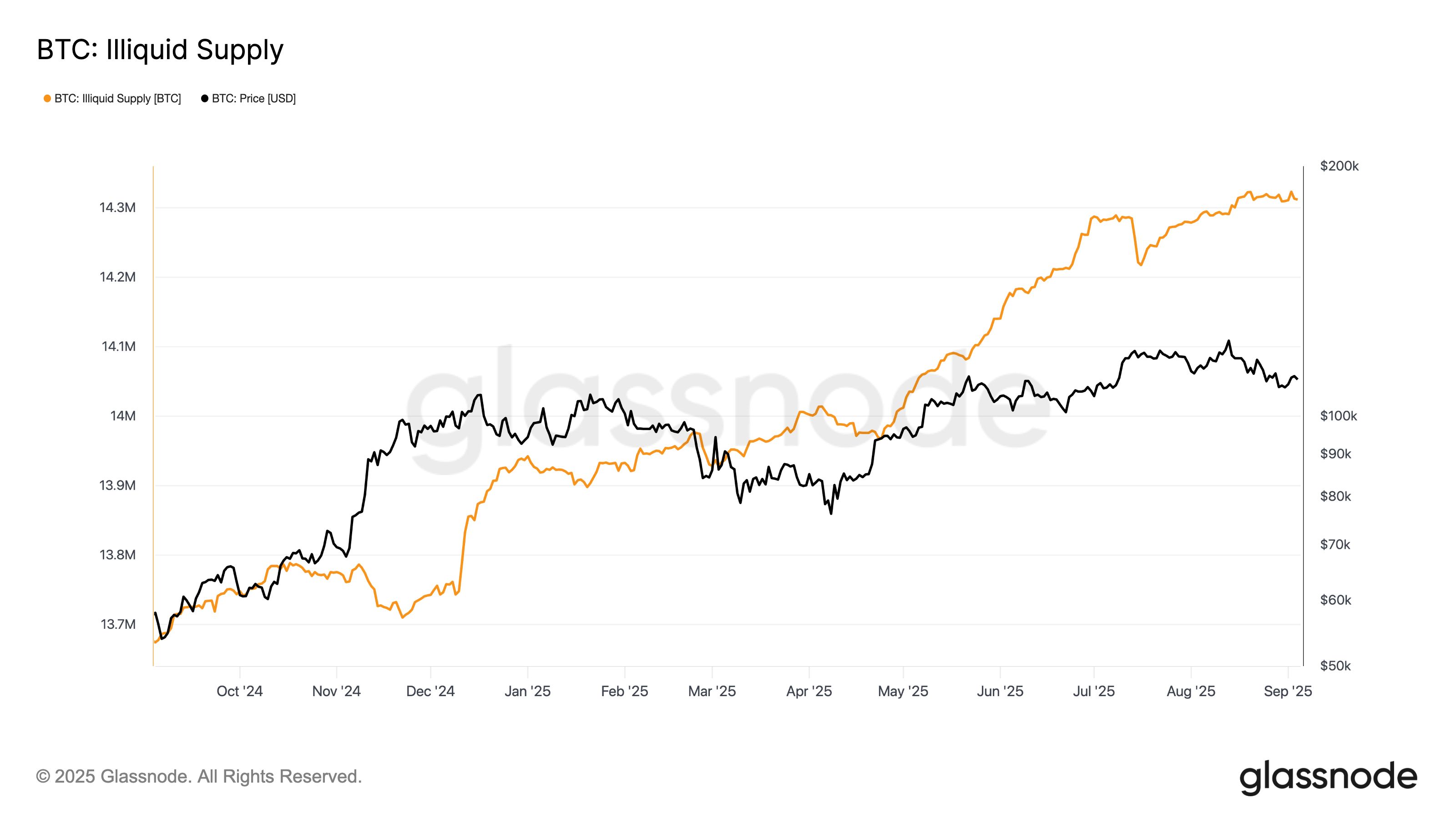
In mid-August, bitcoin hit an all-time high of $124,000 before retreating roughly 15%. Despite the price pullback, the illiquid supply continued to rise, showing that holders remain undeterred by short-term corrections.
Over the past 30 days alone, the net change in illiquid supply has increased by 20,000 BTC, underscoring persistent investor conviction.
The ongoing increase in this category suggests tightening supply dynamics that could set the stage for renewed momentum once sentiment recovers. For now, the trend reflects growing confidence in bitcoin as a long-term store of value.
Disclaimer: The content of this article solely reflects the author's opinion and does not represent the platform in any capacity. This article is not intended to serve as a reference for making investment decisions.
You may also like
PNC Bank Launches USDC Payment Acceptance for Corporate Clients
British Pound tumbles below 1.33 post hot US CPI, Fed hawkish rhetoric
Morgan Stanley warns: old storage prices are peaking, supply and demand may turn relaxed by 2028
Morgan Stanley pointed out that after the U.S. midterm elections, it is expected that about 20% of the new data center capacity in the United States originally planned for 2028 will be postponed to 2029. This may cause a "gap" in the supply chain in 2028, resulting in the risk of excess inventory of legacy storage. Legacy storage is less bound by long-term fixed price contracts, so a narrowing supply-demand gap could lead to significant price fluctuations. The above analysis refers only to legacy storage, including DDR3/4, SLC/MLC NAND, and NOR flash.
Crypto prices
More


