
How Pump.fun is Revolutionizing Memecoin Creation on Solana?

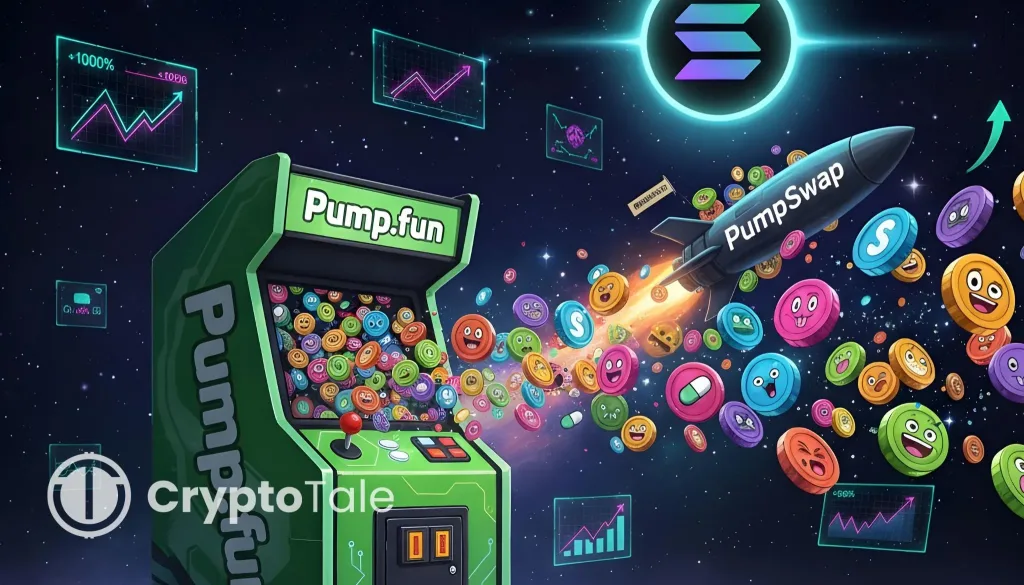
Memecoins, which are inspired by internet memes, social media trends, or popular culture, have become a significant part of the cryptocurrency ecosystem and Pump.fun has become a popular platform for creating and trading memecoins.
Launched on the Solana blockchain in January 2024, Pump.fun has quickly grown into one of the most visited platforms in Web3. In less than two years, it has helped create over 11 million memecoins. According to 21Shares, users can launch a memecoin for as little as 0.015 SOL.
One of the reasons Pump.fun has become so popular is its fair-launch model. All coins are minted at once, with no presales or insider allocations, which means no one can sell the tokens to early buyers.
Pump.fun’s Rapid Growth and Financial Success
By mid-2025, Pump.fun made up about 70% of all new memecoin tokens launched on Solana. Reports indicate the platform earned over $700 million in trading fees in 2024, earning approximately $15 million a week, which is roughly $780 million throughout the year. Furthermore, experts say the platform’s simple design and the viral nature of memecoins are fueling this success.
In July 2025, Pump.fun introduced its native token, raising $600 million within 12 minutes. This was part of a broader funding effort that reportedly reached $1.32 billion, valuing the company at approximately $4 billion. This illustrates how memecoins have evolved from being a joke to a notable participant in the crypto market.
Pump.fun also announced a “Project Ascend” update on 3 September 2025 that changed how creator fees are calculated. According to reports, the new structure pays token creators a variable fee, between 0.05 % and 0.95 % of each trade, based on the market capitalization of their token.
Creators of tokens valued between about $88,000 and $300,000 earn the maximum 0.95% per trade, while larger tokens pay a lower percentage. Pump.fun said the change was meant to boost earnings for streamers and token creators and is part of a broader push to compete with mainstream livestreaming platforms.
Related: Pump.fun Revenue Soars to $800M as Heaven’s LIGHT Pushes $2B
How Pump.fun Works: Creating a Memecoin
Creating a memecoin on Pump.fun is simple and doesn’t require blockchain experience. Here’s how to do it:
- Sign Up and Connect a Wallet
- Create an account on Pump.fun and connect your cryptocurrency wallet (e.g., MetaMask). This allows secure interaction with the platform.
- Create an account on Pump.fun and connect your cryptocurrency wallet (e.g., MetaMask). This allows secure interaction with the platform.
- Choose a Name and Symbol
- Select a catchy name and symbol for your memecoin. These elements serve as the token’s brand identity. You can also customize the token’s supply (mintable or fixed).
- Select a catchy name and symbol for your memecoin. These elements serve as the token’s brand identity. You can also customize the token’s supply (mintable or fixed).
- Set Token Features and Customization
- Add features to your token, such as decimal places, tax fees, or holder rewards. This enables you to customize the coin according to your requirements, whether for giveaways or community engagement.
- Add features to your token, such as decimal places, tax fees, or holder rewards. This enables you to customize the coin according to your requirements, whether for giveaways or community engagement.
- Mint and Deploy the Memecoin
- Finalize your settings and mint the token. The platform handles the technical aspects, and a small fee is charged for minting. The platform then mints the coin and places it on a bonding curve, a key feature of Pump.Fun, which will boost the price of the token as more purchases are made.
- Finalize your settings and mint the token. The platform handles the technical aspects, and a small fee is charged for minting. The platform then mints the coin and places it on a bonding curve, a key feature of Pump.Fun, which will boost the price of the token as more purchases are made.
- Monitor and Manage Your Memecoin
- Use Pump.fun’s analytics tools to track performance, market activity, and community engagement. To maintain community engagement, you can bring in airdrops, rewards, and interactions.
Early buyers pay the lowest price, which increases with each new purchase. If someone sells their tokens, they can do so at the current price minus a small fee.
Graduation and Listing on PumpSwap
Once a token reaches a market value of about $69,000, it “graduates” from the bonding curve and moves to PumpSwap, which is Pump.fun’s decentralized exchange. At this point, the remaining 200 million tokens are made available for trading, and their price is determined by supply and demand.
Solflare notes that PumpSwap’s trading fees are lower than those on the bonding curve. The fees drop to 0.25% per transaction, with a portion going to liquidity providers. This helps successful memecoins gain additional liquidity and visibility, providing them with a chance to continue trading after the initial hype fades.
Popular Tokens and Risks of Memecoin Trading
Some memecoins launched on Pump.fun have reached staggering valuations. According to Solflare’s ecosystem overview, Fartcoin reached a peak market capitalization of more than $2.1 billion. Tokens like Peanut the Squirrel (PNUT) and Moo Deng also hit values in the hundreds of millions.
Another example is Goatseus Maximus (GOAT), which illustrated how a combination of internet humor, social media hype and viral marketing can drive speculative investments. Conversely, the same environment allows for rapid collapses. Even coins that “graduate” might quickly lose liquidity once they leave the bonding curve.
In addition, Pump.fun’s appeal largely stems from its lack of pre-mines, venture capital allocations, or developer fees. This guarantees that all users begin at the same price level, preventing any unfair advantages. Additionally, the platform features auto liquidity, allowing tokens to be traded directly on Pump.fun without requiring a separate liquidity pool.
Controversies and Risks
The platform’s openness has also made it a breeding ground for scams and questionable behaviour. CoinGecko’s guide cautions that only about 3% of wallets make more than $1,000 on Pump.fun. The ease of creation means that many tokens are launched solely to take advantage of unsuspecting buyers.
Pump.fun’s own attempt to control misconduct sometimes falls short. In late 2024, a livestreaming feature became a magnet for shocking stunts, including Russian roulette games and other dangerous acts, and was suspended following public backlash. The platform has also been associated with “soft rug pulls,” where creators dump their holdings after building hype.
Beyond obvious scams, the memecoin market on Pump.fun is unpredictable. Prices can rise and fall within minutes, which means late buyers may lose a lot of money. Further, Bots and trading “snipers” tend to buy large amounts of new tokens immediately after launch, inflating prices before dumping.
Since most memecoins have no fundamental backing, there is little to support prices once the spotlight shifts to other opportunities. Analysts at Bitbond warn that maintaining interest depends on ongoing community involvement and marketing.
Related: Pump.fun Launches Glass Full Foundation for Ecosystem Growth
Impact on Solana and the Broader Crypto Ecosystem
Pump.fun’s popularity stems from its ability to democratize token creation. According to Solflare, users are not required to write any code to create their own memecoin. This reduces the barrier to entry, enabling everyone, from teenagers to artists to influencers, to be involved in crypto. Furthermore, the platform includes a social aspect with tools like live chats, comments, and a trending dashboard, making the process of creating tokens feel more like gaming.
While memecoins may seem frivolous, Pump.fun has had a notable impact on the Solana network. 21Shares notes that the platform’s high transaction volume drives hundreds of millions of dollars in annual fees on Solana. Even though each transaction costs only a fraction of a cent, the sheer number of trades adds up.
The revenue generated has made Pump.fun one of the most profitable applications in the Solana ecosystem and a major contributor to the chain’s growth. Crypto analysts argue that such activity demonstrates Solana’s capacity for high‑throughput, low‑cost transactions, positioning it as an attractive environment for other decentralised applications.
However, critics worry that the memecoin frenzy distracts from projects with real utility and invites regulatory scrutiny. Advocates counter that the platform fosters experimentation and introduces new users to blockchain technology.
Nansen Research has alleged that large investors dominated the July 2025 initial coin offering, buying up significant shares of the supply before retail participants had a chance to participate. Pump.fun has responded by highlighting its revenue‑sharing programme, where around 50 % of earnings are distributed to PUMP holders as SOL payouts, but concerns remain about centralization.
The post How Pump.fun is Revolutionizing Memecoin Creation on Solana? appeared first on Cryptotale.
Disclaimer: The content of this article solely reflects the author's opinion and does not represent the platform in any capacity. This article is not intended to serve as a reference for making investment decisions.
You may also like
Bitcoin’s MA200 at $73,200 — Inverse H&S Neckline Is the Only Level Left
Bitcoin Supply Velocity Hits 10-Year Low as ETH Supply Diverges
Just bet on AI and already faced a market blow! Berkshire reports earnings tonight, Abel faces a major test in his transformation
Greg Abel has been leading Berkshire Hathaway for less than a year, yet he has already made a bet of over $10.9 billion on the AI sector, marking a complete break from Buffett’s traditional avoidance of tech stocks. However, Alphabet’s stock price has fallen below their initial purchase cost, and Bending Spoons continues to decline, putting this bold AI gamble to the test. At the same time, third-quarter earnings per share are expected to drop 6% year-over-year, and the share repurchase program is likely to plummet from $4.5 billion to $1.6 billion. How to deploy $358 billion in cash will be a major challenge for the new leader’s capital allocation skills.

Has the AI bubble burst? Goldman Sachs: It's more like 1998 than 2000 right now
The Goldman Sachs trading desk stated that the current wave of sell-offs resembles the 1998 liquidity crisis more than the bursting of the 2000 bubble. It is a forced deleveraging rather than a refutation of business fundamentals. The market is drastically repricing construction financing and timeline expectations, rather than underlying demand. Moreover, the issues currently drawing the most attention from the market—electricity and licensing—are actually the least important, as limited supply does not equate to disappearing demand. The real question that needs to be answered is whether long-term revenues can ultimately justify the capital invested.
Crypto prices
More


