In the history of technological advancements, there have been many inflection points where the overarching narrative has suddenly shifted. 2025 seems to be headed in that direction as it seems primed to be remembered as the year when the ‘idea of autonomous AI agents’ stopped being a thought experiment and began to resemble a functioning ecosystem.
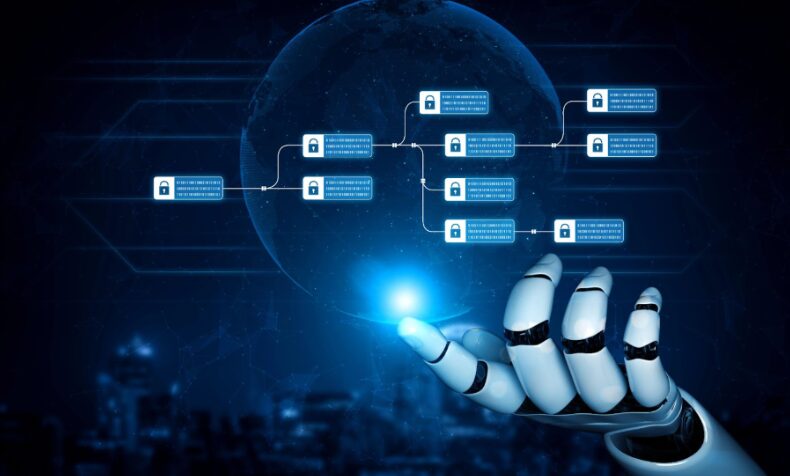
In other words, instead of monolithic models trying to do everything on their own, the future looks increasingly like one where networks of smaller, specialized agents can interact seamlessly across industries, devices, and even blockchains (a framework that has been labelled the ‘ Internet of Agents ’).
A Real, Functioning IoA-verse is Taking Shape
The concept of the Internet of Agents (IoA) provides an open, interoperable framework where autonomous AI entities, created by different teams, trained on diverse data, and designed for various tasks, can discover one another, cooperate, and transact.
Sponsored
In fact, within such a setup, one agent can specialize in financial modeling, another in medical literature review, and another in logistics optimization, yet they can all be linked within a decentralized, collaborative web seamlessly.
The power of the proposition has been so compelling that consulting giant Gartner believes that by 2028, roughly one in three enterprise applications will be agent-powered, while 15% of daily digital tasks for knowledge workers will be handled by IoA frameworks.
The cost efficiencies introduced by the technology have already been remarkable, with early experiments in publishing, IT management, and customer support revealing that AI agents can cut production expenses by over 90% while delivering output at 50 times the speed of traditional workflows.
Microsoft CTO Kevin Scott went so far as to predict that there will be more than 1.3 billion active agents within the next 36 months, a staggering leap from the “millions” tracked at the start of this year.
Lastly, it bears mentioning that the above-stated numbers and figures are deeply embedded in a core framework of interoperability, one that is ruled by the Model Context Protocol (MCP) (which is supported by OpenAI, Microsoft, and Google DeepMind and is set to become the lingua franca of the IoA economy).
Parallely, Cisco and other infrastructure players also have been developing quantum-safe, decentralized communication layers to ensure these networks remain secure and scalable. However, essentially speaking, it is no longer a question of whether the dream of an IoA will materialize, but how quickly its underlying architecture can mature.
 Source: Depositphotos
Stepping into the Picture
Against such a foreboding backdrop, the Coral Protocol has been translating this vision of an IoA universe into a living, breathing reality. Based in London, the project has positioned itself not as another large language model (LLM) provider but as an orchestrator of agents, offering an open-source, decentralized infrastructure layer that allows diverse agents to find, verify, and collaborate with one another.
The elegance of Coral’s approach is in what it avoids. Instead of pouring resources into large models with billions of parameters, it focuses on scaling horizontally, a philosophy that recently produced results worthy of raising eyebrows across both the AI and crypto worlds.
On Meta’s notoriously difficult GAIA benchmark, Coral’s multi-agent “mini-model” scored over 40% accuracy. For those unaware, GAIA is widely viewed as an extremely demanding test suite of roughly 450 difficult questions, designed to simulate real-world tasks requiring extensive research and reasoning. It’s so tough that even GPT-4 has historically managed a success rate of around 15% correct on this benchmark.
Coral’s success echoed earlier research from NVIDIA that suggested small language models, when deployed cleverly, could rival their larger counterparts without sacrificing speed or cost.
Building the Internet of Agents, One Hackathon at a Time
While benchmarks are important, Coral has also been careful to anchor its technology for widespread community development and adoption. Earlier this year, the project co-sponsored “Raise Your Hack” at the RAISE Summit in Paris, where developers experimented with multi-agent applications built on Coral’s infrastructure.
The momentum from that gathering subsequently evolved into something bigger, i.e., the Internet of Agents Hackathon, which is set to be hosted in partnership between Coral, Lablab.ai, and the Solana ecosystem.
Set for this fall in New York City, the event will offer $100,000 in prizes and challenge participants to build applications that not only demonstrate agent collaboration but also integrate with blockchain-based payment rails.
Looking Ahead
If the forecasts are correct, billions of agents will populate our digital world before the decade is out. Some will be deployed by corporations, some by startups, and others by individual coders. What matters is that they can talk to one another, trade with one another, and learn from one another.
If 2025 is remembered as the year the Internet of Agents became tangible, Coral’s fingerprints will almost certainly be found on that story.
Discover DailyCoin’s popular crypto news:
Ripple CTO Shows Off XRP MasterCard; Is $7 Moonshot Ahead?
Crypto Market at a Crossroads as On-Chain Indicators Diverge
People Also Ask:
The Internet of Agents (IoA) is an emerging framework where specialized autonomous AI agents interact, collaborate, and transact across industries, devices, and blockchains.
Unlike large monolithic AI models, IoA focuses on networks of smaller, specialized agents that work together seamlessly, offering higher efficiency, scalability, and interoperability.
IoA enables faster workflows, reduced costs, multi-domain collaboration, and decentralized operations, potentially handling significant portions of enterprise tasks in the near future.
Agents discover and verify each other using interoperable protocols such as the Model Context Protocol (MCP) and can perform complementary tasks across finance, logistics, research, and more.
Early use cases include publishing, IT management, customer support, financial modeling, medical literature review, and logistics optimization, where AI agents significantly improve efficiency.