
Dogecoin Bullish Traders Hit Hard as Long Liquidations Dominate

Dogecoin’s price has dropped 9%, with $10 million in long liquidations over the past 24 hours. The RSI below 50 indicates weakening buy-side momentum, suggesting a possible further decline toward $0.1758.
Dogecoin’s (DOGE) price has tapered downward since August 17, losing roughly 9% of its value over the past three days.
As the token slides, futures traders who had opened positions betting on a rally have plunged into losses. With new demand remaining muted, long traders of the meme coin may be at risk of further declines.
DOGE’s Decline Triggers Long Liquidations
DOGE’s recent price decline, worsened by the broader market dip, has triggered a wave of long liquidations in its futures market. Per Coinglass, this has totaled $10 million in the past 24 hours as the meme coin extends its decline.
For token TA and market updates: Want more token insights like this? Sign up for Editor Harsh Notariya’s Daily Crypto Newsletter .
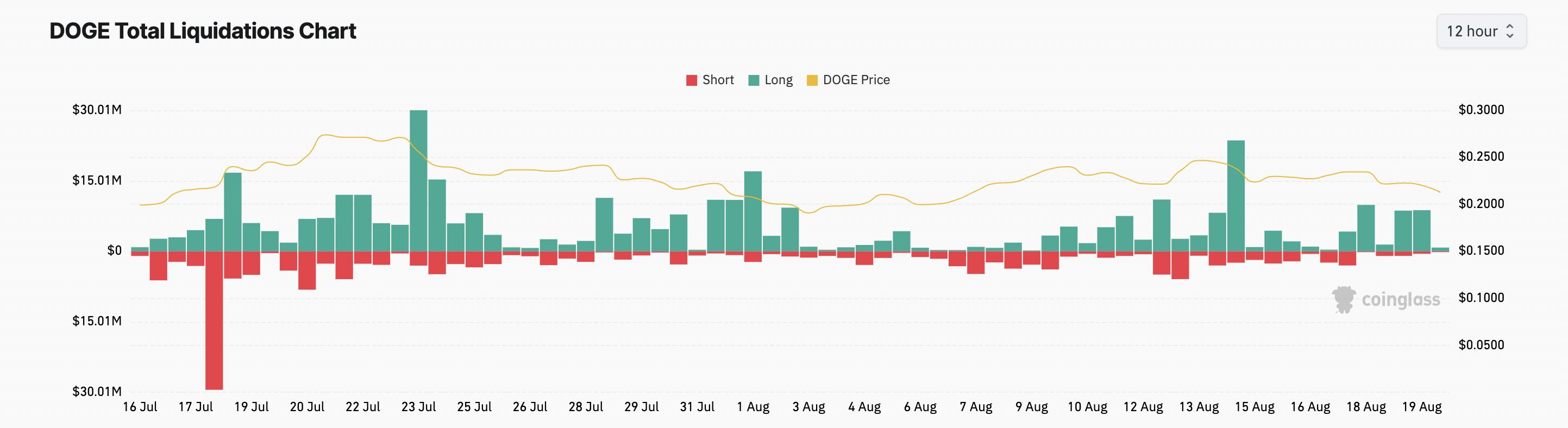 DOGE Liquidations Chart. Source:
Moreso, yesterday, DOGE Futures Long Liquidations Dominance climbed to 98%, signaling that most liquidated positions were long bets.
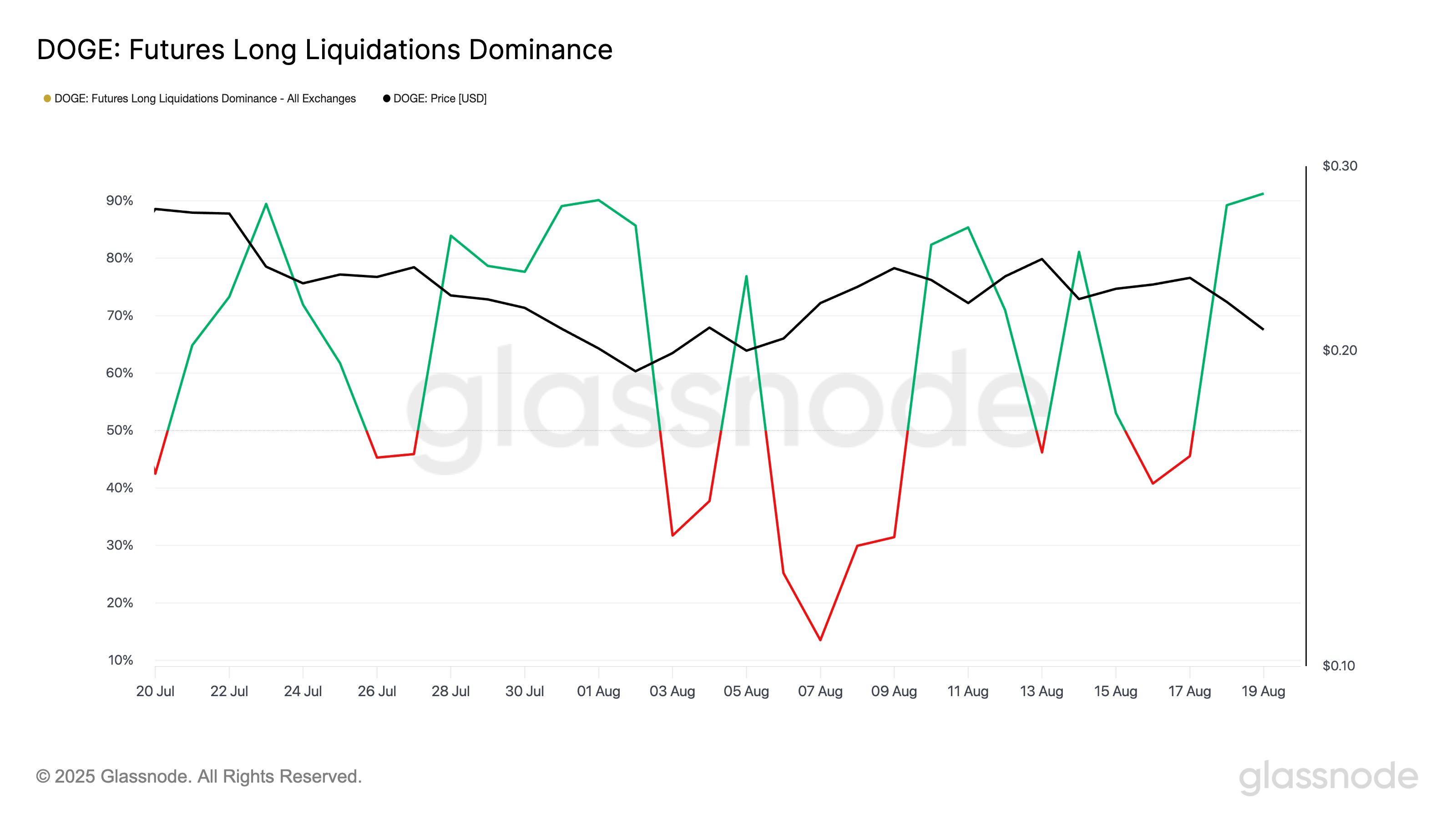 DOGE Futures Long Liquidations Dominance. Source:
Liquidations occur when an asset’s value moves against a trader’s position. In such cases, the trader’s position is forcefully closed due to insufficient funds to maintain it.
Long liquidations occur when an asset’s price falls past a threshold, making traders who bet on a price increase exit the market.
Excessive losses from these liquidations could dampen market sentiment among DOGE holders and futures traders alike, triggering further sell-offs. This may deepen the meme coin’s decline and extend its downward momentum in the near term.
DOGE Buyers Lose Steam
As of this writing, DOGE’s Relative Strength Index (RSI) struggles below the 50-neutral line, supporting this bearish outlook. It is at 46.36, reflecting the waning buy-side activity among market participants.
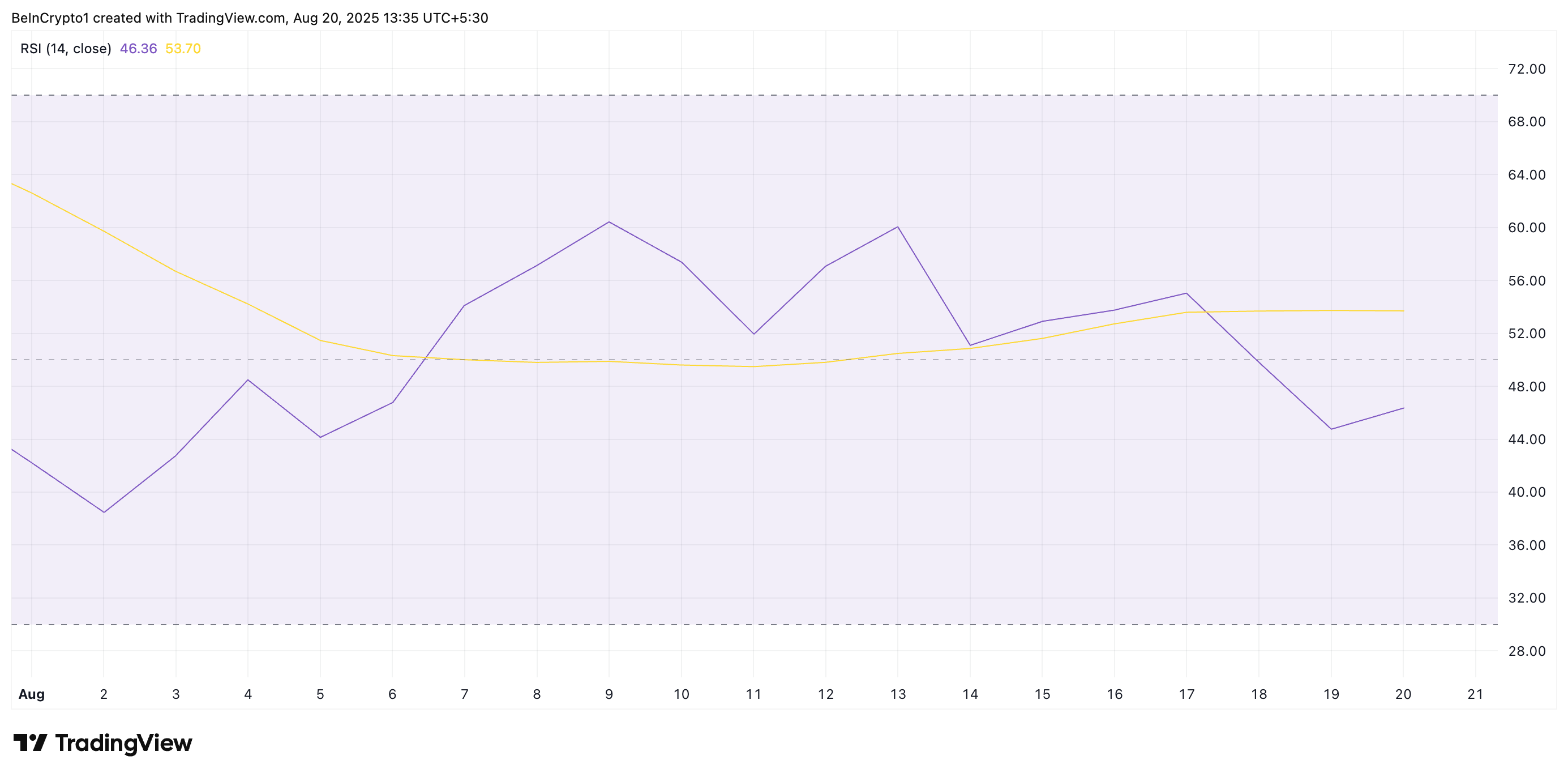 DOGE RSI. Source:
The RSI indicator measures an asset’s overbought and oversold market conditions. Typically, an RSI above 70 indicates an asset may be overbought (potentially overvalued) and due for a rebound. Conversely, values under 30 suggest it may be oversold (potentially undervalued) and is eyeing a bullish reversal.
At 46.36, DOGE’s RSI signals weakening bullish momentum. It suggests that buyers are struggling to maintain control amid the recent sell-off, and if this continues, the meme coin could fall toward $0.1758.
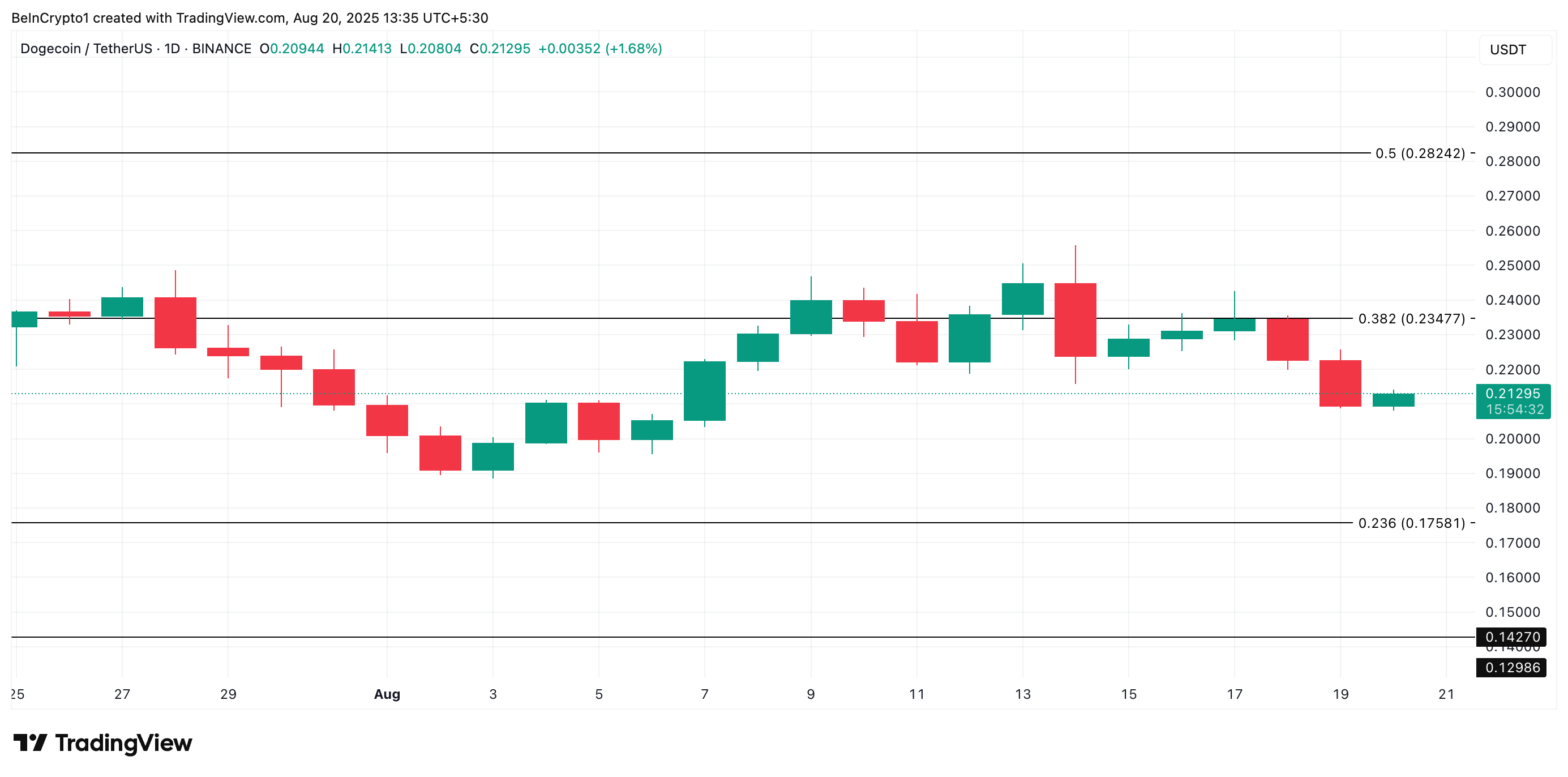 DOGE Price Analysis. Source:
On the other hand, a rebound in buying pressure could push its price past $0.2347.
Disclaimer: The content of this article solely reflects the author's opinion and does not represent the platform in any capacity. This article is not intended to serve as a reference for making investment decisions.
You may also like
Cardano Foundation unveils zero-knowledge series as ADA drops 2.8% to $0.1725

How much CPO demand will Nvidia Rubin Ultra generate? Bernstein: Optical value per Pod will increase fivefold
Bernstein believes that the co-packaged optics (CPO) and fiber demand driven by Nvidia's Rubin Ultra architecture will surge significantly, with the optical content per Pod rising from $1 million to $5.4 million. This will propel the size of Nvidia's optical ecosystem market to $46.8 billion by 2028 (a 91% annual increase). Although the industry faces supply bottlenecks with InP substrates, the outlook remains positive. The institution reiterates its “outperform” rating for Lumentum, Coherent, and Ciena.

UBS Q3 implements a two-way strategy with gold options, heavily invests in technology stocks, and builds positions in SK Hynix (SKHY.US)
UBS Group (UBS.US) has submitted its Q3 holdings report (13F) as of September 30, 2026.

SpaceX (SPCX.US) reportedly attempts “de-Nvidiaization” at the rack level: developing Kessel cabinets to bypass L6 compute boards, purchasing only chips
SemiAnalysis: SpaceX has developed its own Kessel cabinet, bypassing Nvidia's L6 cards to provide more options for manufacturing its own hardware.

Crypto prices
More


