
Ethereum vs. Bitcoin: ETH/BTC Ratio Climbs to Yearly Peak Amid Market Shift

Ethereum (ETH) has maintained upward momentum in recent weeks, with the asset briefly touching $4,774 last week, just shy of its 2021 all-time high of over $4,800. Although ETH has since corrected to around $4,306, the asset remains positive in terms of weekly performance, showing a 0.7% increase.
This price action shows ongoing investor interest at a time when Ethereum’s relative performance against Bitcoin is attracting attention. Analysts have pointed to Ethereum’s growing strength in both spot and derivatives markets, where ETH is showing resilience against BTC.
On CryptoQuant’s QuickTake platform, contributor EgyHash noted that the ETH/BTC trading pair has reached levels not seen since the beginning of the year, with spot trading volumes climbing to record highs.
This shift in participation highlights Ethereum’s expanding role within the broader crypto market, particularly as institutional activity continues to increase.
ETH/BTC Ratio and Market Participation
According to EgyHash, Ethereum has recovered significantly after reaching a six-year low against Bitcoin earlier this year. The ETH/BTC pair now trades at 0.0368, its highest level in 2025, though still well below past cycle peaks.
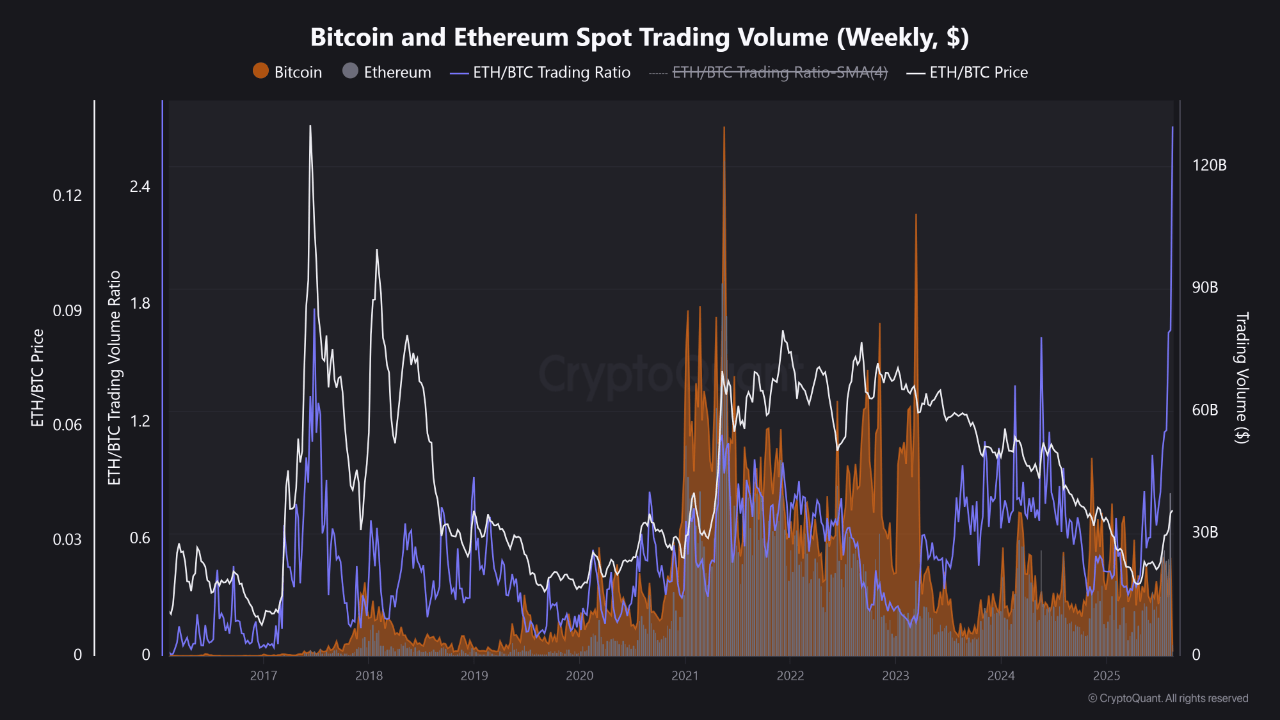
Notably, weekly spot trading volumes for ETH relative to BTC reached an all-time high, with Ethereum trading nearly three times the volume of Bitcoin last week. This signals an adjustment in market preference, as traders and investors increasingly allocate toward ETH.
The derivatives market has also reflected this trend. Data shows that ETH/BTC perpetual futures open interest has risen to 0.71, its highest point in 14 months.
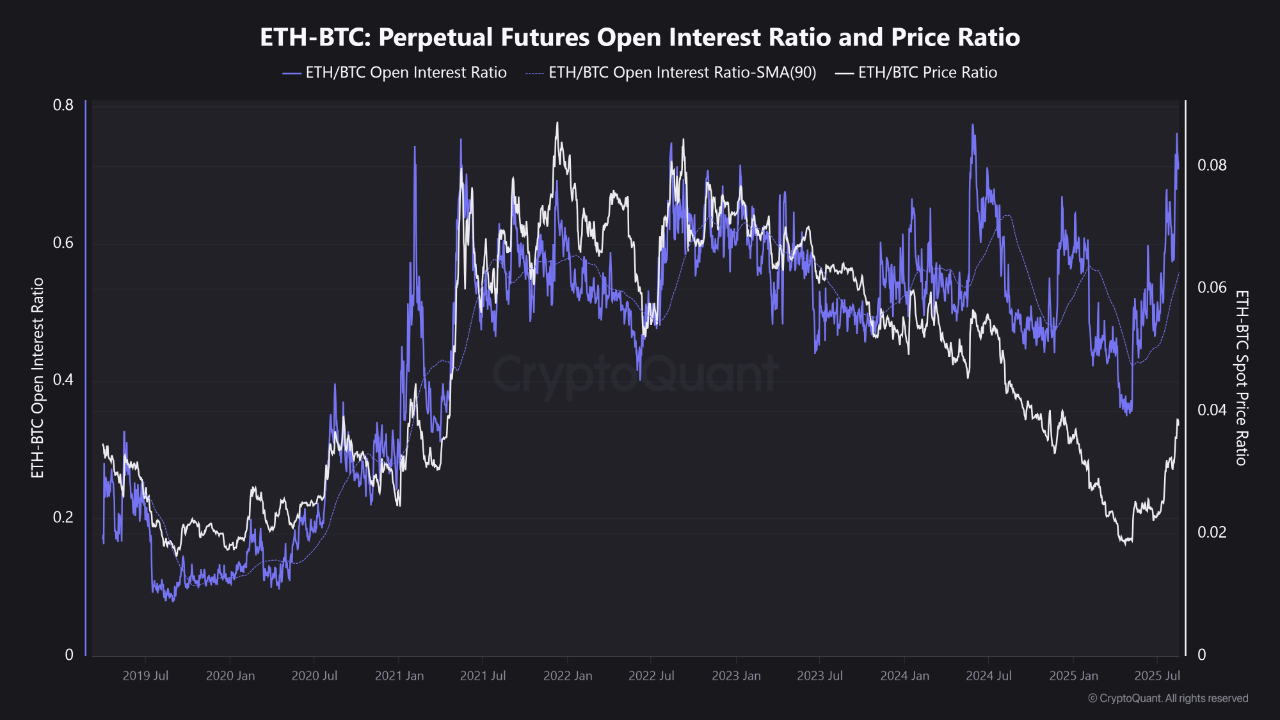
This rise suggests stronger speculative positioning around Ethereum. EgyHash emphasized that such increases often signal short-term strength but also warned that Ethereum’s long-term standing against Bitcoin will depend on sustained adoption and continued investor conviction.
Ethereum Institutional Demand and Policy Context
Beyond spot and derivatives activity, institutional demand for Ethereum has been growing steadily. Another CryptoQuant analyst, writing under the pseudonym OnChain, highlighted that investment funds now hold approximately 6.1 million ETH.
This represents a 68% increase compared to December 2024 levels and a 75% rise from April 2025. Alongside these holdings, the fund market premium for ETH has expanded significantly, climbing to a two-week average of 6.44%, far higher than during previous cycle peaks.
OnChain noted that such institutional accumulation reflects both financial and psychological market effects, with entities like BlackRock’s Ethereum ETF expanding exposure. The analyst also suggested that once staking becomes available within ETH-based ETFs, institutional flows could increase further.
This development could coincide with broader US regulatory clarity, as legislation such as the proposed CLARITY Act seeks to formally classify both Bitcoin and Ethereum as digital commodities under federal law.
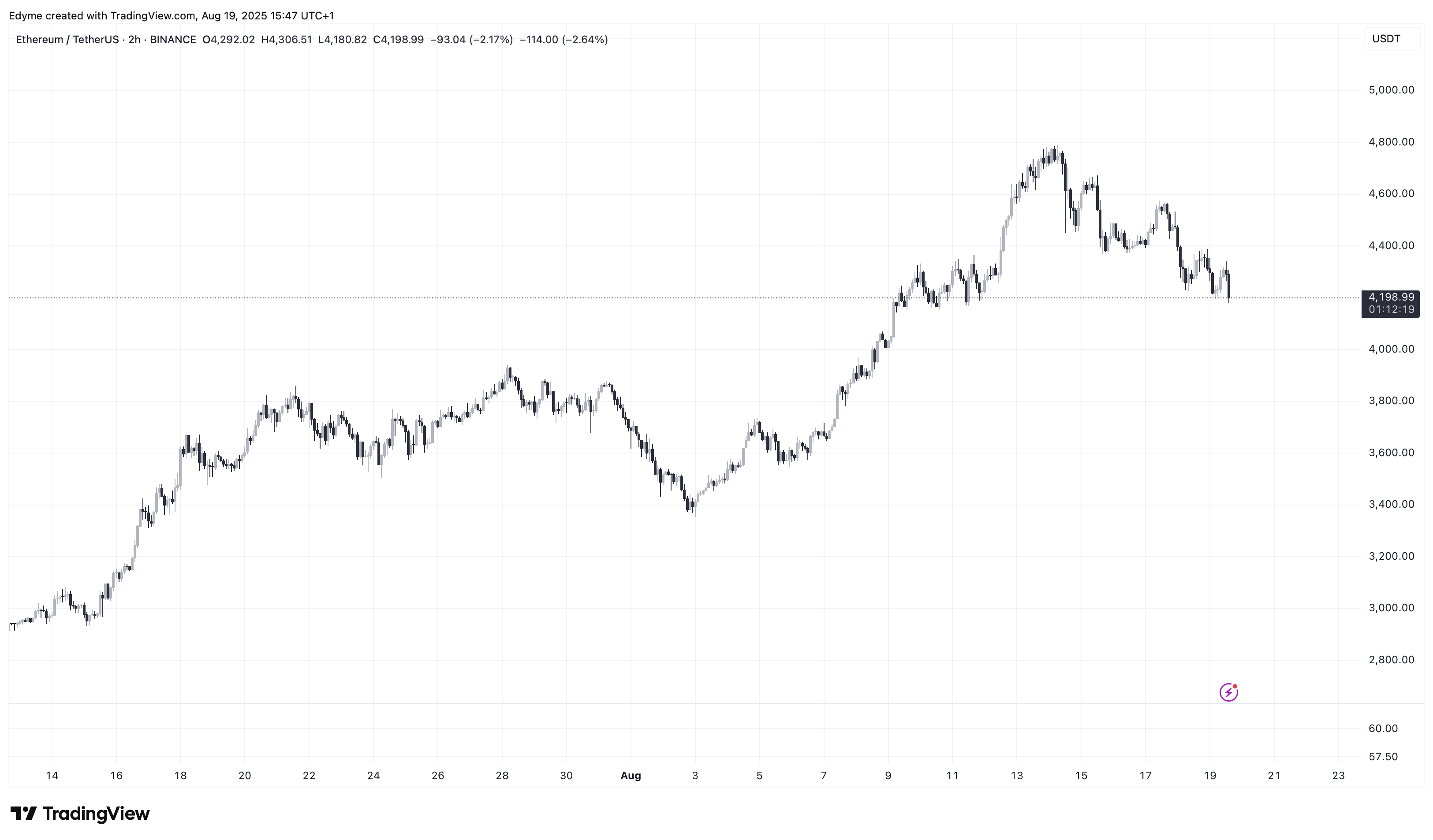
Featured image created with DALL-E, Chart from TradingView
Disclaimer: The content of this article solely reflects the author's opinion and does not represent the platform in any capacity. This article is not intended to serve as a reference for making investment decisions.
You may also like
How much CPO demand will Nvidia Rubin Ultra generate? Bernstein: Optical value per Pod will increase fivefold
Bernstein believes that the co-packaged optics (CPO) and fiber demand driven by Nvidia's Rubin Ultra architecture will surge significantly, with the optical content per Pod rising from $1 million to $5.4 million. This will propel the size of Nvidia's optical ecosystem market to $46.8 billion by 2028 (a 91% annual increase). Although the industry faces supply bottlenecks with InP substrates, the outlook remains positive. The institution reiterates its “outperform” rating for Lumentum, Coherent, and Ciena.
UBS Q3 implements a two-way strategy with gold options, heavily invests in technology stocks, and builds positions in SK Hynix (SKHY.US)
UBS Group (UBS.US) has submitted its Q3 holdings report (13F) as of September 30, 2026.
SpaceX (SPCX.US) reportedly attempts “de-Nvidiaization” at the rack level: developing Kessel cabinets to bypass L6 compute boards, purchasing only chips
SemiAnalysis: SpaceX has developed its own Kessel cabinet, bypassing Nvidia's L6 cards to provide more options for manufacturing its own hardware.

$3.7 billion “data center power equipment prepayments” abandoned! What did "the most active buyer of gas turbines", SoftBank, see?
In the second quarter of fiscal year 2026, SoftBank reported a net loss of $7.1 billion, primarily due to a $3.7 billion impairment charge from a $9.5 billion advance payment for power generation equipment for US data centers—of which about $2.9 billion was non-refundable and effectively lost. The CFO admitted that SoftBank placed orders before the project plan was finalized, and is now conducting a comprehensive review of its procurement strategy. "The most aggressive purchaser of gas turbines has now written off the deposit in this way."
Crypto prices
More


