
Toyota explores blockchain to turn cars into tradable RWAs

Japanese automaker giant Toyota is exploring the financialization of car ownership, turning fleets into assets.
- Toyota has proposed a blockchain that links all key data on cars
- NFTs can represent vehicle ownership, and traders can bundle them in a portfolio
- The concept is especially useful in EVs, robo-taxis, and fleets
Toyota is actively exploring the concept of tokenizing cars. On Tuesday, August 19, Toyota Blockchain Lab released a white paper on the Mobility Orchestration Network (MON). This new blockchain would be able to track key vehicle data, potentially turning cars into tokenized assets.
The proposal explains that every vehicle, including logistic trucks, rental fleets, or even robo-taxis, leaves a trail of information behind it. This information, including registration, manufacturing, and maintenance, could be bundled as proof on the network into a token.
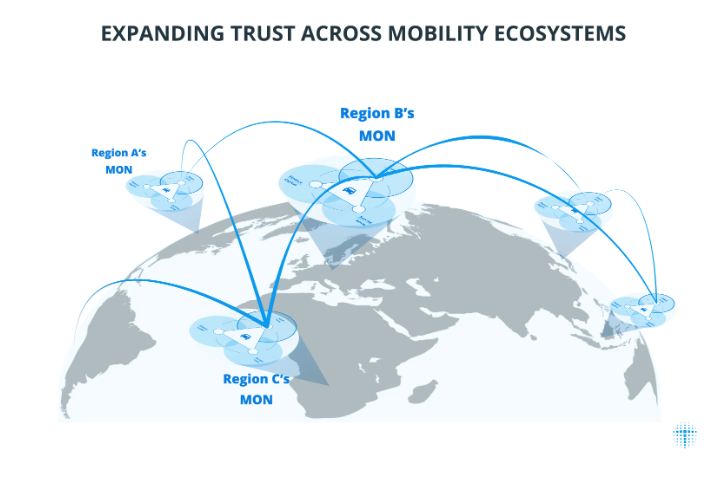 Diagram showing Mobility Orchestration Network connecting information across several regions | Source: Toyota Blockchain Lab
Each vehicle would have its own NFT, which comes together with all its history and key info. Potential buyers could then use this information to assess the car’s value. What is more, the network could enable users to buy these NFTs without having to physically control the vehicle.
How Toyota sees the future of car ownership
Toyota Blockchain Lab envisages several use cases for this network. For one, vehicles are expensive. However, unlike housing, they have so far eluded the trend toward financialization. With a blockchain network tracking their use, car ownership and use don’t have to be closely tied together.
For instance, carmakers could bundle multiple car NFTs into a fund, effectively enabling investment in car fleets. The same type of investment vehicle could be used to fund robo-taxi fleets or logistics fleets in emerging markets.
What is more, if cars can be securitized, fleet operators could be able to raise capital more cheaply than through loans. Still, the white paper does not go into how this financialization of car ownership could affect regular car owners or car prices.
Disclaimer: The content of this article solely reflects the author's opinion and does not represent the platform in any capacity. This article is not intended to serve as a reference for making investment decisions.
You may also like
How much CPO demand will Nvidia Rubin Ultra generate? Bernstein: Optical value per Pod will increase fivefold
Bernstein believes that the co-packaged optics (CPO) and fiber demand driven by Nvidia's Rubin Ultra architecture will surge significantly, with the optical content per Pod rising from $1 million to $5.4 million. This will propel the size of Nvidia's optical ecosystem market to $46.8 billion by 2028 (a 91% annual increase). Although the industry faces supply bottlenecks with InP substrates, the outlook remains positive. The institution reiterates its “outperform” rating for Lumentum, Coherent, and Ciena.

UBS Q3 implements a two-way strategy with gold options, heavily invests in technology stocks, and builds positions in SK Hynix (SKHY.US)
UBS Group (UBS.US) has submitted its Q3 holdings report (13F) as of September 30, 2026.

SpaceX (SPCX.US) reportedly attempts “de-Nvidiaization” at the rack level: developing Kessel cabinets to bypass L6 compute boards, purchasing only chips
SemiAnalysis: SpaceX has developed its own Kessel cabinet, bypassing Nvidia's L6 cards to provide more options for manufacturing its own hardware.

$3.7 billion “data center power equipment prepayments” abandoned! What did "the most active buyer of gas turbines", SoftBank, see?
In the second quarter of fiscal year 2026, SoftBank reported a net loss of $7.1 billion, primarily due to a $3.7 billion impairment charge from a $9.5 billion advance payment for power generation equipment for US data centers—of which about $2.9 billion was non-refundable and effectively lost. The CFO admitted that SoftBank placed orders before the project plan was finalized, and is now conducting a comprehensive review of its procurement strategy. "The most aggressive purchaser of gas turbines has now written off the deposit in this way."
Crypto prices
More


