
Texas judge backs Logan Paul’s bid to escape CryptoZoo lawsuit

YouTuber Logan Paul’s bid to dismiss a proposed class-action lawsuit over his defunct non-fungible token (NFT) project CryptoZoo should be allowed, says a Texas magistrate judge.
Magistrate Judge Ronald Griffin advised an Austin federal court on Thursday that the class group had not sufficiently tied Paul to their claims that they lost money by buying into the CryptoZoo project.
The recommendation could see a federal judge drop the suit unless the class updates it.
The group is made up of CryptoZoo buyers who first sued Paul and others allegedly tied to the project in February 2023, alleging it was a “rug pull” that promised perks which never materialized.
However, Griffin said the class should be allowed to amend all but one of their 27 claims against Paul, but said a claim alleging he committed commodity pool fraud should be permanently dismissed.
“Mental gymnastics” needed for commodity pool fraud claim
Judge Griffin said in his 75-page report that his recommendation to dismiss the lawsuit’s commodity pool fraud claim came as the court “does not follow Plaintiffs’ logic.”
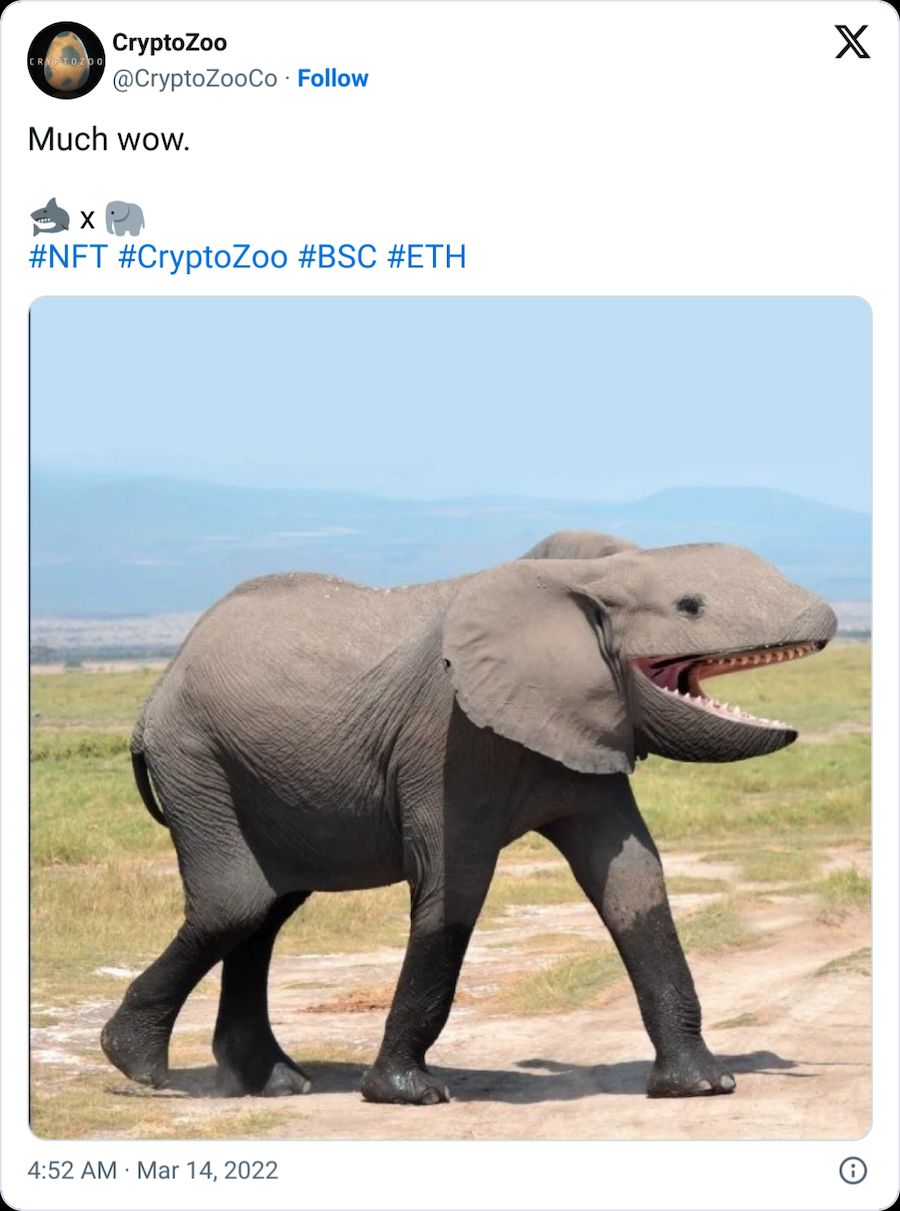
The class argued that CryptoZoo NFTs were an option contract as they started as “eggs” that “hatch” into animals, which then can be bred with others to create hybrid animals that could be traded.
“In other words, because purchasers buy CZ [CryptoZoo] NFTs unaware of their value until they hatch, and because the CZ NFT animals can be bred with others to create hybrid NFTs, an option contract is thereby formed,” Judge Griffin wrote.
“The mental gymnastics required to come to this conclusion are truly dizzying,” he added. “Plaintiffs do not explain—nor can the Court understand—how their purchases of CZ NFTs create option contracts or contracts for future delivery.”
Other claims fail to tie in Paul
Judge Griffin said that the lawsuit failed to properly connect Paul to the 26 other claims made against him, saying they hadn’t yet shown evidence that he directly and personally benefited from CryptoZoo’s collapse.
The lawsuit brought claims of fraud, unjust enrichment, negligence, breach of contract, fraud conspiracy, aiding and abetting fraud and breaches of consumer law in multiple states, among others.
Judge Griffin said in some cases the complaint gave “only fragments of facts accompanied by vague attributions of conduct to ‘Defendants’” or looked to “jam together two pieces of different puzzles in the vain hope of producing a final, cohesive product.”
“Unfortunately, the caselaw does not support this tactic.”
Paul refunded CryptoZoo buyers
The class group sued Paul and CryptoZoo co-founders Eduardo Ibanez and Jake Greenbaum in 2021, and Paul alleged in January 2024 that the duo conned him, causing CryptoZoo’s collapse, which Judge Griffin urged the court in July to rebuff.
Related: Digital Currency Group sues subsidiaries over $1.1B promissory note
In January 2023, Paul promised to make a plan for CryptoZoo and put aside $2.3 million for refunds for CryptoZoo buyers a year later under the condition that claimants agreed not to sue over the project.
Buyers were refunded 0.1 Ether (ETH), the same amount the CryptoZoo NFTs were originally sold for in 2021.
Magazine: Influencers shilling memecoin scams face severe legal consequences
Disclaimer: The content of this article solely reflects the author's opinion and does not represent the platform in any capacity. This article is not intended to serve as a reference for making investment decisions.
You may also like
How much CPO demand will Nvidia Rubin Ultra generate? Bernstein: Optical value per Pod will increase fivefold
Bernstein believes that the co-packaged optics (CPO) and fiber demand driven by Nvidia's Rubin Ultra architecture will surge significantly, with the optical content per Pod rising from $1 million to $5.4 million. This will propel the size of Nvidia's optical ecosystem market to $46.8 billion by 2028 (a 91% annual increase). Although the industry faces supply bottlenecks with InP substrates, the outlook remains positive. The institution reiterates its “outperform” rating for Lumentum, Coherent, and Ciena.

UBS Q3 implements a two-way strategy with gold options, heavily invests in technology stocks, and builds positions in SK Hynix (SKHY.US)
UBS Group (UBS.US) has submitted its Q3 holdings report (13F) as of September 30, 2026.

SpaceX (SPCX.US) reportedly attempts “de-Nvidiaization” at the rack level: developing Kessel cabinets to bypass L6 compute boards, purchasing only chips
SemiAnalysis: SpaceX has developed its own Kessel cabinet, bypassing Nvidia's L6 cards to provide more options for manufacturing its own hardware.

$3.7 billion “data center power equipment prepayments” abandoned! What did "the most active buyer of gas turbines", SoftBank, see?
In the second quarter of fiscal year 2026, SoftBank reported a net loss of $7.1 billion, primarily due to a $3.7 billion impairment charge from a $9.5 billion advance payment for power generation equipment for US data centers—of which about $2.9 billion was non-refundable and effectively lost. The CFO admitted that SoftBank placed orders before the project plan was finalized, and is now conducting a comprehensive review of its procurement strategy. "The most aggressive purchaser of gas turbines has now written off the deposit in this way."
Crypto prices
More


