Bitget App
Trade smarter
Buy cryptoMarketsTradeFuturesStocksEarnInstitutionAI & More
Mercedes CEO warns Europe against premature EV push as EVs get critical US support

Mercedes CEO warns Europe against premature EV push as EVs get critical US support

CryptopolitanCryptopolitan2025/08/12 03:40
By:By Hannah Collymore

Share link:In this post: Ola Källenius, CEO of Mercedes-Benz, has publicly criticized the European Union’s plan to ban CO2-emitting vehicles by 2035. Källenius argues that the transition to electric vehicles must be balanced with the realities of supply chain capabilities and consumer needs. The Trump administration released updated guidelines for a $5 billion program expanding electric vehicle (EV) charging infrastructure across the United States.

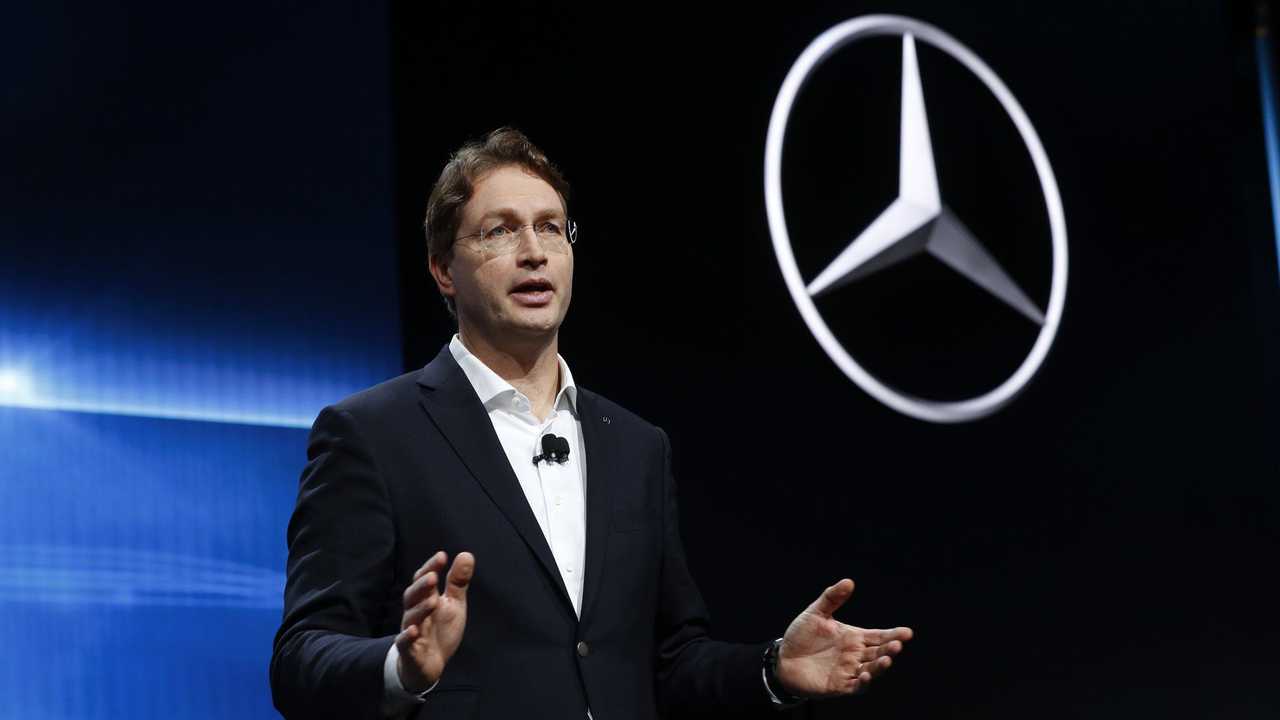
Mercedes-Benz CEO Ola Källenius recently shared his concerns about the European Union’s plan to ban CO2-emitting vehicles by 2035, calling for a “reality check” due to potential economic risks for the European auto industry. 

Starting in 2035, the EU has a plan to ban CO2-emitting vehicles, but Källenius wants the target reevaluated and has sounded the alarm in hopes of positively influencing the review coming up in the second half of this year.
Mercedes CEO warns Europe against premature EV push as EVs get critical US support image 0

Why Källenius is skeptical of the EU’s plan

Supporters of the ban say it is crucial for Europe to realize its green goals, but critics like Källenius argue it could make things worse for European carmakers who already have to deal with weak demand, Chinese competition, and poor electric vehicle sales.

Rather than an outright ban, Källenius has instead advocated for regular tax incentives and supply of low-cost power at charging stations to encourage more people to make the switch to electric vehicles.

“Of course we have to decarbonise, but it has to be done in a technology-neutral way. We must not lose sight of our economy,” he said.

“We need a reality check. Otherwise we are heading at full speed against a wall.”

Källenius noted that the car market is currently tougher than ever. He also argued that consumers could decide to buy cars with petrol or diesel engines ahead of the ban’s implementation, even if it stands.

See also Micron hikes Q4 outlook on AI chip surge

The US restarts EV charger funding despite Trump’s objections

While the EU is focused on banning petrol or diesel engines by 2035, America continues to gradually roll out infrastructure that will ease the transition for its citizens.

The Trump administration has released new guidance that outlines how states may use federal funds to build electric car chargers, a move that comes after a federal court blocked an earlier attempt to freeze the program.

According to the US Department of Transportation, the guidelines will streamline applications and cut red tape to access the program’s $5 billion in funding for charging infrastructure that is set to wind down in 2026.

The updated policy gets rid of some earlier requirements, such as ensuring disadvantaged communities have access to EV chargers and promoting the use of union labor in installation.

The National Electric Vehicle Infrastructure program was part of the 2021 bipartisan infrastructure law enacted by President Joe Biden. However, the Federal Highway Administration in February suspended the program at the behest of Trump, who wanted to eliminate federal support for the wider adoption of EVs.

A federal court ruling in June blocked the suspension claiming the Transportation Department’s move had no such authority which means it had attempted to override the will of Congress.

See also Chinese tech giants reel under US tariffs as they bet big on AI

Transportation Secretary Sean Duffy has said that while he doesn’t “agree with subsidizing green energy,” the will of Congress will be respected and they will make sure the program efficiently utilizes federal resources.

Get seen where it counts. Advertise in Cryptopolitan Research and reach crypto’s sharpest investors and builders.


1
0

Disclaimer: The content of this article solely reflects the author's opinion and does not represent the platform in any capacity. This article is not intended to serve as a reference for making investment decisions.

Understand the market, then trade.
Bitget offers one-stop trading for cryptocurrencies, stocks, and gold.
Trade now!

You may also like

How much CPO demand will Nvidia Rubin Ultra generate? Bernstein: Optical value per Pod will increase fivefold

Bernstein believes that the co-packaged optics (CPO) and fiber demand driven by Nvidia's Rubin Ultra architecture will surge significantly, with the optical content per Pod rising from $1 million to $5.4 million. This will propel the size of Nvidia's optical ecosystem market to $46.8 billion by 2028 (a 91% annual increase). Although the industry faces supply bottlenecks with InP substrates, the outlook remains positive. The institution reiterates its “outperform” rating for Lumentum, Coherent, and Ciena.

华尔街见闻•2026/11/11 08:47
How much CPO demand will Nvidia Rubin Ultra generate? Bernstein: Optical value per Pod will increase fivefold

UBS Q3 implements a two-way strategy with gold options, heavily invests in technology stocks, and builds positions in SK Hynix (SKHY.US)

UBS Group (UBS.US) has submitted its Q3 holdings report (13F) as of September 30, 2026.

智通财经•2026/11/11 08:22
UBS Q3 implements a two-way strategy with gold options, heavily invests in technology stocks, and builds positions in SK Hynix (SKHY.US)

SpaceX (SPCX.US) reportedly attempts “de-Nvidiaization” at the rack level: developing Kessel cabinets to bypass L6 compute boards, purchasing only chips

SemiAnalysis: SpaceX has developed its own Kessel cabinet, bypassing Nvidia's L6 cards to provide more options for manufacturing its own hardware.

智通财经•2026/11/11 08:20
SpaceX (SPCX.US) reportedly attempts “de-Nvidiaization” at the rack level: developing Kessel cabinets to bypass L6 compute boards, purchasing only chips

$3.7 billion “data center power equipment prepayments” abandoned! What did "the most active buyer of gas turbines", SoftBank, see?

In the second quarter of fiscal year 2026, SoftBank reported a net loss of $7.1 billion, primarily due to a $3.7 billion impairment charge from a $9.5 billion advance payment for power generation equipment for US data centers—of which about $2.9 billion was non-refundable and effectively lost. The CFO admitted that SoftBank placed orders before the project plan was finalized, and is now conducting a comprehensive review of its procurement strategy. "The most aggressive purchaser of gas turbines has now written off the deposit in this way."

华尔街见闻•2026/11/11 08:19
