

The US GENIUS Act could significantly boost stablecoin adoption while driving trillions into tokenized real-world assets due to its ban on yield-bearing stablecoins.
-
The GENIUS Act’s ban on yield-bearing stablecoins may lead to increased investment in tokenized assets.
-
Experts predict a shift of capital from non-interest-bearing stablecoins to tokenized financial markets.
-
Trillions of dollars are expected to flow into digital finance as institutions seek yield.
The US GENIUS Act may enhance stablecoin adoption while redirecting capital into tokenized assets, creating new opportunities in digital finance.
| Yield-bearing Stablecoins | Banned | Increased tokenization |
What is the US GENIUS Act?
The US GENIUS Act is a legislative proposal aimed at regulating stablecoins and enhancing their adoption. Its central provision is a ban on yield-bearing stablecoins, which could redirect capital into tokenized assets.
How Will the GENIUS Act Affect Stablecoin Adoption?
The GENIUS Act is expected to boost stablecoin adoption by legitimizing digital currencies. However, the ban on yield-bearing options may lead institutions to seek alternative investment vehicles, such as tokenized real-world assets.
Frequently Asked Questions
How does the GENIUS Act impact digital finance?
The GENIUS Act is expected to reshape digital finance by promoting stablecoin use while limiting yield options, driving investments into tokenized assets.
What are tokenized real-world assets?
Tokenized real-world assets are digital representations of physical assets, allowing for fractional ownership and broader access to investment opportunities.
Key Takeaways
- Stablecoin Adoption: The GENIUS Act is likely to enhance stablecoin usage.
- Capital Shift: Expect a significant flow of capital into tokenized assets.
- Investment Opportunities: Tokenization will broaden access to various asset classes.
Conclusion
The US GENIUS Act presents a pivotal moment for stablecoins and tokenization, potentially reshaping the landscape of digital finance. As institutions adapt, the focus will shift toward compliant avenues for earning yield, marking a new era in asset management.
-
The US GENIUS Act could serve as a major catalyst for stablecoin adoption both domestically and abroad.
-
Rather than simply boosting demand for dollar-backed digital currencies, it may unintentionally push capital into the tokenization market as investors seek yield on their holdings.
-
A central provision of the GENIUS Act is its blanket ban on yield-bearing stablecoins, which prevents holders from earning interest on their digital dollar balances.
The US GENIUS Act may boost stablecoin adoption, but its ban on yield-bearing stablecoins could drive trillions into tokenized real-world assets.
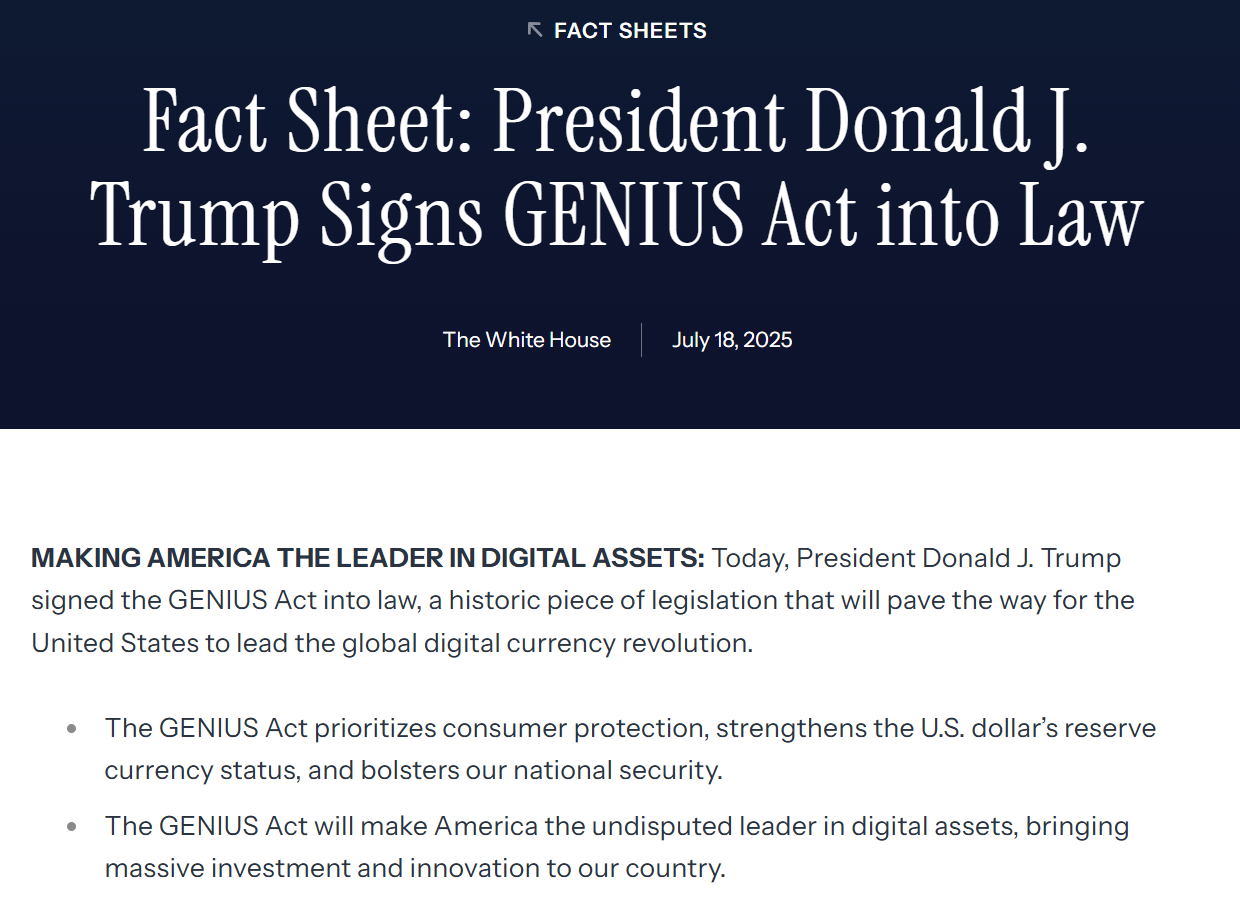 An excerpt of US President Donald Trump’s GENIUS Act fact sheet. Source: White House
“With yield-bearing stablecoins off the table, institutions need a compliant way to earn yield while staying liquid,” Beeson told Cointelegraph. “Capital is already shifting.”
He noted that trillions of dollars in non-interest-bearing stablecoins are poised to enter digital finance. “Institutional holders aren’t going to sit on idle, depreciating assets. They’ll demand yield — and infrastructure that makes accessing it […] compliant,” he said, adding:
“The next phase isn’t about holding idle stablecoins. It’s about programmatic access to risk-free yield, and the ability to move between cash and high-quality assets at will.”
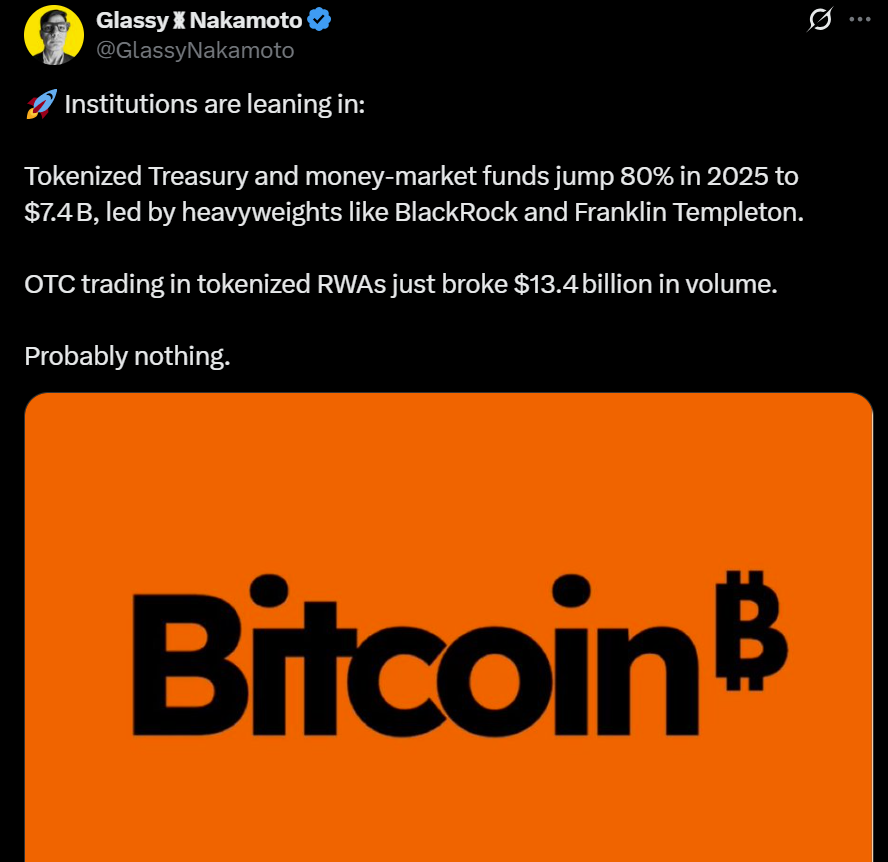 Tokenized Treasury and money market funds have witnessed significant growth in 2025. Source: Glassy Nakamoto
To meet this need, Beeson’s Uniform Labs is building Multiliquid, an institutional liquidity layer for tokenized markets that enables programmable, real-time conversion between tokenized assets, such as US Treasurys and money market funds, and stablecoins.
Multiliquid’s open-architecture design allows compliant issuers to integrate without commercial agreements.
While declining to name partners, Beeson confirmed that Uniform Labs is “working with a number of leading institutions, fintechs, and stablecoin issuers” ahead of its production launch later this year.
Before launching Uniform Labs, Beeson served as chief product officer at Libeara, a tokenization platform incubated by Standard Chartered’s SC Ventures.
Related: Tokenized money market funds emerge as Wall Street’s answer to stablecoins
Tokenization surge to broaden beyond private credit, government bonds
Although the GENIUS Act gives newfound legitimacy to stablecoins — and to digital currencies more broadly — “the next phase of digital assets is focused on asset tokenization,” wrote Sandra Waliczek, a member of the World Economic Forum’s blockchain and digital asset division.
Waliczek highlighted tokenization’s potential to level the investing playing field for asset classes like real estate and private equity, which have historically been restricted to wealthier investors.
“Tokenization changes this by enabling asset fractionalization, breaking assets into smaller, more affordable units,” she wrote.
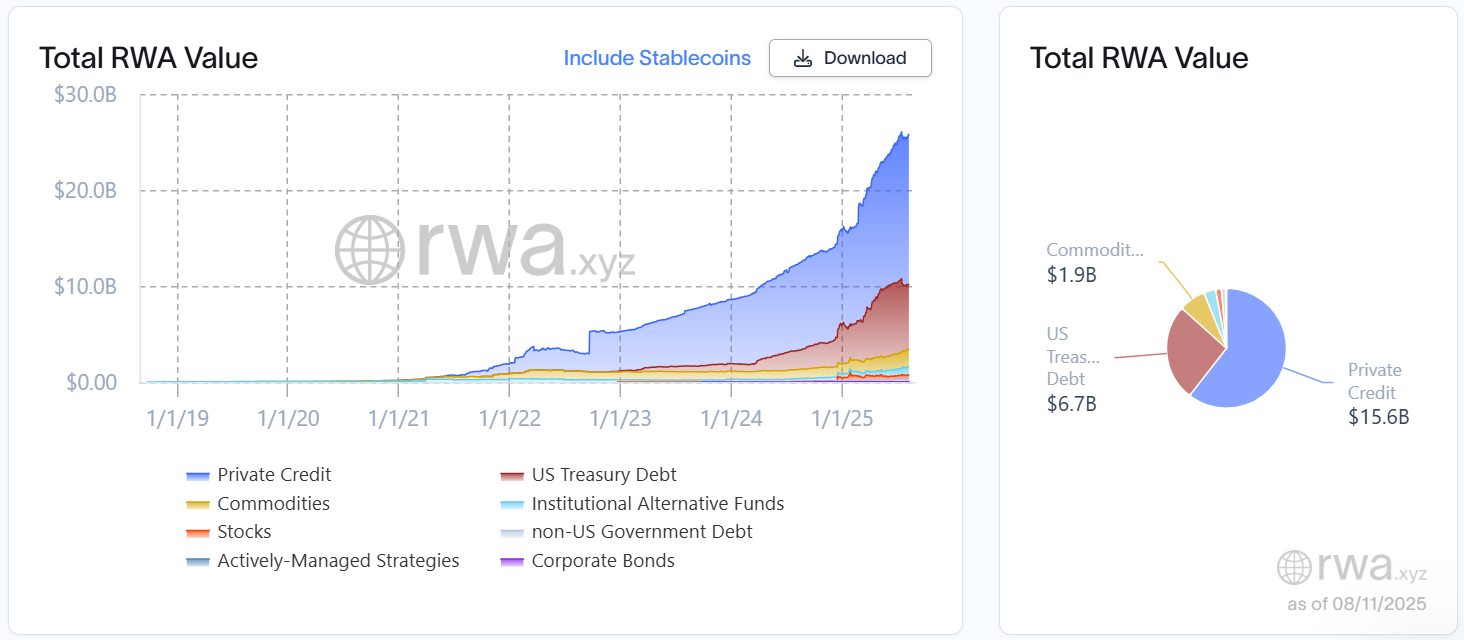 A snapshot of the nearly $26 billion tokenization market. Source: RWA.xyz
So far, the nearly $26 billion tokenization market has largely centered on private credit and government bonds. But as Beeson noted, the disruption will extend far beyond those segments, encompassing “corporate bonds, credit and credit funds, commodities, equities, real estate funds, private equity funds, and ultimately private equity and real estate assets themselves.”
Related: GENIUS Act scrutinized for stablecoin yield ban as TradFi tokenization gains steam





