
Bitcoin’s corporate boom raises ‘Fort Knox’ nationalization concerns

Corporate Bitcoin treasuries have surged past $100 billion, raising concerns among analysts that the United States could one day nationalize these holdings in a move reminiscent of the gold standard era.
Corporate crypto treasuries have surpassed $100 billion of digital asset holdings, with Bitcoin (BTC) treasury firms amassing 791,662 BTC worth about $93 billion, representing 3.98% of the circulating supply, Cointelegraph reported on July 31.
The growing corporate holdings may present a new centralized point of vulnerability for Bitcoin, which may see the world’s first cryptocurrency follow the same “nationalization path” as gold in 1971, according to crypto analyst Willy Woo.
“If the US dollar is structurally getting weak and China is coming in, it’s a fair point that the US might do an offer to all the treasury companies and centralize where it could be then put into a digital form, not create a new gold standard,” Woo said during a panel discussion at Baltic Honeybadger 2025, adding:
“You could then rug it like happened in 1971. And it’s all centralized around the digital Bitcoin. The whole history repeats again back to the beginning.”

In 1971, President Richard Nixon ended the Bretton Woods system, suspending the dollar’s convertibility into gold and abandoning the fixed $35-per-ounce rate, effectively ending the gold standard.
Related: BTCFi VC funding hits $175M as investors focus on consumer apps
Woo noted that institutional adoption is still a critical step for Bitcoin to replace the US dollar, surpass gold and become a new monetary standard. “That’s not going to happen until you get the large gatekeepers of capital opening up to Bitcoin and pouring money in,” he said.
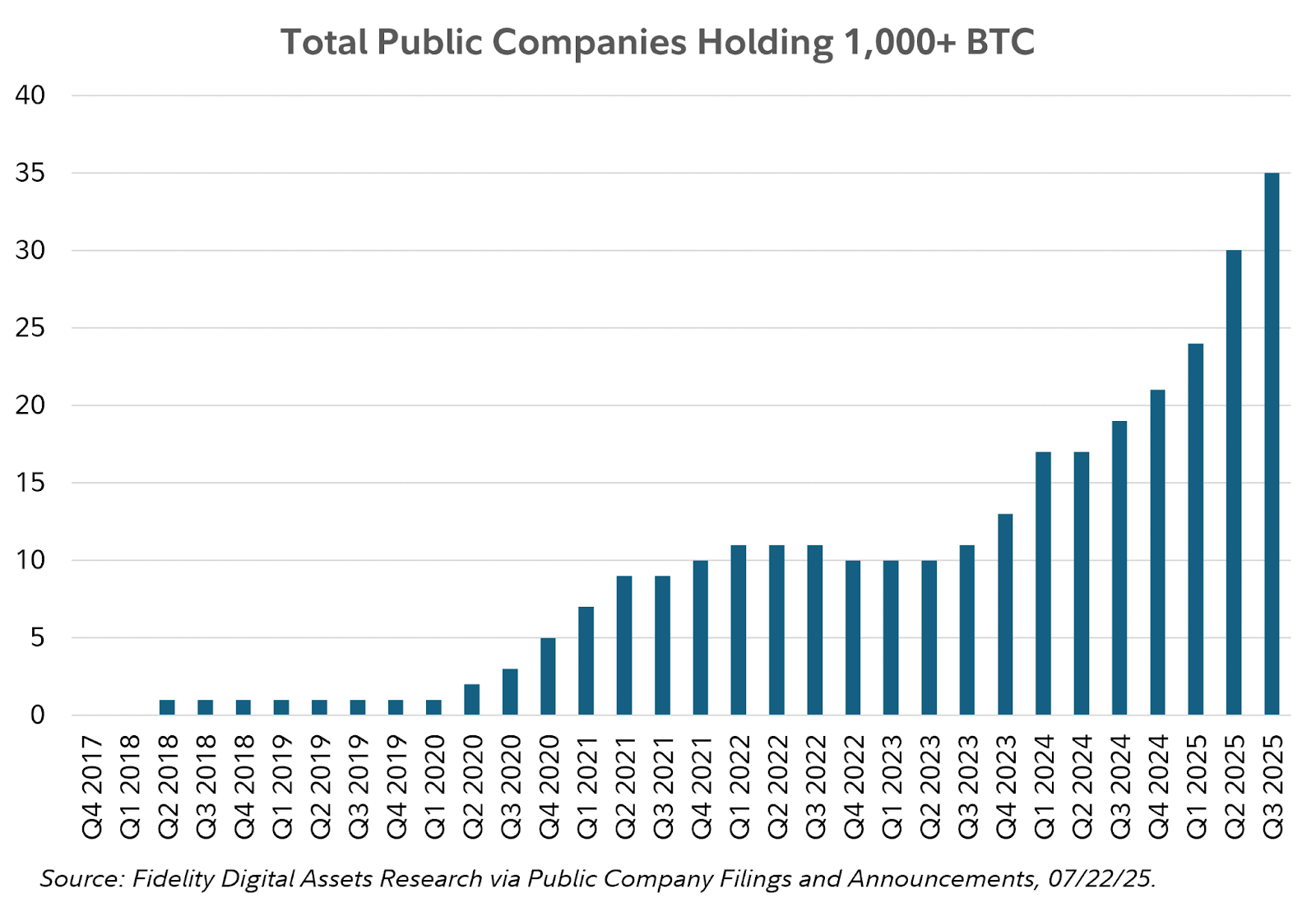
The analyst’s comments come amid a period of accelerating institutional adoption, two weeks after 35 publicly traded companies have surpassed 1,000 BTC or approximately $116 billion in balance sheet holdings each, Cointelegraph reported on July 25.
Nationalization efforts may also target Bitcoin whales, according to Preston Pysh, co-founder of the Investors Podcast Network and Bitcoin venture fund Ego Death Capital.
“They’re going to take the Bitcoin because it’s going to have an institutional custodian that does not want to go to jail,” he explained, adding that the first targets may be “private entities that have a lot of Bitcoin.”
Related: Tokenized stocks rise 220% in July, reminiscent of ‘early DeFi boom’
Massive upside despite risks
Despite the nationalization concerns, the growing corporate adoption may present a potential $100 trillion market opportunity.
Bitcoin is already a $2 trillion-dollar asset at just 16 years of age, said Woo, adding that “we’ve got 100x to grow, and it’s probably going to take decades to get there.”
Woo’s projection aligns with prior forecasts from Adam Back, co-founder and CEO of Blockstream, who has described Bitcoin as a $200 trillion market opportunity in the long term.
“A sustainable and scalable $100-$200 trillion trade front-running hyperbitcoinization. scalable enough for most big listed companies to move to BTC treasury,” said Back in an April 26 X post.
Hyperbitcoinization refers to the theoretical future where Bitcoin becomes the largest global currency, replacing fiat money due to its inflationary economics.
Magazine: Bitcoin OG Willy Woo has sold most of his Bitcoin — Here’s why
Disclaimer: The content of this article solely reflects the author's opinion and does not represent the platform in any capacity. This article is not intended to serve as a reference for making investment decisions.
You may also like
How much CPO demand will Nvidia Rubin Ultra generate? Bernstein: Optical value per Pod will increase fivefold
Bernstein believes that the co-packaged optics (CPO) and fiber demand driven by Nvidia's Rubin Ultra architecture will surge significantly, with the optical content per Pod rising from $1 million to $5.4 million. This will propel the size of Nvidia's optical ecosystem market to $46.8 billion by 2028 (a 91% annual increase). Although the industry faces supply bottlenecks with InP substrates, the outlook remains positive. The institution reiterates its “outperform” rating for Lumentum, Coherent, and Ciena.

UBS Q3 implements a two-way strategy with gold options, heavily invests in technology stocks, and builds positions in SK Hynix (SKHY.US)
UBS Group (UBS.US) has submitted its Q3 holdings report (13F) as of September 30, 2026.

SpaceX (SPCX.US) reportedly attempts “de-Nvidiaization” at the rack level: developing Kessel cabinets to bypass L6 compute boards, purchasing only chips
SemiAnalysis: SpaceX has developed its own Kessel cabinet, bypassing Nvidia's L6 cards to provide more options for manufacturing its own hardware.

$3.7 billion “data center power equipment prepayments” abandoned! What did "the most active buyer of gas turbines", SoftBank, see?
In the second quarter of fiscal year 2026, SoftBank reported a net loss of $7.1 billion, primarily due to a $3.7 billion impairment charge from a $9.5 billion advance payment for power generation equipment for US data centers—of which about $2.9 billion was non-refundable and effectively lost. The CFO admitted that SoftBank placed orders before the project plan was finalized, and is now conducting a comprehensive review of its procurement strategy. "The most aggressive purchaser of gas turbines has now written off the deposit in this way."
Crypto prices
More


