

SBI Holdings has indicated potential plans for an XRP ETF, contingent on future regulatory clarity in Japan, although no official application is currently in progress.
-
SBI Holdings hints at future XRP ETF, fueled by regulatory progress in Japan, though no official move is planned yet.
-
Social media rumors misrepresented the situation, claiming SBI’s XRP ETF application is already underway, which isn’t true.
-
Despite progress in crypto regulation, Japan’s authorities need to provide clarity before SBI proceeds with any ETF plans.
SBI Holdings hints at a potential XRP ETF, fueled by regulatory advancements in Japan, though no official application is underway yet.
New XRP ETF Rumors
One topic that persistently attracts attention in crypto is the XRP ETF. This product began trading in Brazil in April and went live in Canada in June, but US regulators keep dragging their feet.
Thanks to recent developments, social media rumors suggest that Japan will be the next country to launch this product.
So, why is this? SBI Holdings, a Japanese financial conglomerate, recently posted its Q2 2025 Financial Results. Among many topics, it referenced potential regulatory developments in the country, which could enable the firm to create new token-based ETFs.
One of its ETF proposals focused on indirect crypto exposure, while the other included XRP:
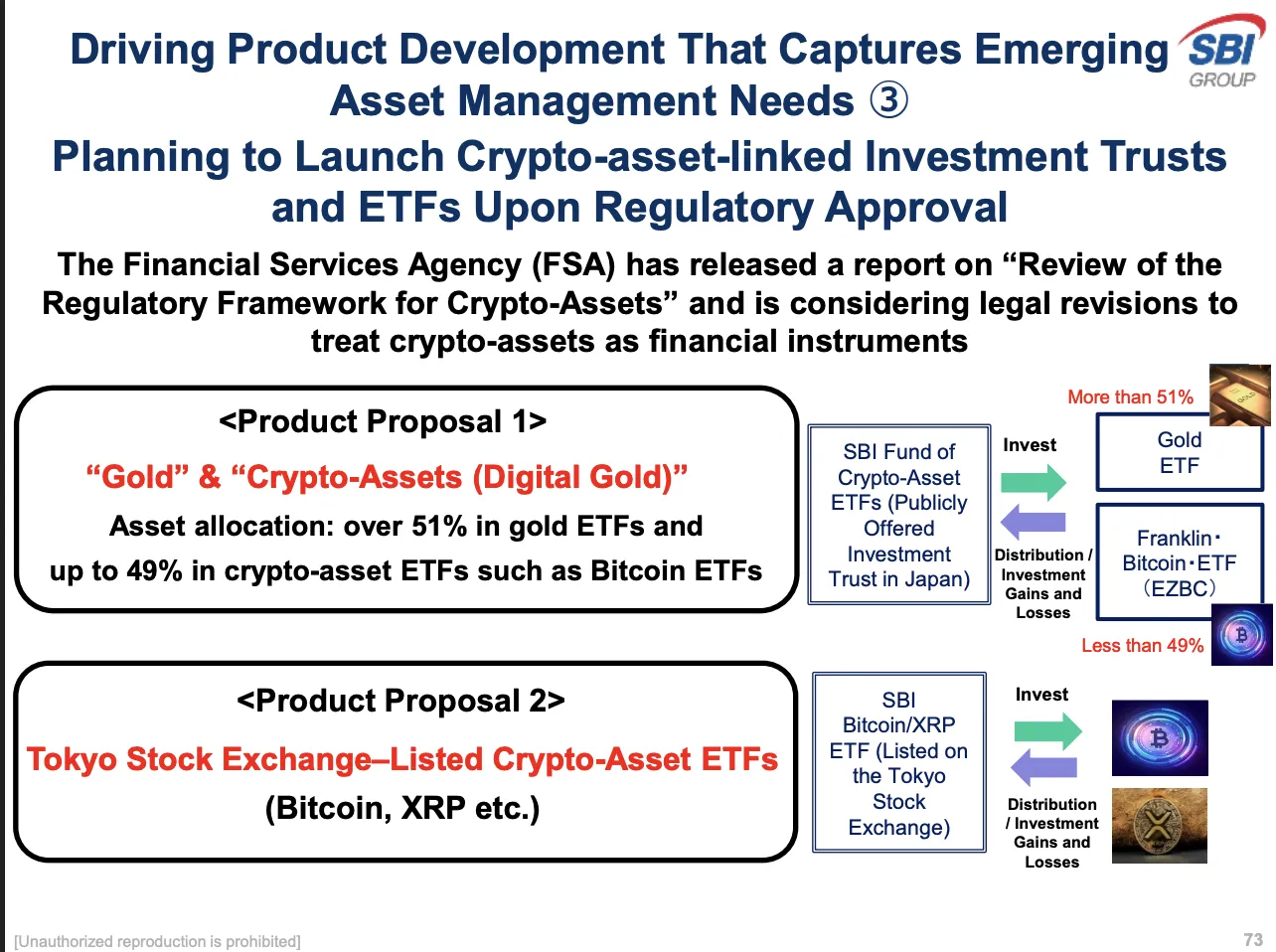 SBI Holdings’ ETF Proposals. Source: SBI
Is the Hype Credible?
There’s certainly a bullish case for why SBI could establish an XRP ETF.
For one thing, the firm has an established history with Ripple, as it’s currently one of the largest users of XRP on Ripple’s Global Payments Network. Moreover, it even allows customers to acquire XRP using credit card points.
However, social media rumors implied or erroneously claimed that SBI’s XRP ETF application was already in progress. Unfortunately, that’s an exaggeration.
At least Japan is actually getting serious about crypto regulation; one of its top financial regulators recently began operating a Working Group on Web3 policy. This signal encouraged SBI to prepare these hypothetical products.
Nonetheless, SBI won’t make a move until it gets more clarity from the authorities. Furthermore, this advertised product isn’t actually an XRP ETF. It’d be a basket product, combining XRP with several other leading tokens.
The US, as a matter of fact, already approved such a product, although it faces a few setbacks before market access.
Still, SBI has a definite history of partnership with Ripple and interest in XRP. If anybody in Japan is going to launch an XRP ETF, they’re a strong candidate.
For now, however, it’ll have to wait for regulatory approval, just like XRP fans in most jurisdictions worldwide.
Frequently Asked Questions
What is an XRP ETF?
An XRP ETF is an exchange-traded fund that allows investors to gain exposure to XRP without directly holding the cryptocurrency. It combines XRP with other assets in a single investment vehicle.
When will SBI Holdings launch its XRP ETF?
Currently, SBI Holdings has not officially announced a launch date for its XRP ETF, as it awaits further regulatory clarity from Japanese authorities.
Key Takeaways
- SBI Holdings is exploring an XRP ETF: The firm is waiting for regulatory clarity before moving forward.
- Social media rumors are misleading: Claims of an ongoing application for the ETF are exaggerated.
- Japan’s regulatory environment is evolving: Recent developments signal a more serious approach to crypto regulation.
Conclusion
SBI Holdings is positioned as a key player in the potential launch of an XRP ETF, contingent on regulatory developments in Japan. As the landscape evolves, XRP enthusiasts remain hopeful for a favorable outcome.





