
Could Tennessee Get a Bitcoin Reserve With Marsha Blackburn as Governor?

Marsha Blackburn's campaign for Governor of Tennessee signals the potential for a state-backed Bitcoin Reserve, making Tennessee a potential player in the crypto space.
Tennessee Senator Marsha Blackburn announced her candidacy for Governor today. A prominent crypto advocate, her victory could spell a new initiative for a local Bitcoin Reserve.
Blackburn supported a national Bitcoin Strategic Reserve bill and has co-sponsored other proposals, like the GENIUS Act. She has spoken at industry events in the state, and her campaign accepts crypto donations.
Tennessee’s Potential Next Pro-Crypto Governor
2025 has been a potent year for US crypto regulation, but the current Tennessee Governor, Bill Lee, hasn’t been particularly active. Since taking office in 2019, he’s signed multiple bills aiding the crypto industry without being a vocal supporter.
However, his term is expiring next year, and a new candidate may take the Volunteer State to the forefront of Web3 friendliness.
It’s official! I’m running for Governor to ensure Tennessee is America’s conservative leader for this generation and the next. I would be honored to have your support. #TNGov pic.twitter.com/5PNN8MkTJQ
— Marsha Blackburn (@VoteMarsha) August 6, 2025
Senator Marsha Blackburn, by contrast, is a fierce supporter of the industry. Her campaign has accepted crypto donations for over a year, and she spoke at last year’s Bitcoin Conference in Nashville alongside President Trump.
She was also a co-sponsor of the GENIUS Act alongside other bills.
Could Blackburn Introduce a Bitcoin Reserve For Tennessee?
So, why should the crypto community care about this development? If Blackburn becomes Tennessee’s Governor, she’ll be less able to vote for nationwide legislative initiatives. However, her local influence would grow significantly.
Case in point, Blackburn sponsored a bill to create a Strategic Bitcoin Reserve, but this referred to a national initiative. Right now, more than 20 US states are attempting to develop local reserves, but Tennessee isn’t among them.
According to crypto policy watchdogs, it’s one of the last holdouts.
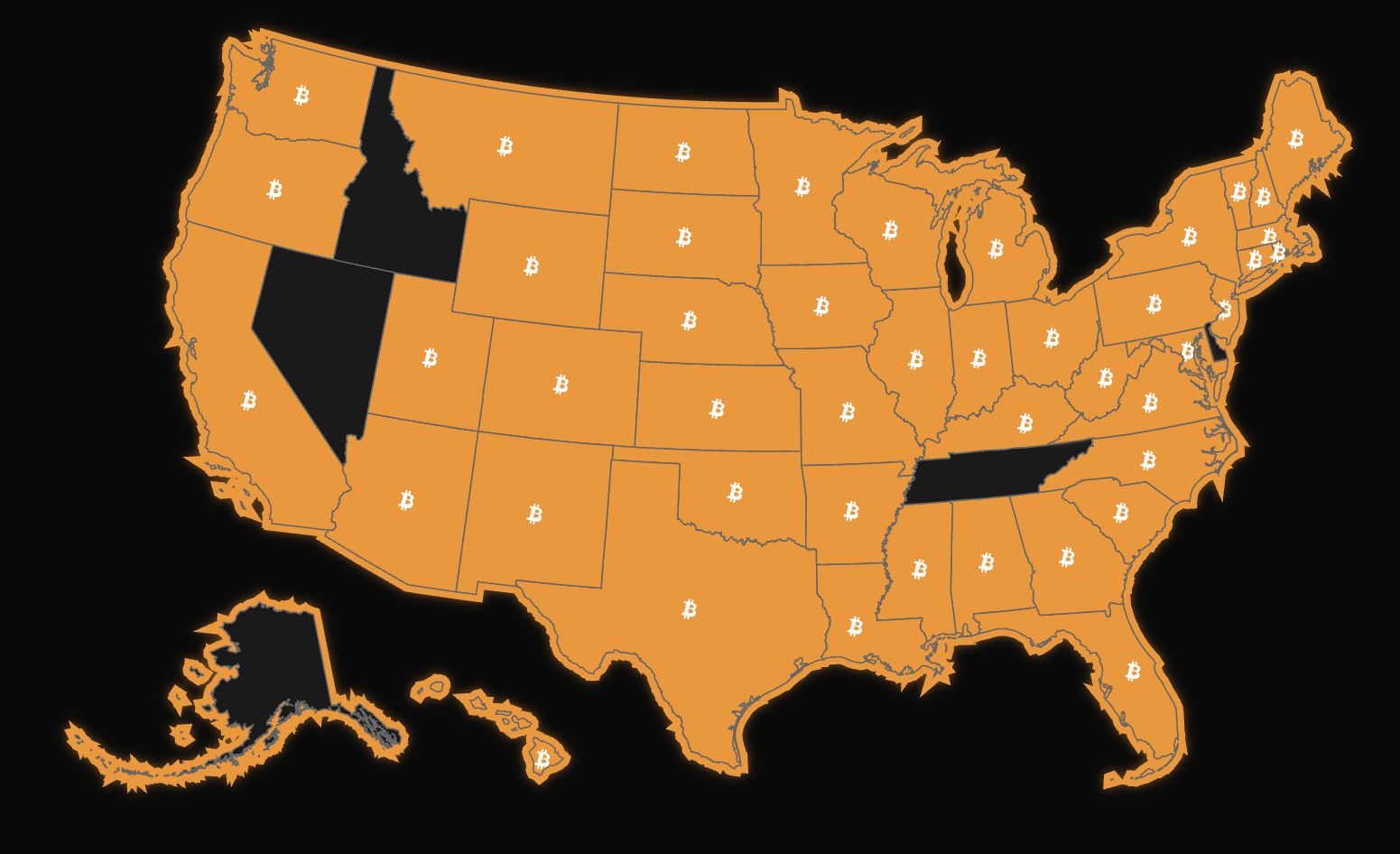 No Bitcoin Reserve for Tennessee. Source:
Bitcoinlaws.io
As Governor, Marsha Blackburn would be in an ideal position to change this situation for Tennessee. She already supported a national Bitcoin Reserve, so a local counterpart seems like a logical next step.
Having a supportive Governor would be very beneficial to Tennessee’s hypothetical Bitcoin Reserve effort. In Arizona, the Governor vetoed Reserve bills, even though they were very popular in the legislature.
Conversely, a sympathetic executive branch can help get these initiatives off the ground.
All that is to say, it currently seems very likely that Blackburn will win this election. Tennessee is a deeply red state, and a Democrat hasn’t been elected Governor there since 2006.
Disclaimer: The content of this article solely reflects the author's opinion and does not represent the platform in any capacity. This article is not intended to serve as a reference for making investment decisions.
You may also like
How much CPO demand will Nvidia Rubin Ultra generate? Bernstein: Optical value per Pod will increase fivefold
Bernstein believes that the co-packaged optics (CPO) and fiber demand driven by Nvidia's Rubin Ultra architecture will surge significantly, with the optical content per Pod rising from $1 million to $5.4 million. This will propel the size of Nvidia's optical ecosystem market to $46.8 billion by 2028 (a 91% annual increase). Although the industry faces supply bottlenecks with InP substrates, the outlook remains positive. The institution reiterates its “outperform” rating for Lumentum, Coherent, and Ciena.
UBS Q3 implements a two-way strategy with gold options, heavily invests in technology stocks, and builds positions in SK Hynix (SKHY.US)
UBS Group (UBS.US) has submitted its Q3 holdings report (13F) as of September 30, 2026.
SpaceX (SPCX.US) reportedly attempts “de-Nvidiaization” at the rack level: developing Kessel cabinets to bypass L6 compute boards, purchasing only chips
SemiAnalysis: SpaceX has developed its own Kessel cabinet, bypassing Nvidia's L6 cards to provide more options for manufacturing its own hardware.
$3.7 billion “data center power equipment prepayments” abandoned! What did "the most active buyer of gas turbines", SoftBank, see?
In the second quarter of fiscal year 2026, SoftBank reported a net loss of $7.1 billion, primarily due to a $3.7 billion impairment charge from a $9.5 billion advance payment for power generation equipment for US data centers—of which about $2.9 billion was non-refundable and effectively lost. The CFO admitted that SoftBank placed orders before the project plan was finalized, and is now conducting a comprehensive review of its procurement strategy. "The most aggressive purchaser of gas turbines has now written off the deposit in this way."
Crypto prices
More


