

Solana’s long-term holders are actively accumulating SOL despite recent price declines, suggesting the token may be nearing a local bottom as selling pressure eases.
-
Long-term holders increased net position by 102% since late July, signaling strong confidence.
-
Realized Profit/Loss Ratio dropped to 0.15, indicating most recent sellers exited at a loss.
-
Technical indicators show momentum slowing with potential for price stabilization and rebound.
Solana long-term holders boost accumulation amid price dip, signaling potential bottom. Discover SOL’s market trends and what’s next for investors.
Why Are Solana Long-Term Holders Increasing Their Positions Despite Price Drops?
Solana long-term holders are accumulating more SOL tokens even as prices fall. Data from Glassnode reveals a 102% increase in Hodler Net Position Change since July 30, highlighting strategic accumulation rather than panic selling. This behavior suggests seasoned investors anticipate a recovery or see value at current levels.
What Does the Realized Profit/Loss Ratio Indicate About Solana’s Market Sentiment?
The Realized Profit/Loss Ratio for SOL reached a 30-day low of 0.15 on August 2, showing that recent sellers mostly exited at a loss. Historically, such capitulation points often occur near market cycle bottoms, implying that selling pressure may be diminishing and a stabilization phase could be imminent.
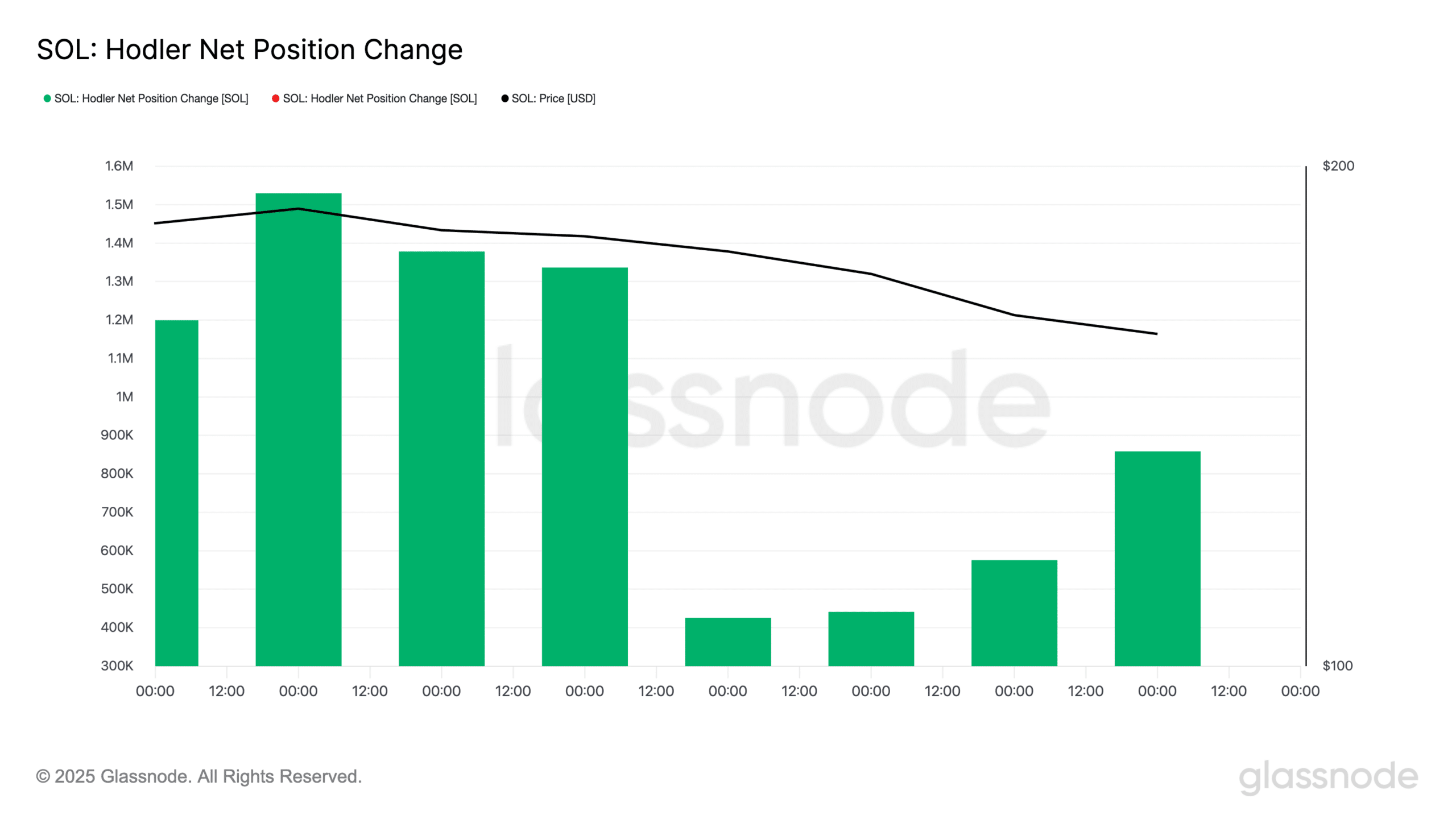
Source: Glassnode
How Is Solana’s Price Momentum Affecting Buyer and Seller Behavior?
After a series of declines, Solana’s price momentum is showing signs of slowing. The Relative Strength Index (RSI) stands at 41.65, approaching oversold territory, which often precedes price stabilization. Additionally, the On-Balance Volume (OBV) indicator has flattened, suggesting that selling volume is decreasing and buyers may be preparing to enter the market.
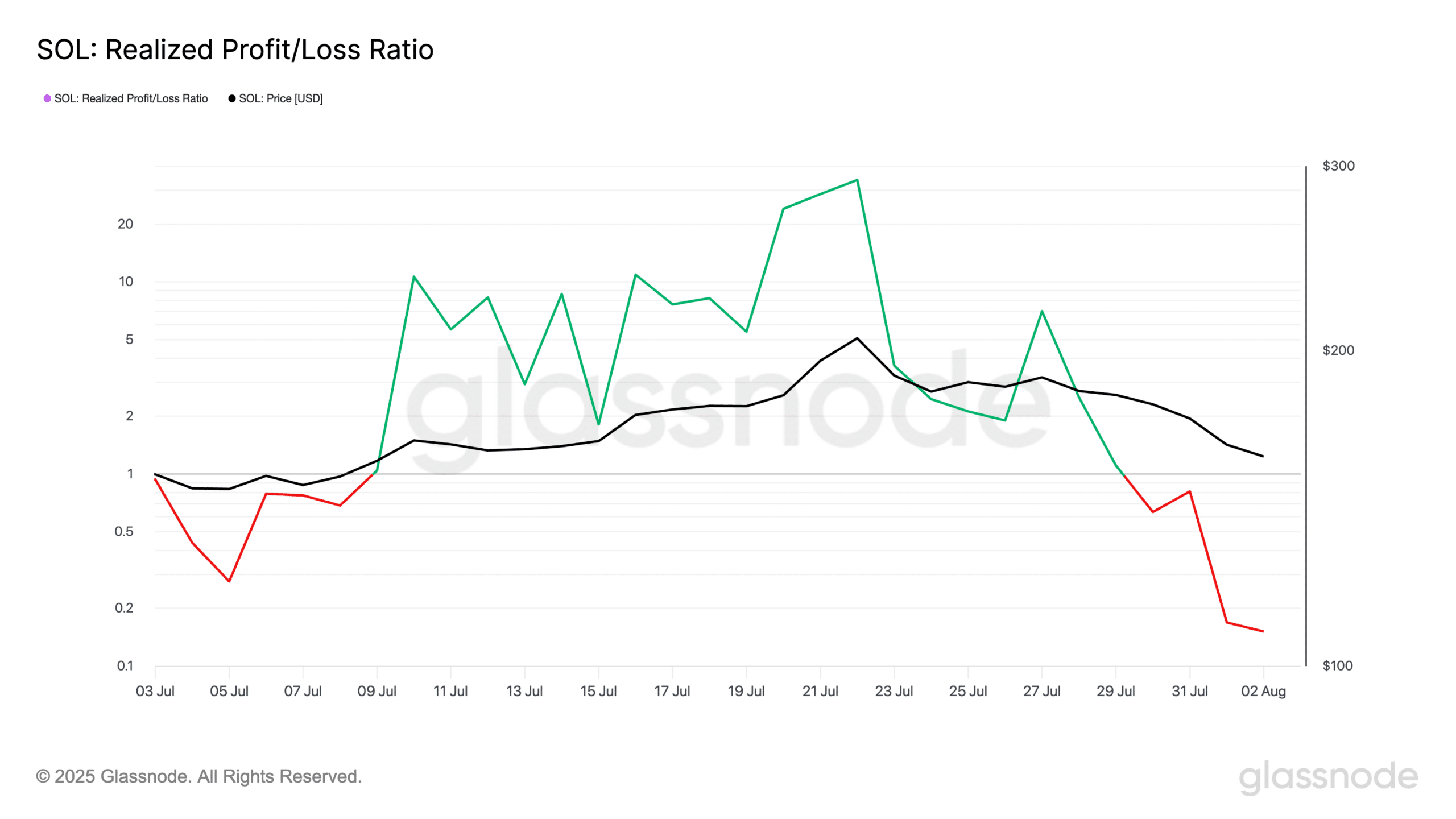
Source: Glassnode
What Are the Key Technical Indicators Suggesting About Solana’s Near-Term Outlook?
Technical analysis shows SOL struggling below the $165 mark, but signs of exhaustion in selling pressure are emerging. The RSI near oversold levels and flattening OBV indicate that downward momentum may be waning. While a definitive reversal is not confirmed, these signals point toward a potential stabilization phase that could lead to a rebound.
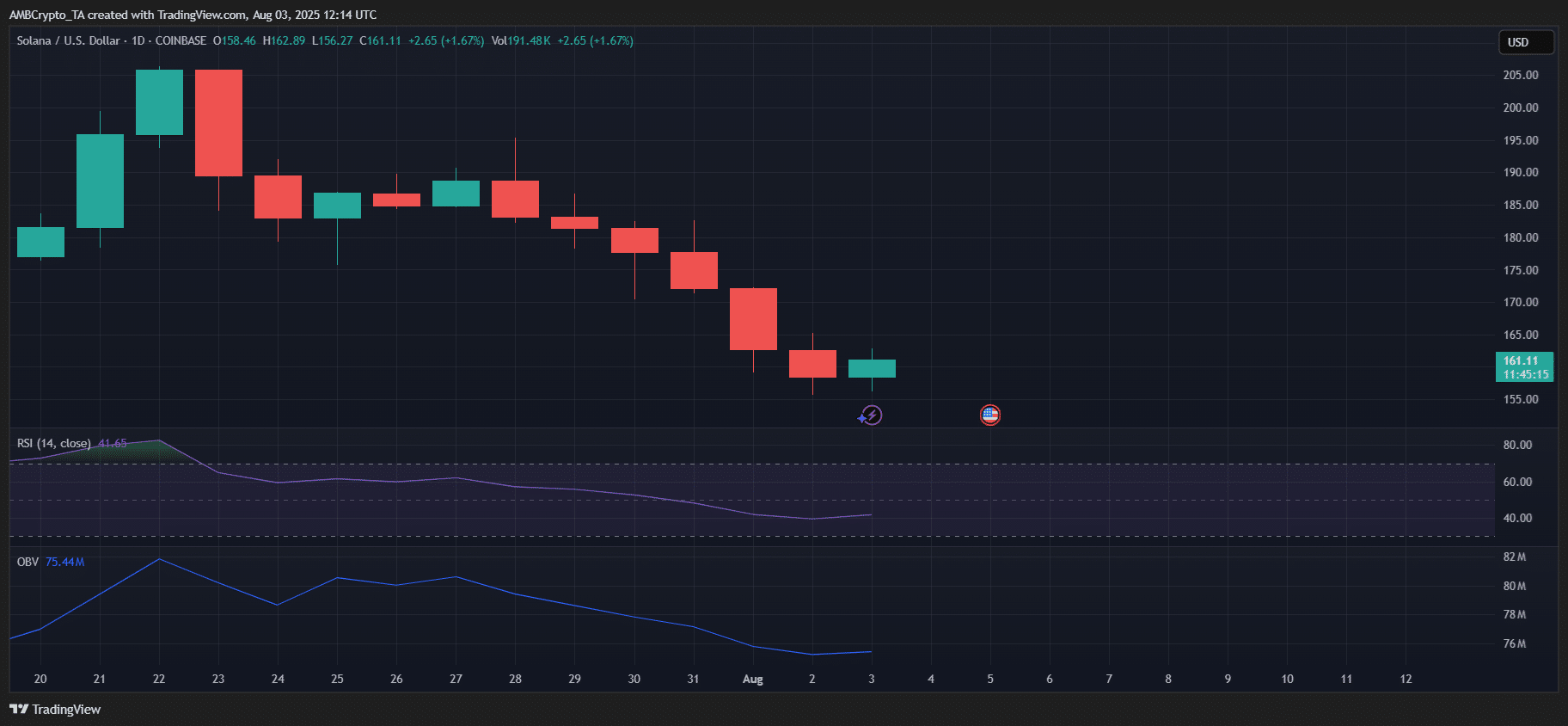
Source: TradingView
Frequently Asked Questions
How do long-term holders influence Solana’s price stability?
Long-term holders tend to accumulate during dips, reducing circulating supply and supporting price floors. Their confidence often signals market resilience and potential recovery phases.
What technical signals suggest Solana might rebound soon?
Indicators such as a low RSI near oversold levels and flattening OBV show that selling pressure is weakening, which often precedes price stabilization or upward movement.
Key Takeaways
Long-term holders are doubling down on Solana despite the recent price drop. Data suggests that SOL may be close to a local bottom.
- Long-term holders increased net positions by 102% since late July, indicating strong confidence.
- Realized Profit/Loss Ratio dropped to 0.15, showing recent sellers exited at a loss.
- Technical indicators like RSI and OBV suggest selling momentum is slowing, hinting at potential price stabilization.
Conclusion
Solana’s accumulation by long-term holders amid price declines highlights growing investor confidence and a potential market bottom. With key technical indicators signaling reduced selling pressure, SOL may soon stabilize and prepare for a rebound. Investors should monitor these trends closely as the market evolves.





