

A crypto user lost $908,551 in a phishing approval scam 458 days after unknowingly granting wallet access, highlighting the critical need to regularly review and revoke token approvals to protect funds.
-
The scam involved a malicious ERC-20 approval transaction that gave ongoing access to the attacker’s wallet.
-
The attacker waited over a year, striking only after large deposits increased the wallet’s value.
-
Experts advise using tools like token approval checkers to revoke unnecessary permissions and enhance wallet security.
Crypto phishing approval scam leads to $908K loss; learn how to safeguard your wallet by revoking old approvals. Stay protected with COINOTAG insights.
How Did the Phishing Approval Scam Result in a $908,551 Loss?
The phishing approval scam occurred when the victim unknowingly signed a malicious ERC-20 token approval transaction, granting the attacker’s wallet continuous access to their funds. This approval was likely obtained through a phishing site or a fake airdrop. The attacker patiently waited 458 days before draining the wallet, stealing $908,551 in USDC stablecoins on August 2, 2024.
What Role Did Wallet Activity Play in the Scam’s Timing?
The attacker’s patience was strategic. The victim’s wallet showed minimal activity and low value for over a year, providing no incentive for theft. However, on July 2, 2024, the wallet received two large deposits totaling $908,551. The scammer monitored these transactions and executed the theft a month later, demonstrating a common tactic where scammers wait for significant wallet balances before acting.
What Tools Can Crypto Users Use to Prevent Phishing Approval Attacks?
Ethereum users can protect themselves by regularly reviewing token approvals using tools like Etherscan’s Token Approval Checker. This tool allows users to identify and revoke unnecessary or suspicious token permissions, although each revocation requires a gas fee. Regularly revoking old approvals is essential to minimize risk from dormant malicious permissions.
How Significant Are Crypto Scams in the Current Market?
Crypto scams remain a major threat, with over $142 million stolen in July 2024 alone across multiple attacks. High-profile incidents, such as the CoinDCX exchange exploit, highlight the ongoing risks. Security experts emphasize vigilance and proactive wallet management to reduce vulnerability to such attacks.
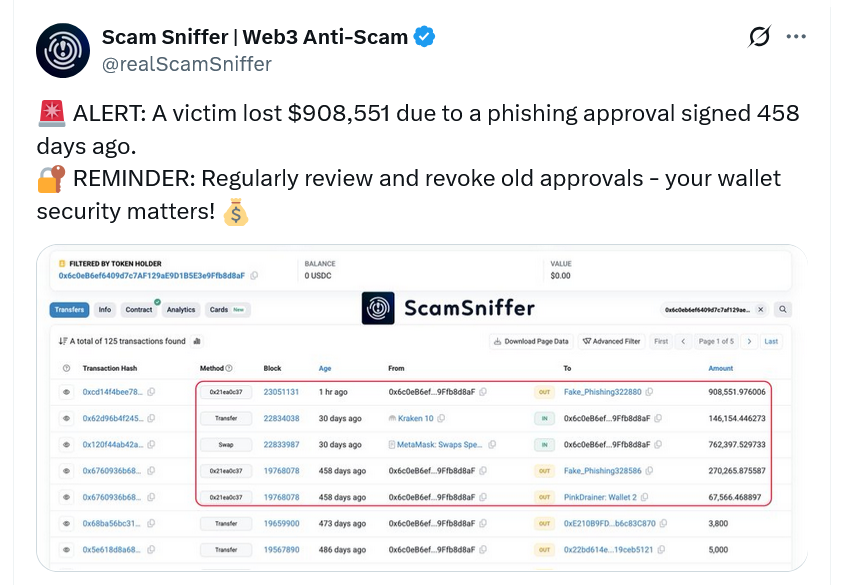 Source: Scam Sniffer
Frequently Asked Questions
How does a phishing approval scam work in cryptocurrency?
A phishing approval scam tricks users into signing a token approval transaction that grants attackers ongoing access to their wallet funds. Attackers then wait to drain assets when the wallet balance is high.
What steps can I take to secure my crypto wallet from approval scams?
Regularly review and revoke token approvals using trusted tools, avoid signing suspicious transactions, and monitor wallet activity to detect unauthorized access early.
Key Takeaways
- Phishing approval scams: Attackers gain long-term wallet access through malicious token approvals.
- Delayed theft tactics: Scammers wait for large deposits before draining wallets.
- Prevention tools: Token approval checkers help users revoke risky permissions and protect funds.
Conclusion
This $908,551 phishing approval scam underscores the importance of proactive wallet security. Regularly reviewing and revoking token approvals is essential to prevent delayed thefts. Staying informed and vigilant helps safeguard crypto assets against evolving threats.





