
PUMP Eyes Rebound as Whales Go “Dip Shopping,” Scoop Up 5.4 Billion Tokens

PUMP price has slid 18% amid retail selling, yet whales are aggressively buying the dip, adding 5.4 billion tokens. Could this spark a rebound?
PUMP’s price has dropped sharply, sliding over 18% in the past 24 hours, even as whales have turned aggressive buyers.
On-chain data shows a clear divergence between retail selling pressure and big wallet accumulation, creating a potential setup for a rebound if whale demand manages to outpace exits.
Retail Selling Clashes With Whale Demand
Coinglass data shows that retail traders are offloading PUMP into exchanges, with netflows flipping from a $1.38 million outflow to nearly $1 million positive within hours. This quick change signals heightened selling activity from smaller holders, fueling the latest price dip.
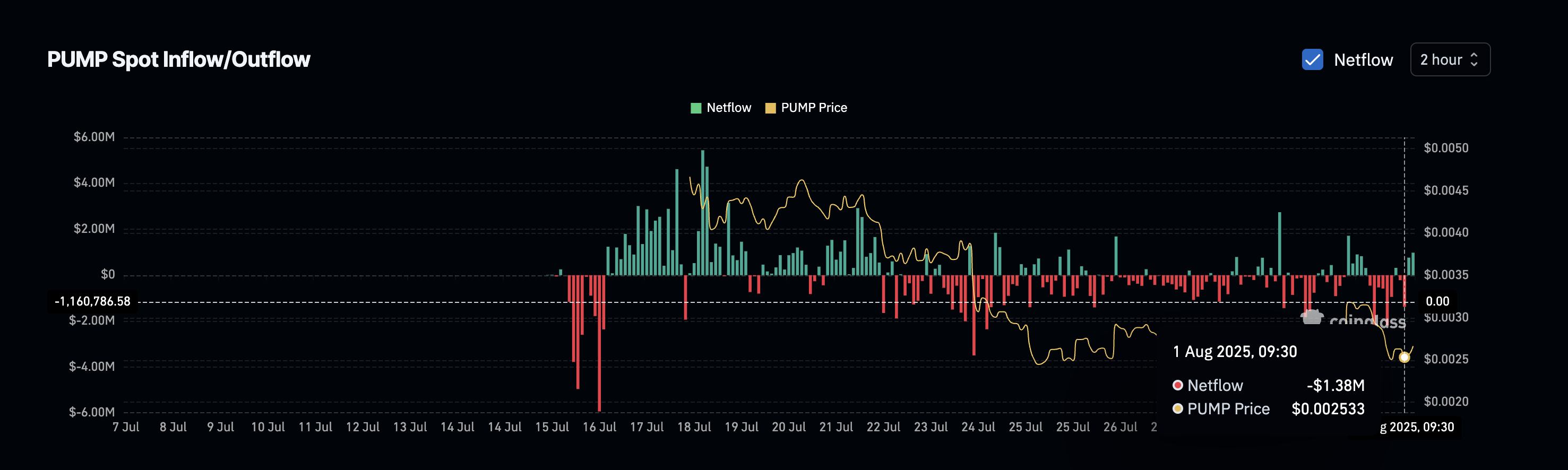 PUMP price and increasing inflows:
Coinglass
However, while retail is exiting, whales are positioning differently. In the past 7 days, whale wallets added 5.4 billion PUMP tokens, a 35.8% jump in their holdings, bringing their total stash to 20.7 billion tokens.
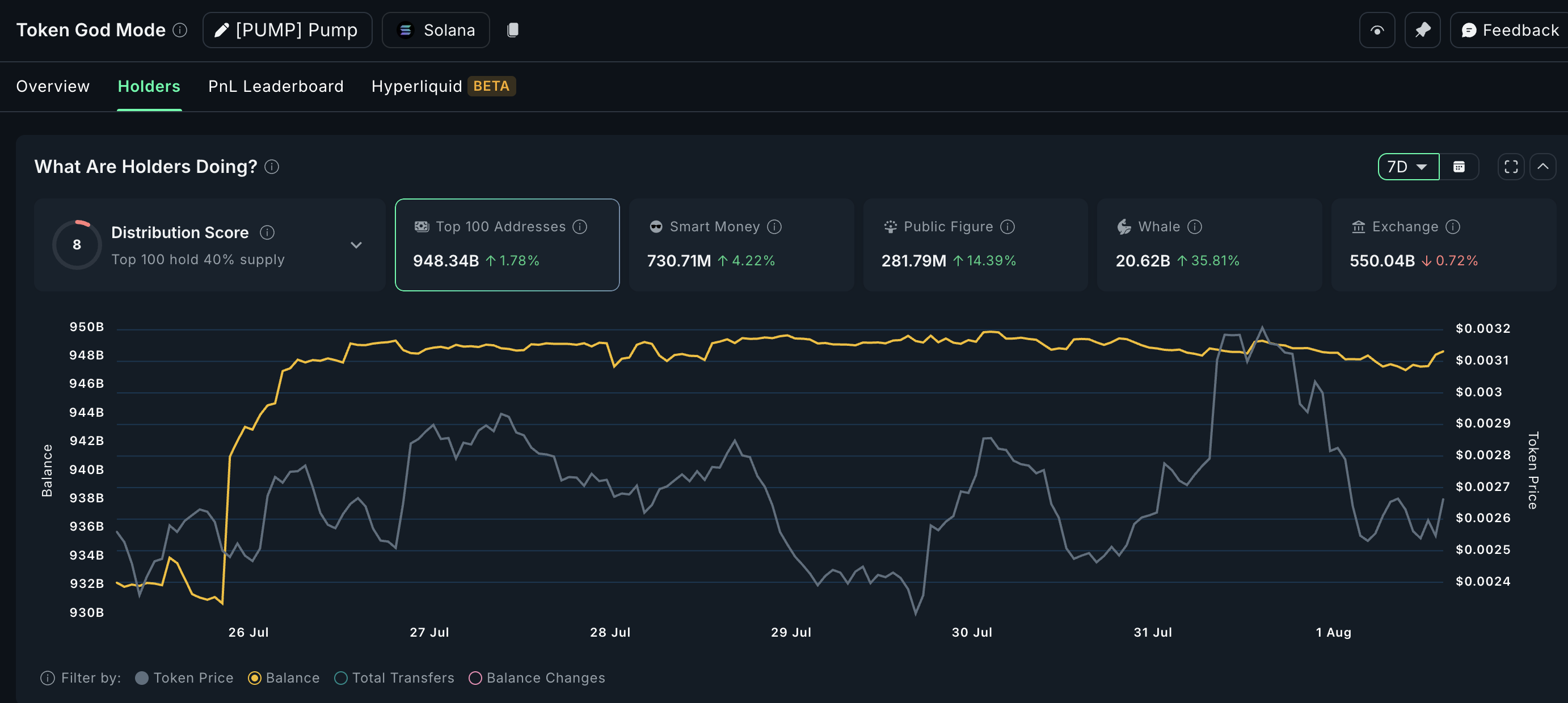 Whale buying PUMP (weekly timeframe):
Nansen
Despite whales picking up a major PUMP token stash, the exchange netflows continued to remain flat across 24-hour and 7-day charts. This validates retail’s bearish viewpoint and lingering sell-side pressure.
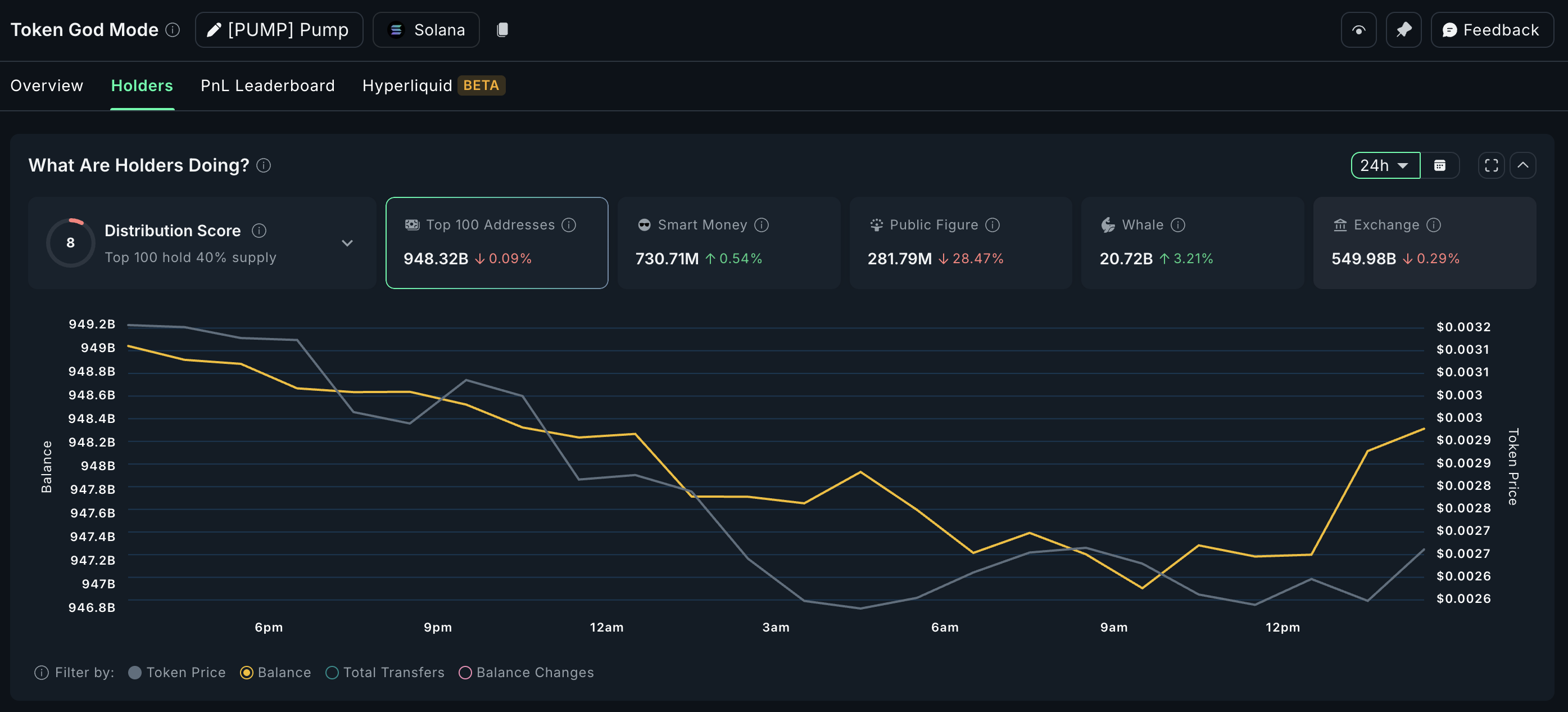 Whale buying PUMP (daily timeframe):
Nansen
Daily whale activity also rose 3.21% in the last 24 hours, showing consistent appetite for the dip.
For token TA and market updates: Want more token insights like this? Sign up for Editor Harsh Notariya’s Daily Crypto Newsletter here.
Liquidation Map Shows Long Bias Despite The Crash
Data from Hyperliquid reveals a market heavily skewed toward long positions, with $7.88 billion at risk of liquidation for longs, more than double the shorts. This imbalance shows traders are still betting on a PUMP price recovery despite the 18% correction.
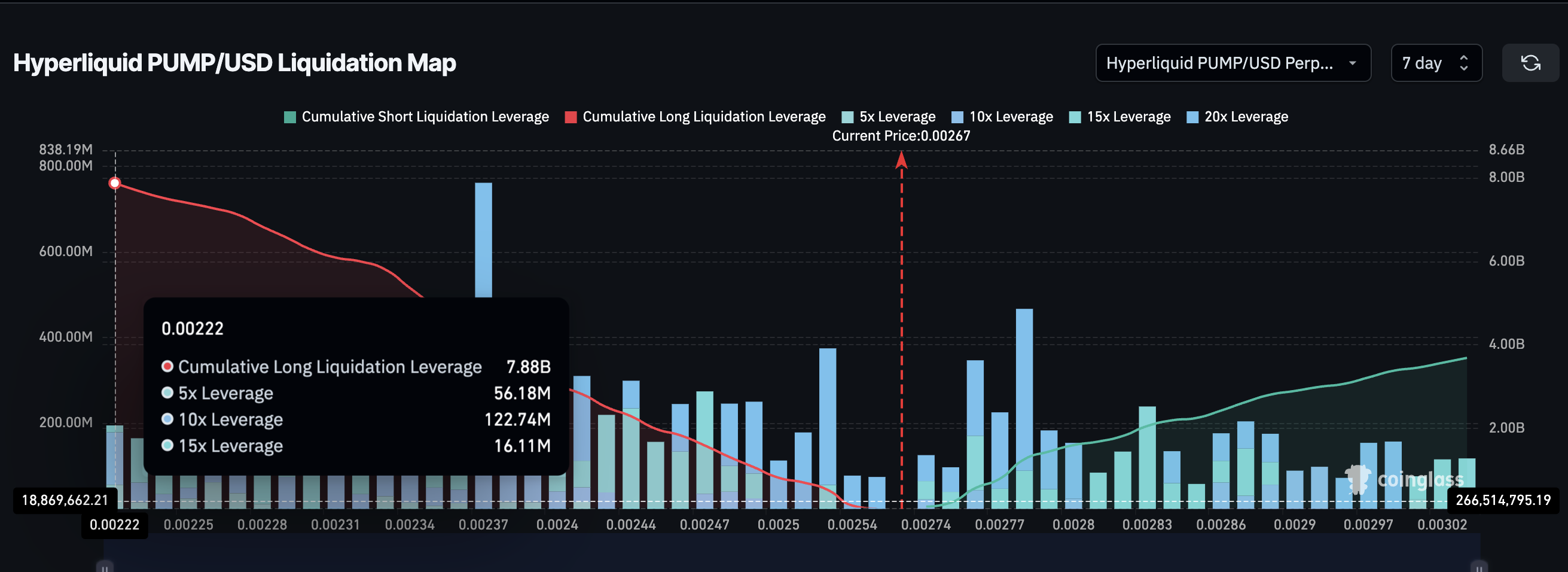 Hyperliquid’s PUMP liquidation map:
Coinglass
However, this presents a price risk as well. If the correction continues, led by retail selling, longs might quickly get liquidated. That would cascade a deeper price drop.
On the flip side, if whale accumulation continues and the PUMP price starts to climb, the large build-up of long positions could trigger a cascade of short liquidations, adding fuel to any rebound rally. For now, the market bias remains bullish on leverage, but sentiment could flip if selling accelerates.
Key PUMP Price Support May Decide The Next Move
The 2-hour chart shows PUMP clinging to the $0.00259 Fibonacci support after the steep sell-off. PUMP price has formed an ascending channel structure over recent sessions, hinting at a broader bullish setup despite short-term weakness.
A breakdown below this level could open the way to $0.00241, invalidating the bullish scenario. While some might argue that breaking the lower trendline could also invalidate the bullish setup but we also need to account for false breakouts. A dip under $0.0024 confirms trend weakness.
Yet, holding support and the lower trendline of the channel may allow bulls to retest $0.00284 and $0.00294 in the near term. That happens only when the whale buying manages to outpace the retail sentiment. And in that case, PUMP remains very much inside the channel.
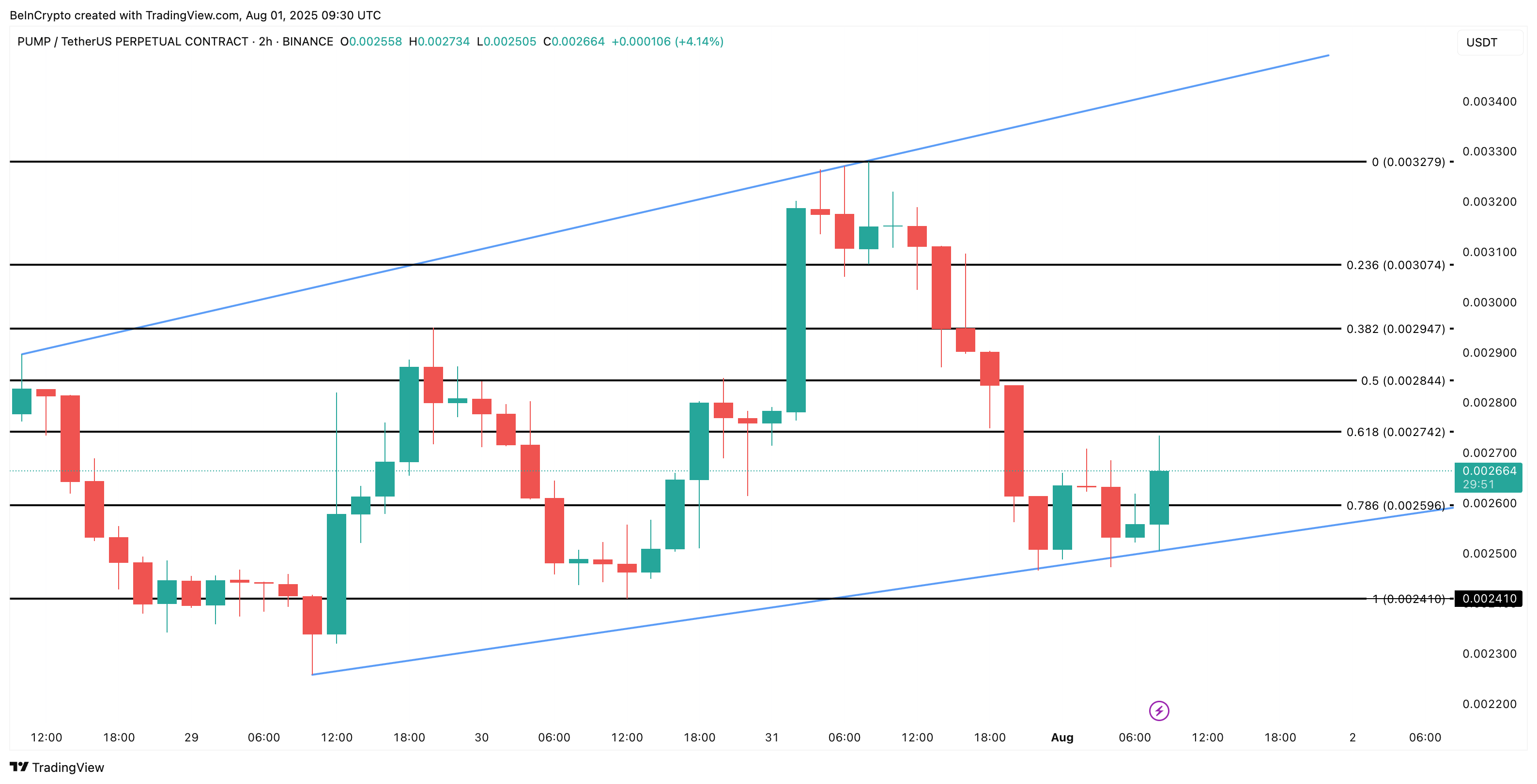 PUMP price analysis:
TradingView
The divergence between retail selling and whale dip-buying paints a tug-of-war scenario. If whales keep stacking and netflows turn consistently negative on exchanges, a rebound could take shape, invalidating the latest correction and sparking a relief rally.
Disclaimer: The content of this article solely reflects the author's opinion and does not represent the platform in any capacity. This article is not intended to serve as a reference for making investment decisions.
You may also like
How much CPO demand will Nvidia Rubin Ultra generate? Bernstein: Optical value per Pod will increase fivefold
Bernstein believes that the co-packaged optics (CPO) and fiber demand driven by Nvidia's Rubin Ultra architecture will surge significantly, with the optical content per Pod rising from $1 million to $5.4 million. This will propel the size of Nvidia's optical ecosystem market to $46.8 billion by 2028 (a 91% annual increase). Although the industry faces supply bottlenecks with InP substrates, the outlook remains positive. The institution reiterates its “outperform” rating for Lumentum, Coherent, and Ciena.

UBS Q3 implements a two-way strategy with gold options, heavily invests in technology stocks, and builds positions in SK Hynix (SKHY.US)
UBS Group (UBS.US) has submitted its Q3 holdings report (13F) as of September 30, 2026.

SpaceX (SPCX.US) reportedly attempts “de-Nvidiaization” at the rack level: developing Kessel cabinets to bypass L6 compute boards, purchasing only chips
SemiAnalysis: SpaceX has developed its own Kessel cabinet, bypassing Nvidia's L6 cards to provide more options for manufacturing its own hardware.

$3.7 billion “data center power equipment prepayments” abandoned! What did "the most active buyer of gas turbines", SoftBank, see?
In the second quarter of fiscal year 2026, SoftBank reported a net loss of $7.1 billion, primarily due to a $3.7 billion impairment charge from a $9.5 billion advance payment for power generation equipment for US data centers—of which about $2.9 billion was non-refundable and effectively lost. The CFO admitted that SoftBank placed orders before the project plan was finalized, and is now conducting a comprehensive review of its procurement strategy. "The most aggressive purchaser of gas turbines has now written off the deposit in this way."
Crypto prices
More


