Bitcoin is currently under pressure due to the rising U.S. Dollar Index (DXY), which often signals an impending BTC correction as the dollar strengthens against global currencies.
-
Bitcoin struggles below $120,000 amid strong U.S. dollar gains
-
The DXY approaching 101.6 indicates growing macroeconomic uncertainty impacting crypto markets
-
COINOTAG analysis highlights potential short-term bearish momentum for BTC if dollar strength persists
Bitcoin faces pressure as the U.S. Dollar Index strengthens, signaling a possible correction. Stay informed with COINOTAG’s expert crypto market insights.
How Does the U.S. Dollar Index Impact Bitcoin’s Price?
The U.S. Dollar Index (DXY) measures the dollar’s strength against a basket of major currencies and is a critical indicator for Bitcoin’s price movements. Historically, Bitcoin and the DXY share an inverse relationship: when the dollar strengthens, Bitcoin often faces downward pressure. This is because a stronger dollar reduces global liquidity and deters foreign investment in risk assets like BTC.
Why Is Bitcoin Struggling Below $120,000?
Bitcoin is currently consolidating beneath the key resistance level of $120,000. This price ceiling coincides with the DXY’s surge toward 101.6, signaling a potential reversal from its previous downward trend. The strengthening dollar creates a macroeconomic environment where investors seek safer assets, limiting Bitcoin’s upward momentum. COINOTAG experts note that this resistance cluster is crucial for BTC bulls to overcome to avoid a deeper correction.
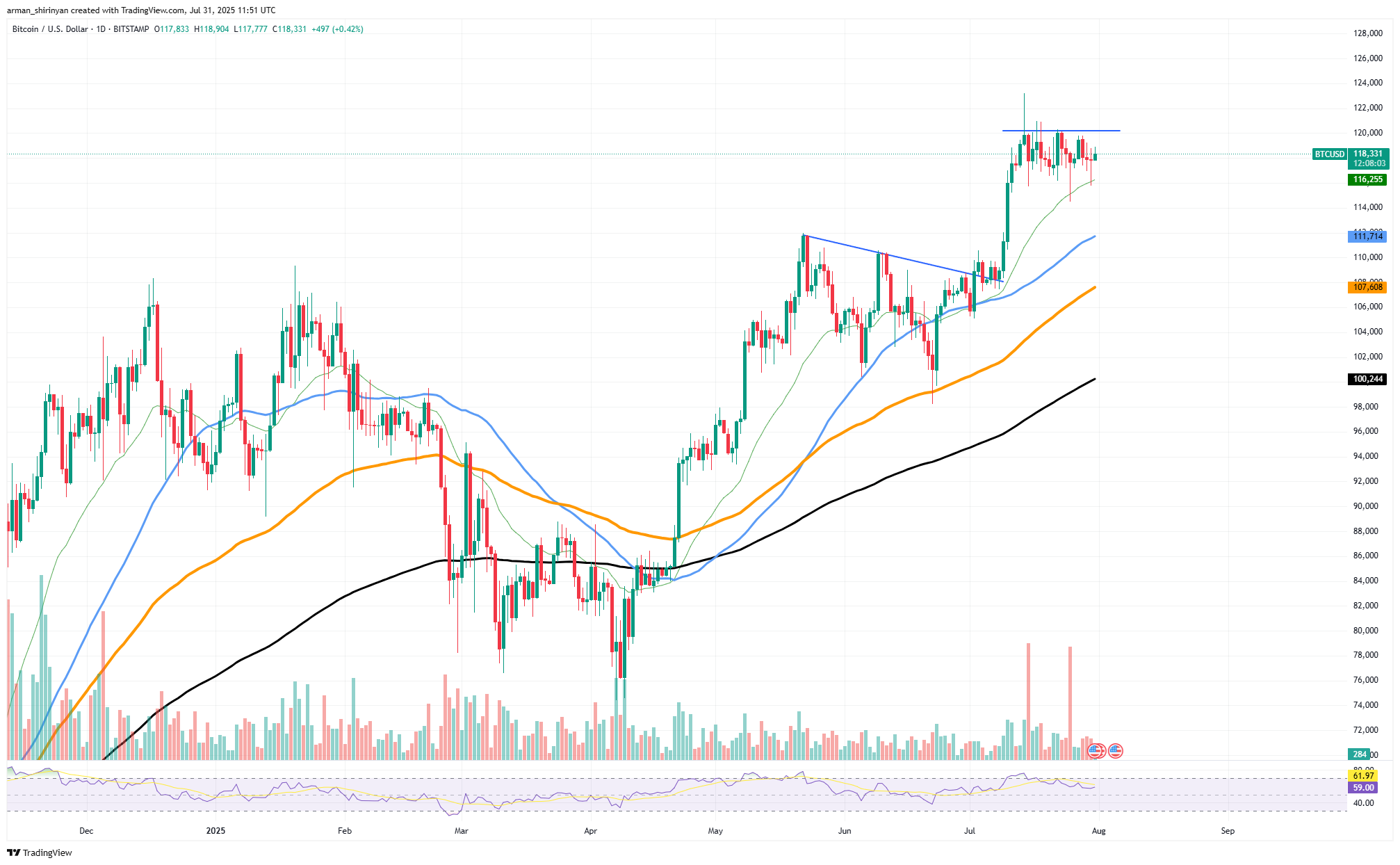 BTC/USDT Chart by TradingView
What Does a Rising DXY Mean for the Crypto Market?
If the DXY breaks above the 102 resistance level, it would indicate a broader flight to safety among investors. Such a move typically results in collateral damage to speculative crypto sectors, especially altcoins. Bitcoin’s current volume shows signs of exhaustion, and its Relative Strength Index (RSI) remains elevated, suggesting waning momentum. This combination points to potential short-term bearishness unless BTC can decisively break above $120,000 soon.
How Should Investors Manage Risk Amid Dollar Strength?
Given the macroeconomic pressure from a strengthening dollar, risk management is paramount. Investors should monitor Bitcoin’s ability to breach the $120,000 resistance to confirm bullish momentum. Until then, cautious positioning is advised to mitigate the risk of a steep retracement. COINOTAG recommends prioritizing capital preservation as the market adjusts to these shifting dynamics.
Frequently Asked Questions
How does the U.S. Dollar Index impact Bitcoin’s price movements?
The U.S. Dollar Index measures the dollar’s strength against other currencies. When it rises, Bitcoin often faces downward pressure as investors shift to safer assets, reducing demand for BTC.
What is the significance of Bitcoin’s $120,000 resistance?
Bitcoin’s $120,000 resistance is a key price barrier. Breaking above it could signal renewed bullish momentum, while failure to do so may lead to a price correction amid dollar strength.
Key Takeaways
- Bitcoin is pressured by a rising U.S. Dollar Index: DXY’s surge often precedes BTC corrections.
- $120,000 is a critical resistance level: BTC must break above to maintain bullish momentum.
- Risk management is essential: Investors should monitor macroeconomic trends and technical signals closely.
Conclusion
Bitcoin’s price faces significant headwinds as the U.S. Dollar Index strengthens, signaling potential short-term bearishness. Overcoming the $120,000 resistance is crucial for BTC bulls to sustain momentum. COINOTAG will continue to monitor these macroeconomic factors, providing timely updates to help investors navigate this evolving landscape.