
Shiba Inu (SHIB): It's Long-Term Now, Fundamental Shift

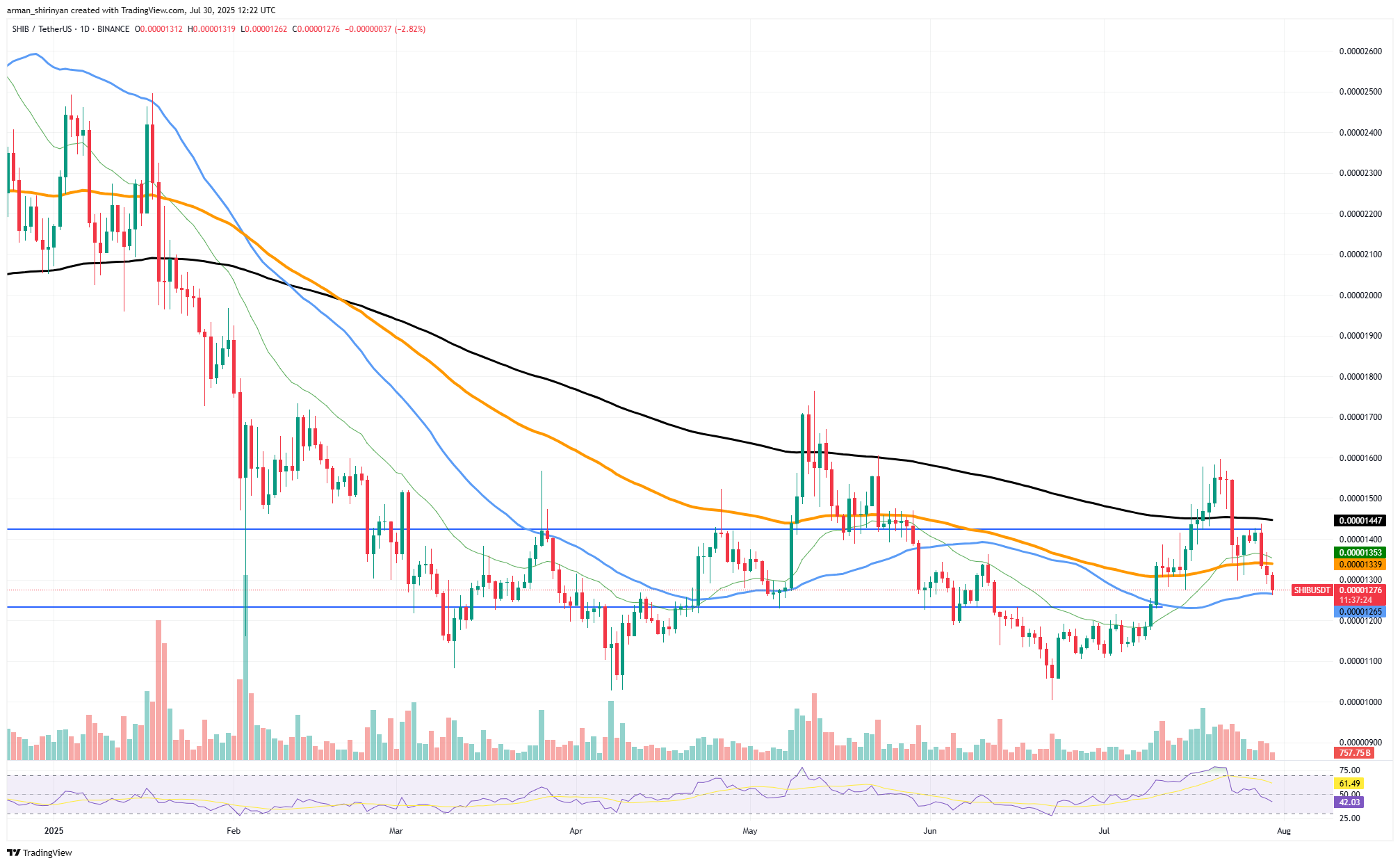
A mixed but instructive picture is painted by Shiba Inu's recent price performance. SHIB has entered a sharp correction after failing to maintain a breakout above the resistance level of $0.00001447. It is currently hovering around $0.0000126 and is in danger of breaking through the 50-day moving average. Technical indicators indicate more downward pressure, and a move toward the $0.000011 support zone appears likely if bulls do not intervene quickly.
Structural SHIB shift
Beyond the fluctuations in price, however, a more profound and structural shift is taking place — one that essentially changes the way SHIB functions as a market asset. Nearly 80% of all SHIB is currently held by long-term investors, as indicated by data from IntoTheBlock (wallets holding for more than a year). For a token that first prospered on speculative hype and transient rallies, this is a startling evolution.
In contrast to the more than 10% decline in short-term traders over the past year, the proportion of holders with one year or more has remained stable and is even increasing. This sustained dominance brings stability, which SHIB has not had in the past. Violent downward swings are less common when the majority of tokens are locked up in long-duration addresses, which reduces the likelihood of large-scale dumping.
Is it that good?
It also increases resilience in times of market volatility, when 80% of the supply is dormant. SHIB just cannot move as easily. This shows that new capital and speculative interest in the SHIB ecosystem are slowing down. There is less buying pressure during rallies when there are fewer short-term players, which may account for the poor follow-through following recent gains.
Shiba Inu is essentially going through a transitional stage. It is evolving into a passive long-term asset for many people, not just a meme-driven gamble. Because of this, it may be less explosive but also more dependable. The days of traders experiencing 100% daily spikes might be over. Long-term holders are beginning to see it less as a moonshot and more as a silent wager on societal conviction and slow adoption.
Disclaimer: The content of this article solely reflects the author's opinion and does not represent the platform in any capacity. This article is not intended to serve as a reference for making investment decisions.
You may also like
How much CPO demand will Nvidia Rubin Ultra generate? Bernstein: Optical value per Pod will increase fivefold
Bernstein believes that the co-packaged optics (CPO) and fiber demand driven by Nvidia's Rubin Ultra architecture will surge significantly, with the optical content per Pod rising from $1 million to $5.4 million. This will propel the size of Nvidia's optical ecosystem market to $46.8 billion by 2028 (a 91% annual increase). Although the industry faces supply bottlenecks with InP substrates, the outlook remains positive. The institution reiterates its “outperform” rating for Lumentum, Coherent, and Ciena.

UBS Q3 implements a two-way strategy with gold options, heavily invests in technology stocks, and builds positions in SK Hynix (SKHY.US)
UBS Group (UBS.US) has submitted its Q3 holdings report (13F) as of September 30, 2026.

SpaceX (SPCX.US) reportedly attempts “de-Nvidiaization” at the rack level: developing Kessel cabinets to bypass L6 compute boards, purchasing only chips
SemiAnalysis: SpaceX has developed its own Kessel cabinet, bypassing Nvidia's L6 cards to provide more options for manufacturing its own hardware.

$3.7 billion “data center power equipment prepayments” abandoned! What did "the most active buyer of gas turbines", SoftBank, see?
In the second quarter of fiscal year 2026, SoftBank reported a net loss of $7.1 billion, primarily due to a $3.7 billion impairment charge from a $9.5 billion advance payment for power generation equipment for US data centers—of which about $2.9 billion was non-refundable and effectively lost. The CFO admitted that SoftBank placed orders before the project plan was finalized, and is now conducting a comprehensive review of its procurement strategy. "The most aggressive purchaser of gas turbines has now written off the deposit in this way."
Crypto prices
More


