
Bitcoin Hits $116,000 as Crypto Enters a New Bull Market — What’s Next?

Bitcoin hits $116,000 just days after Trump signs $3.3 trillion bill. ETF inflows, rising debt, and macro shifts fuel a powerful new crypto bull cycle.
Bitcoin surged to an all-time high of $116,000 on July 10, just six days after Donald Trump signed the Big Beautiful Bill into law. The flagship cryptocurrency has gained 6% since the bill’s signing, with Ethereum and other altcoins following close behind.
The rally comes amid a wave of macroeconomic shifts, rising US debt, tightening bond markets, and historic ETF inflows.
Fiscal Surge Triggers Flight to Hard Assets
Trump’s $3.3 trillion Big Beautiful Bill, signed on July 4, triggered an immediate $410 billion rise in US debt. The bill lifts the debt ceiling by $5 trillion and permanently extends key tax cuts.
Markets see this as inflationary. Investors are rotating out of bonds and into scarce assets like Bitcoin. The bill’s size and speed of implementation have amplified fears over fiscal discipline.
Bitcoin, with its fixed supply, is emerging again as a hedge against fiat debasement.
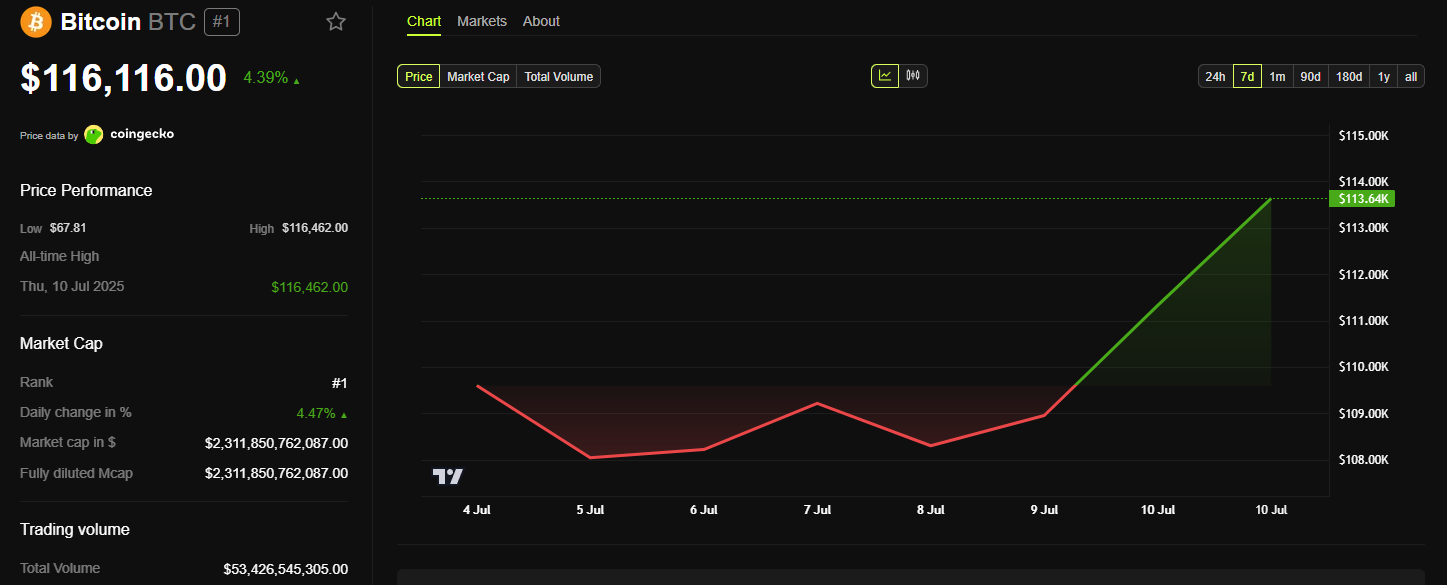 Bitcoin price Chart. Source:
BeInCrypto
BlackRock’s spot Bitcoin ETF (IBIT) has reached $76 billion in assets under management. That’s triple what it held just 200 trading days ago.
By comparison, it took the largest gold ETF over 15 years to reach the same milestone. Institutional flows are now a powerful driver of price action, pushing Bitcoin deeper into mainstream portfolios.
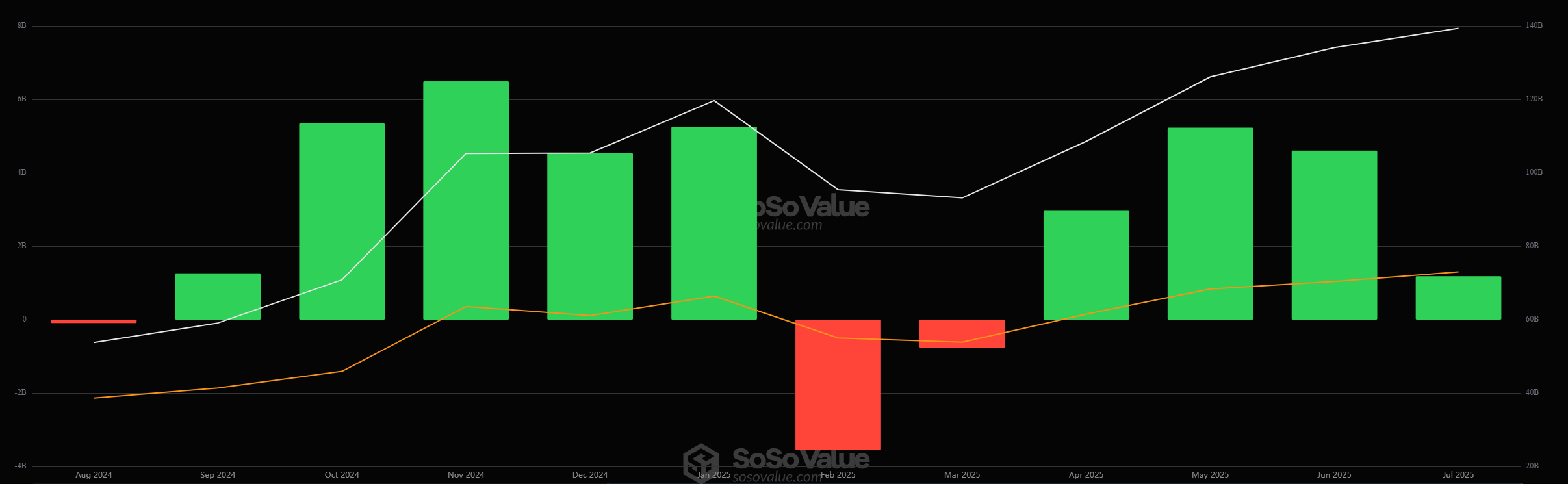 US Spot Bitcoin ETFs Monthly Inflows in 2025. Source:
SoSoValue
Fed Balance Sheet Shrinkage Tightens Liquidity
In June, the Federal Reserve reduced its balance sheet by $13 billion, bringing it to $6.66 trillion—the lowest since April 2020. The Fed has now cut over $2.3 trillion in assets over the last three years.
Meanwhile, Treasury holdings are down $1.56 trillion in that same period. With fewer buyers in the bond market and more debt being issued, investors are moving into alternative stores of value.
Bitcoin has become the top candidate.
BREAKING: The Federal Reserve’s balance sheet declined by -$13 billion in June, to $6.66 trillion, the lowest since April 2020.Over the last 3 years, the Fed has reduced its asset holdings by -$2.31 trillion, or -26%.During this period, the value of Treasury holdings has… pic.twitter.com/OGAVR5wjUd
— The Kobeissi Letter (@KobeissiLetter) July 10, 2025
Also, Ethereum is trading near $3,000, up 14% since the Big Beautiful Bill became law. Solana, Avalanche, and other altcoins are also rallying.
Retail and institutional capital are returning. Meme coins and DeFi tokens are gaining traction as speculative sentiment returns. Crypto is once again leading the risk-on cycle.
SP 500 All-Time High: Risk-On Across the Board
The SP 500 has surged 30% since its April 2025 low, hitting a new all-time high this week. This signals strong investor confidence in high-growth, high-risk assets.
Bitcoin benefits directly from this environment. As equities rally, crypto tends to follow. The market sees the Big Beautiful Bill as indirect stimulus—and it’s responding accordingly.
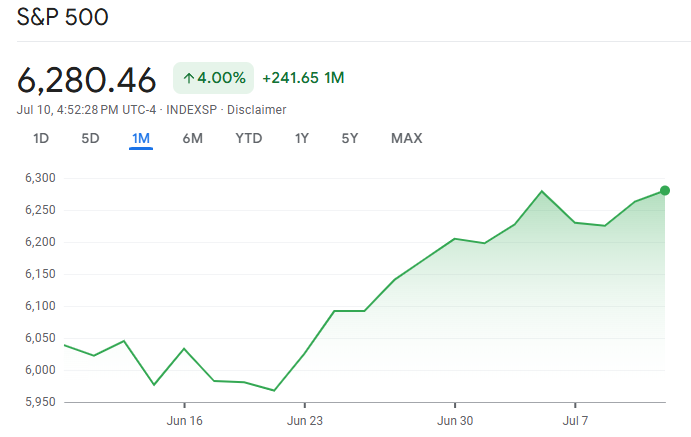 SP 500 Price Chart Over the Past Month. Source:
Google Finance
Bottom Line
Bitcoin’s latest all-time high is a response to structural changes—not hype. The Big Beautiful Bill expanded the deficit and shook confidence in US debt markets.
With inflation fears rising and institutional access growing, Bitcoin is becoming the macro hedge of choice. As crypto enters a new bull market, all eyes now turn to the Federal Reserve and rate cut decisions.
Disclaimer: The content of this article solely reflects the author's opinion and does not represent the platform in any capacity. This article is not intended to serve as a reference for making investment decisions.
You may also like
Hashrate orders are booming, why is "AI trading" falling out of favor? JPMorgan reveals the time lag between AI investment and productivity realization
Joseph Lupton from the JP Morgan Global Economic Research Team pointed out in a research report on November 10 that recent improvements in labor productivity have been driven more by capital deepening and increased intensity of factor utilization. The broad efficiency gains from AI, resulting from process reconstruction, data integration, and organizational adjustments, will still take time to materialize. This means orders for chips, servers, and electrical equipment may grow first, but continuous investment returns for computing power operators and end users may not arrive at the same pace.
AI investment enters the "Trough of Disillusionment", the next 18 months will be a life-or-death test!
Goldman Sachs believes that the AI investment cycle is currently in the "trough of disillusionment," but this is not the first time. The core contradiction lies in the fact that the business models of new cloud computing providers are highly dependent on end-user returns from AI spending, while currently "there are basically zero companies that can attribute profits to AI." Social Capital founder Palihapitiya has clearly defined an 18-month key window, during which the market will decide which AI business models are sustainable and which are not.

Anthropic's Core Concern: Revenue Can Be Withdrawn at Any Time, but Computing Power Costs Are Locked in for up to 20 Years
Zheshang Securities believes that Anthropic's revenue is mainly based on usage-based billing, with remaining performance obligations covering only about 5.1 months of annualized revenue, while compute power costs are already locked in with $895.4 billion in irrevocable commitments, some extending as far as 2045. Revenues can be reduced at any time, but costs are non-exitable, creating a highly asymmetric maturity gap between the two—this is the company's real core constraint.

Triple Pressure from the Federal Reserve, Treasury, and Congress; Goldman Sachs: Liquidity Crisis May Occur in 2027
Goldman Sachs warns that the reserve ratio of bank assets has dropped to around 11%, only slightly above the crisis trough of 2019. In the second half of 2027, a deadlock in debt ceiling negotiations will force the Treasury to rebuild the TGA, triggering a "perfect storm" of a sharp drop in reserves and a surge in T-bill supply; combined with stalled money market fund buying, this will create a huge liquidity black hole. The Federal Reserve could be forced into the awkward position of lowering interest rates and launching large-scale bond purchases to rescue the market.

Crypto prices
More


