
Ethereum Tracks Bitcoin, But Can ETH Break $3,000 With Retail Selling?

Ethereum's price is climbing alongside Bitcoin, but retail traders’ selling behavior is slowing its momentum, keeping ETH from breaking $3,000 despite strong institutional backing.
Ethereum’s price has climbed steadily over the past week, rising nearly 10% as institutional players continue to pour capital into the leading altcoin.
This growing momentum comes amid broader optimism in the crypto market and a strengthening correlation with Bitcoin, which is itself edging closer to a new all-time high. Together, these trends suggest Ethereum may be poised for a significant breakout, but a familiar roadblock still stands in the way.
ETH/BTC Correlation Climbs
Ethereum’s correlation with Bitcoin has climbed sharply since late June. The ETH/BTC correlation coefficient, which measures how closely ETH’s price movements track those of BTC over a given period, now sits at 0.02.
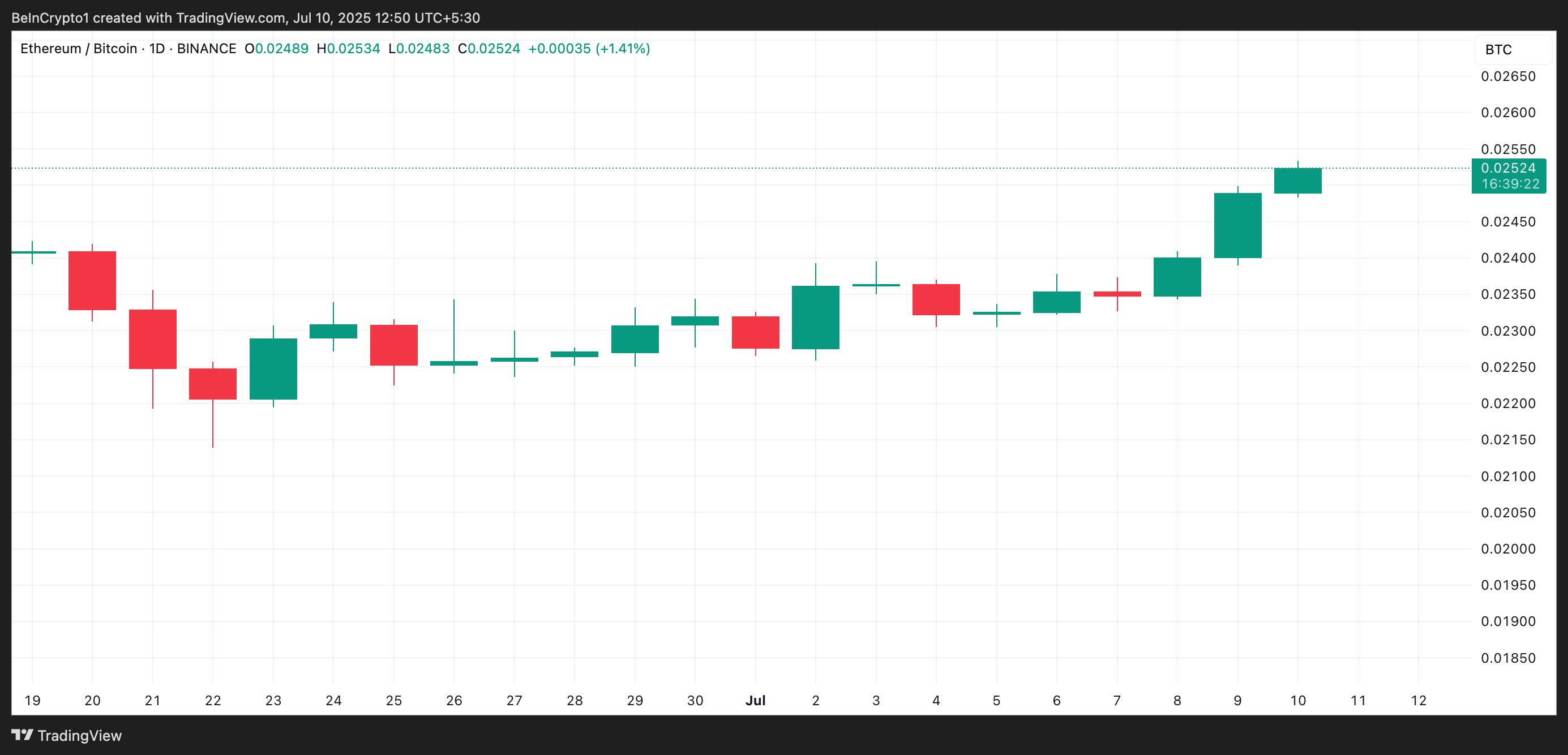 ETH/BTC Correlation Coefficient. Source:
TradingView
A value close to 1 indicates that both assets move in the same direction, while a value near -1 means they move in opposite directions.
With BTC nearing its all-time high, ETH’s price could follow suit and rally. This is because, historically, high correlation in bull phases has preceded joint rallies for both assets.
ETH Targets $3,000 as Institutions Load Up
Ethereum’s institutional investors appear to be locking in positions as they take advantage of the climbing ETH/BTC correlation. With both assets historically rallying in tandem during bullish phases, this group is positioning for a likely breakout above $3,000.
According to on-chain data from Glassnode, open interest in ETH futures on the Chicago Mercantile Exchange (CME), measured by the 7-day simple moving average, has surged to a record high of $3.34 billion.
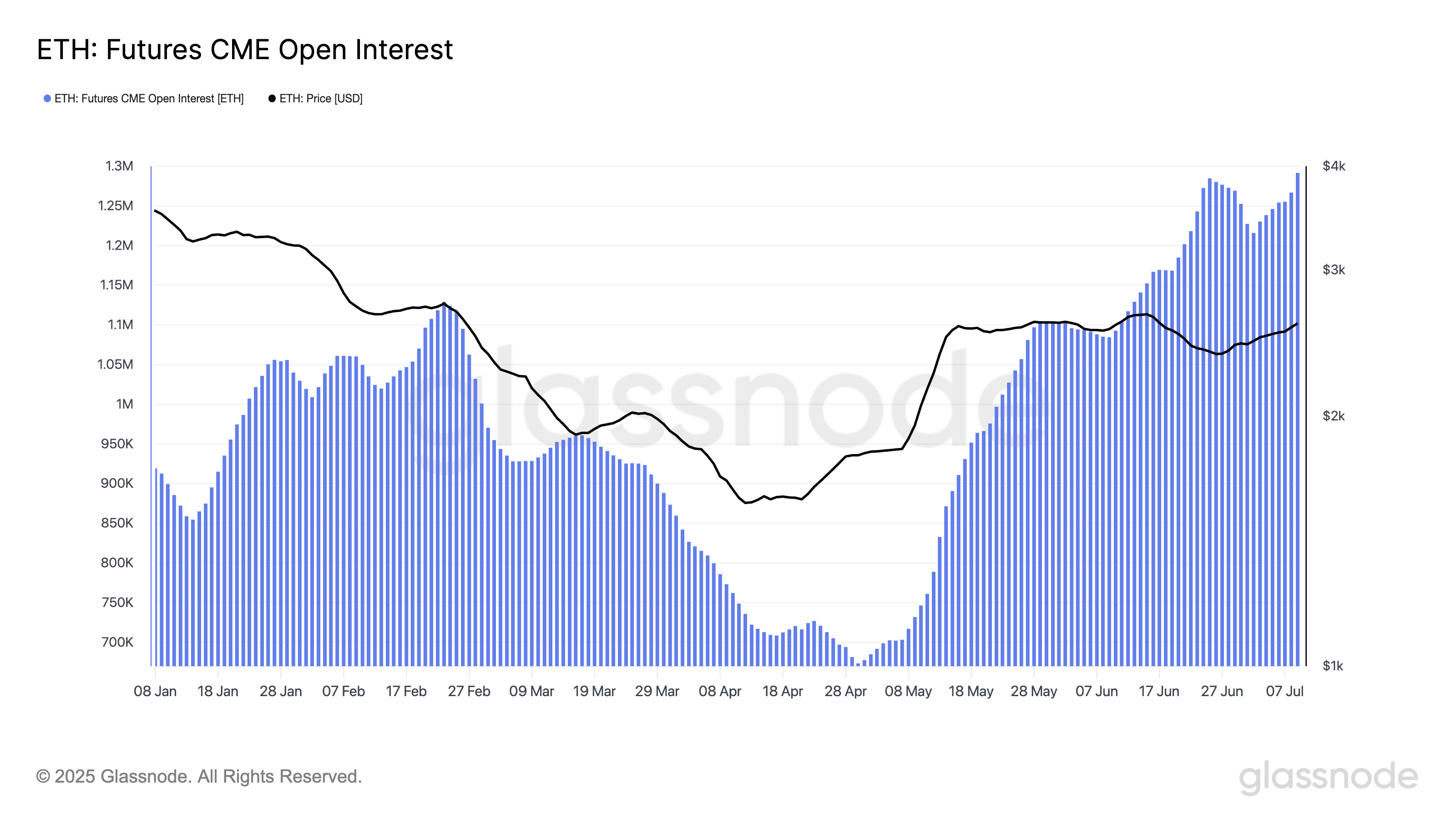 ETH: Futures CME Open Interest. Source:
Glassnode
This reflects rising institutional positioning as key market players accumulate ETH in anticipation of further upside.
Open interest refers to the total number of outstanding futures contracts that have not been settled. When it surges like this, it indicates rising trading activity and increased capital entering the market.
Furthermore, the consistent weekly inflows into spot ETH ETFs highlight the strengthening confidence in the altcoin among these key investors.
According to SosoValue, ETH-backed funds have recorded uninterrupted weekly inflows since May 9. Last week alone, over $219 million in capital flowed into ETH spot ETFs despite the coin’s largely sideways price action.
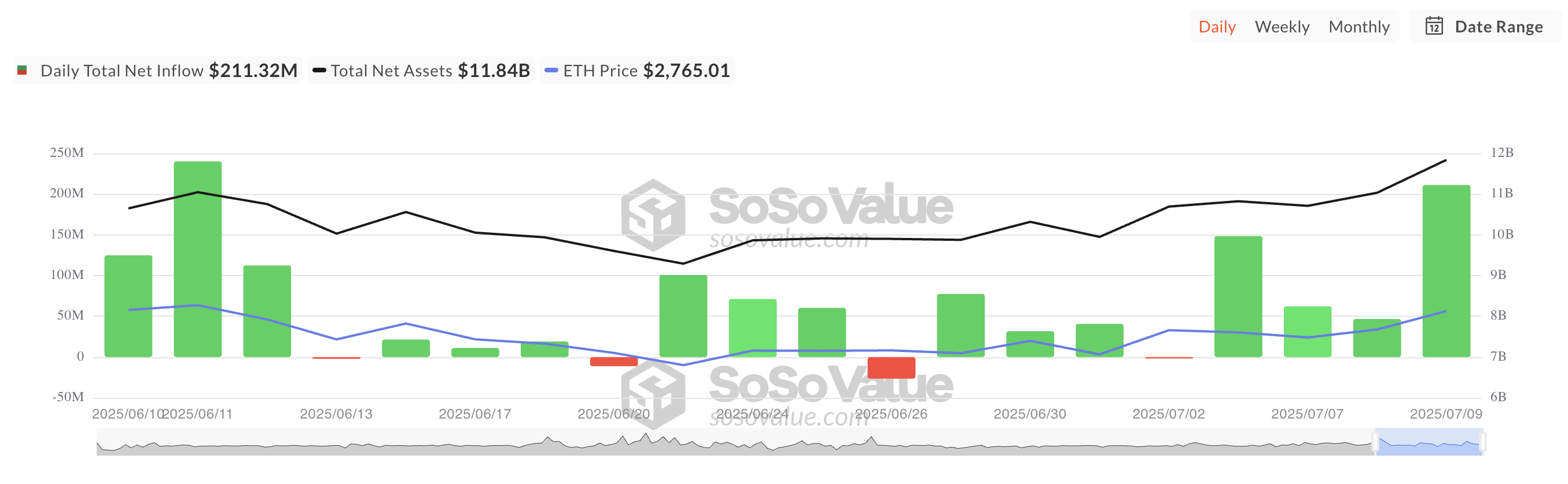 Total Ethereum Spot ETF Net Inflow. Source:
SosoValue
This sustained investment confirms the rising confidence in ETH’s long-term value as sophisticated investors position ahead of an anticipated breakout above $3,000.
However, there is a catch.
ETH Bulls Stall Below $3,000 as Retail Traders Tap Out
As key holders chase a rally above $3,000, ETH’s short-term price action continues to be weighed down by “paper hands.” These retail traders have held the coin for less than 30 days and are selling into its recent strength.
IntoTheBlock’s data shows that this group’s balance has dropped by 16% since July 4, slowing down the coin’s price growth amid strong institutional support.
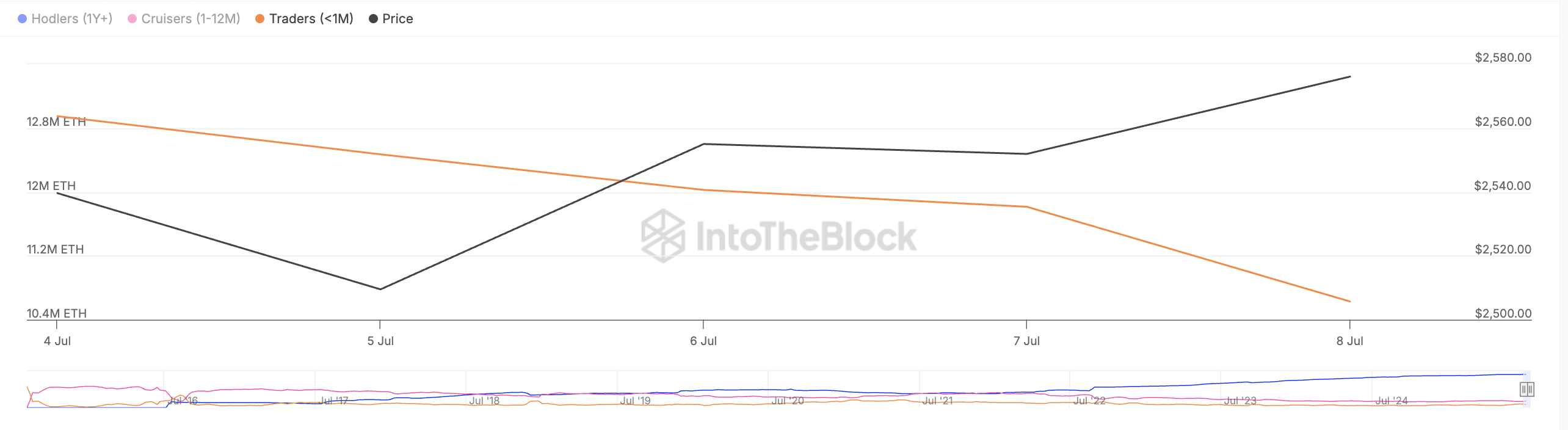 Ethereum Balance by Time Held. Source:
IntoTheBlock
Retail traders drive an asset’s short-term price performance through frequent, emotion-driven buying and selling. Unlike institutional investors who tend to hold through fluctuations, retail participants are more reactive to news, sentiment, and short-term price moves.
When they begin to sell, downward pressure increases, stalling rallies or triggering corrections.
Although institutional interest in ETH is a good sign of long-term confidence, retail traders are needed to catalyze a rally above $3,000 in the short term. If they remain aloof and demand falls, the coin could lose some of its recent gains and fall below $2,745.
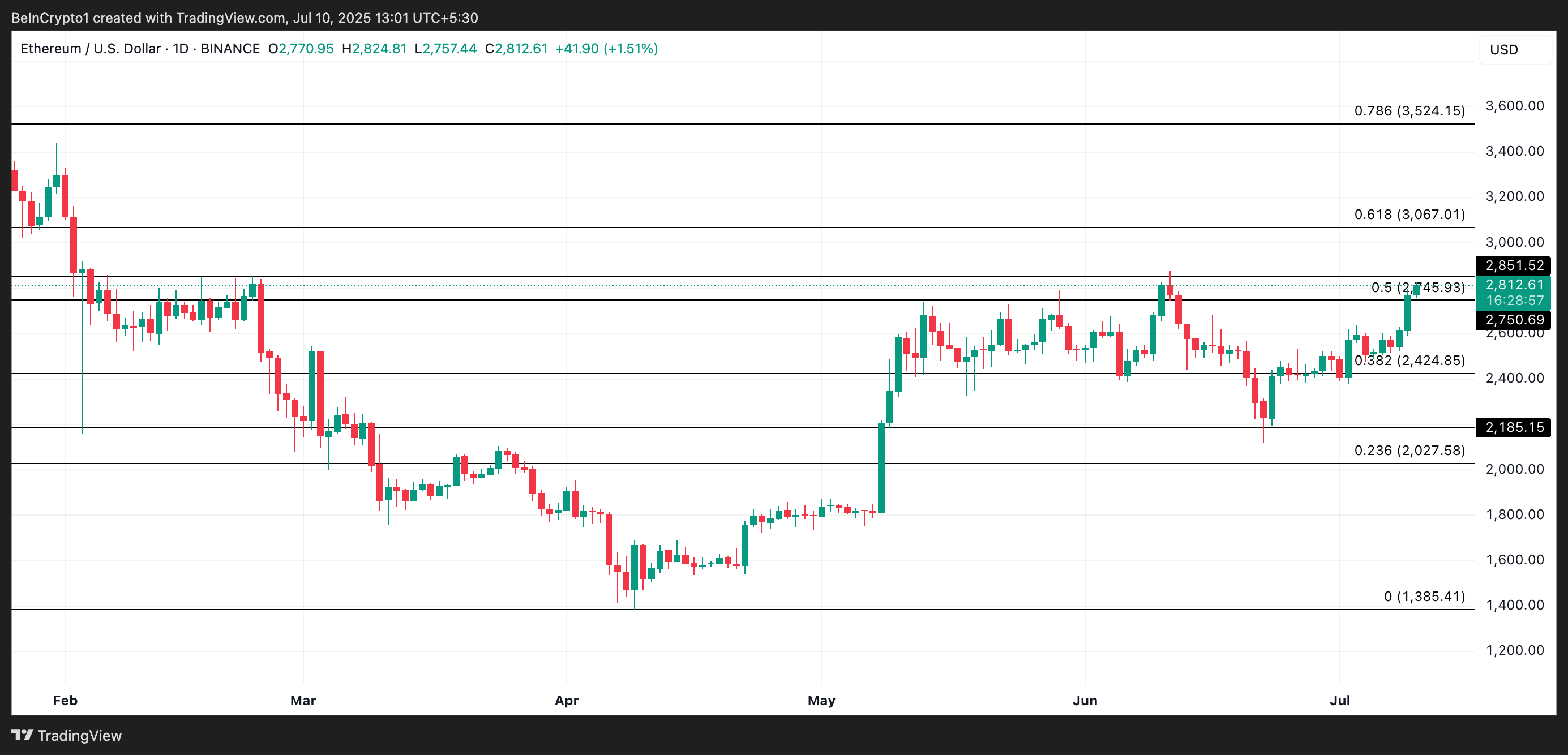 ETH Price Analysis. Source:
TradingView
However, a resurgence in new demand could push ETH’s price above $2,851 and toward $3,067.
Disclaimer: The content of this article solely reflects the author's opinion and does not represent the platform in any capacity. This article is not intended to serve as a reference for making investment decisions.
You may also like
Hashrate orders are booming, why is "AI trading" falling out of favor? JPMorgan reveals the time lag between AI investment and productivity realization
Joseph Lupton from the JP Morgan Global Economic Research Team pointed out in a research report on November 10 that recent improvements in labor productivity have been driven more by capital deepening and increased intensity of factor utilization. The broad efficiency gains from AI, resulting from process reconstruction, data integration, and organizational adjustments, will still take time to materialize. This means orders for chips, servers, and electrical equipment may grow first, but continuous investment returns for computing power operators and end users may not arrive at the same pace.
AI investment enters the "Trough of Disillusionment", the next 18 months will be a life-or-death test!
Goldman Sachs believes that the AI investment cycle is currently in the "trough of disillusionment," but this is not the first time. The core contradiction lies in the fact that the business models of new cloud computing providers are highly dependent on end-user returns from AI spending, while currently "there are basically zero companies that can attribute profits to AI." Social Capital founder Palihapitiya has clearly defined an 18-month key window, during which the market will decide which AI business models are sustainable and which are not.

Anthropic's Core Concern: Revenue Can Be Withdrawn at Any Time, but Computing Power Costs Are Locked in for up to 20 Years
Zheshang Securities believes that Anthropic's revenue is mainly based on usage-based billing, with remaining performance obligations covering only about 5.1 months of annualized revenue, while compute power costs are already locked in with $895.4 billion in irrevocable commitments, some extending as far as 2045. Revenues can be reduced at any time, but costs are non-exitable, creating a highly asymmetric maturity gap between the two—this is the company's real core constraint.

Triple Pressure from the Federal Reserve, Treasury, and Congress; Goldman Sachs: Liquidity Crisis May Occur in 2027
Goldman Sachs warns that the reserve ratio of bank assets has dropped to around 11%, only slightly above the crisis trough of 2019. In the second half of 2027, a deadlock in debt ceiling negotiations will force the Treasury to rebuild the TGA, triggering a "perfect storm" of a sharp drop in reserves and a surge in T-bill supply; combined with stalled money market fund buying, this will create a huge liquidity black hole. The Federal Reserve could be forced into the awkward position of lowering interest rates and launching large-scale bond purchases to rescue the market.

Crypto prices
More


