
Bitcoin Drops Below $100,000 as Iran Moves to Close Strait of Hormuz

Bitcoin dropped below $100,000 as Iran moved to close the Strait of Hormuz, triggering nearly $1 billion in crypto liquidations and escalating market risk.
Bitcoin price dropped to $99,800 after Iran’s parliament approved a proposal to close the Strait of Hormuz. The move follows the US bombing of Iran’s nuclear sites yesterday.
With final approval pending at the Supreme National Security Council, markets brace for heightened energy disruption risk. As Hormuz is critical to the world’s oil supply, a macro shock of this level could notably disrupt the crypto market.
Impact of Potential Hormuz Shutdown
In addition to Bitcoin, Ethereum fell 4% under $2,200, and XRP dropped below $2 for the first time since April. Crypto liquidations hit $950 million in the past 24 hours, reflecting deep risk-off sentiment.
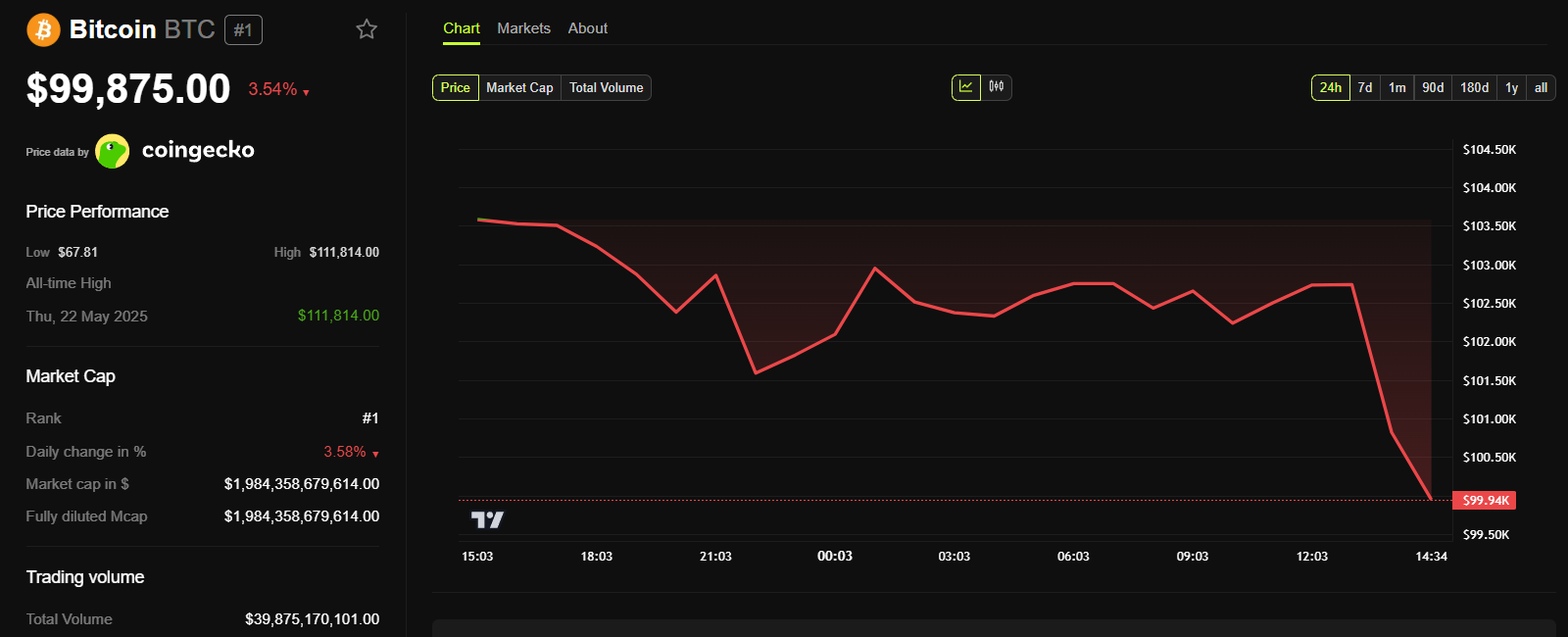 Bitcoin Price Drops Below $100,000. Source:
BeInCrypto
But why? The Strait of Hormuz channels nearly 25% of global oil shipments. Closing this chokepoint would tighten global energy supply immediately.
Oil prices could surge, stoking inflation and delaying central bank rate cuts.
Consequently, higher energy costs would ripple through economies. Consumers face steeper fuel bills, while businesses grapple with rising transport and production expenses.
In response, investors typically flock to safe-havens like US Treasuries and the dollar, draining capital from risk assets such as crypto.
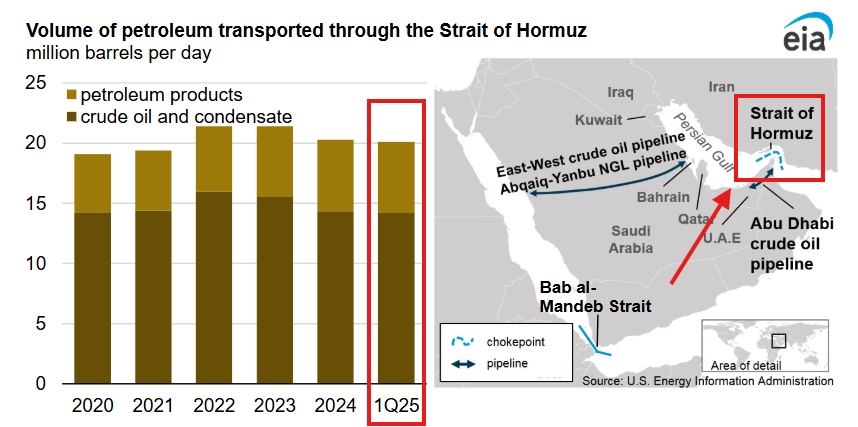 Global Petroleum Supply Through the Strait of Hormuz. Source:
X/The Kobeissi Letter
Moreover, energy-driven inflation pressures would challenge the Federal Reserve’s 2% target. If the Fed signals further tightening, real yields could rise.
Historically, higher real yields weigh on Bitcoin by raising the opportunity cost of holding non-yielding assets.
Crypto Market Risks and Macro Linkages
Crypto’s recent sell-off reflects broader market stress. Liquidations concentrated in long positions across Bitcoin and Ethereum. Rising VIX and widening Treasury yield spreads signal tightening risk budgets.
Additionally, hedge funds and retail traders often use leverage in crypto. Sharp price moves trigger margin calls, amplifying declines.
With current leverage metrics elevated, further downside remains likely if uncertainty persists.
At the same time, dollar strength usually correlates with crypto weakness. A surge in the US Dollar Index could deepen Bitcoin losses, potentially pushing it towards $95,000.
Outlook and Key Indicators
Traders should watch three developments closely:
- SNSC Decision: Final vote on Hormuz closure.
- Oil Prices: Breaks above $100/barrel could exacerbate inflation.
- Fed Signals: Comments on rate policy in response to energy shocks.
In sum, Iran’s potential closure of the Strait of Hormuz elevates macro risks for crypto.
If approved, expect sustained pressure on Bitcoin and broader digital-asset markets until geopolitical clarity and energy stability return.
Disclaimer: The content of this article solely reflects the author's opinion and does not represent the platform in any capacity. This article is not intended to serve as a reference for making investment decisions.
You may also like
During Anthropic IPO roadshow, OpenAI also discloses financial data: Q3 revenue falls short, losses far exceed expectations
OpenAI's revenue in Q3 reached $10 billion, marking a nearly 50% quarter-on-quarter increase. Its annualized run rate is approximately $50 billion, but operating losses have expanded from $10.1 billion to $10.9 billion. Competitor Anthropic has begun its IPO roadshow, with Q3 revenue of $17 billion and losses of only $567 million, leading in both scale and profitability.
Petrobras (PBR.US) Achieves Record Oil and Gas Production in Q3; Adjusted Net Profit Up 78% Year-on-Year, Raises Full-Year Production and Capital Expenditure Guidance
Petrobras released its Q3 2026 financial results after the US market close on November 10.
Retail Investors Can Short AI-Related Debt? High-Leverage CDS ETF Launches, but Analysts Remain Skeptical
Two institutions plan to launch leveraged ETFs tied to CDS of AI companies, betting on credit defaults; Oracle's CDS volume has surged from $8.7 billion to $47.6 billion this year.

Wall Street is divided over Nvidia (NVDA.US): Some see a "once-in-a-lifetime buying opportunity," while others worry about Huang Renxun being "irreplaceable."
Nvidia's (NVDA.US) forward P/E ratio has fallen below 10x—a valuation typical for companies in structural decline, now seen at a firm widely regarded as the "core of the AI revolution."

Crypto prices
More


