
Bitcoin Price Drops Below $80,000 as BTC Miners Offload Holdings

Bitcoin's sudden drop to $77,393 led to a wave of miner sell-offs, raising concerns about more downward pressure on the price. A negative miner netflow signals continued bearish sentiment.
Bitcoin price briefly dropped below $80,000 on Monday, hitting a four-month low of $77,393. This sharp decline triggered a wave of miner capitulation, prompting them to offload their holdings.
On-chain data has revealed an uptick in miner sell-offs—a trend that increases bearish sentiment in the market and puts more downward pressure on BTC’s price.
Bitcoin Price Drops to Multi-Month Low as Miners Flood Exchanges
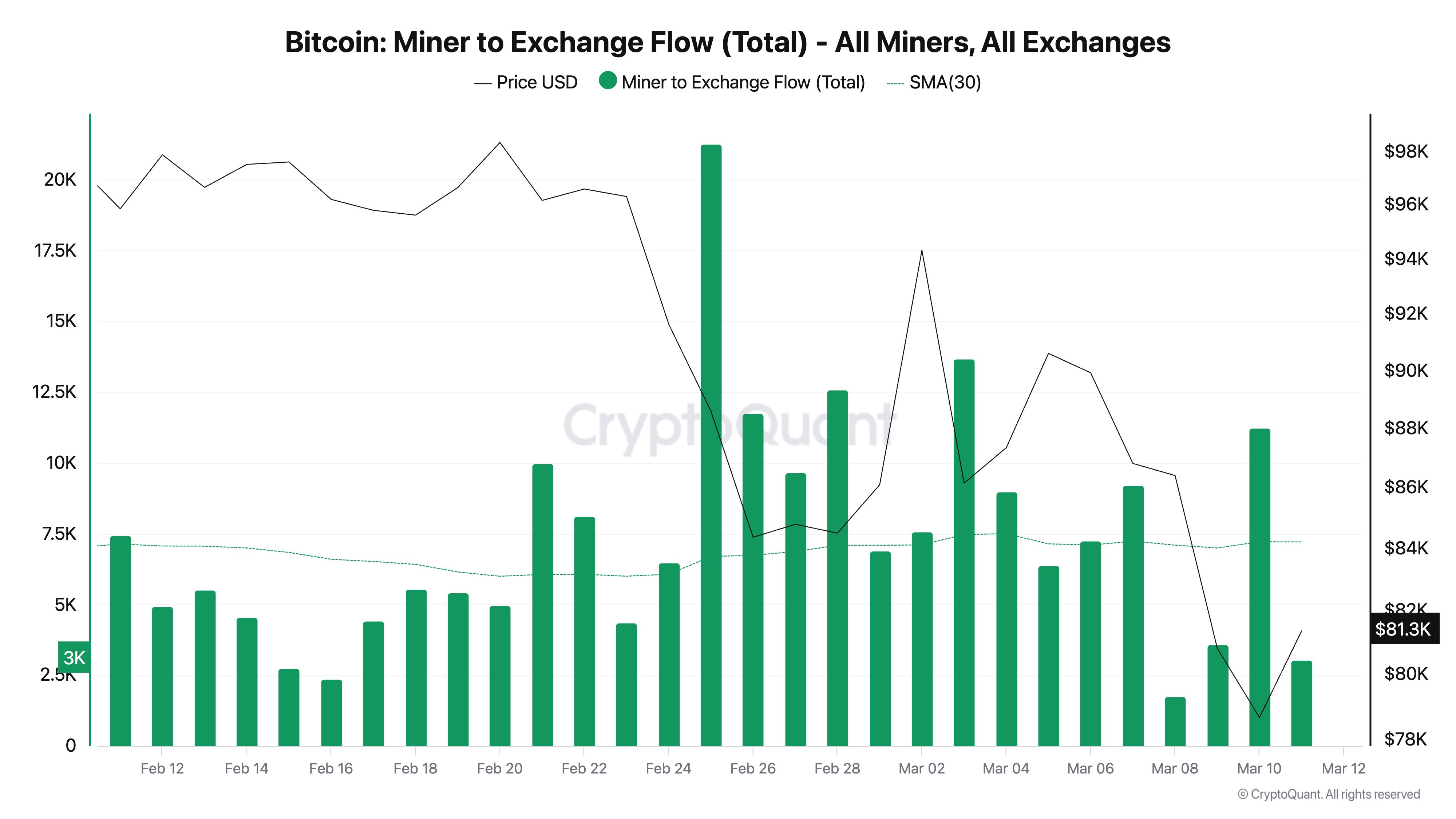
As Bitcoin fell to a multi-month low on Monday, miner transfers to exchanges surged sharply. According to CryptoQuant, BTC’s Miner-to-Exchange Flow—which measures the total amount of coins sent from miner wallets to exchanges—spiked to 11,250 BTC during this period.
 Bitcoin Miner to Exchange Flow. Source:
CryptoQuant
When BTC’s Miner-to-Exchange Flow climbs like this, it suggests that miners are offloading their holdings, often to cover operational costs or mitigate losses. This increased selling pressure can weaken BTC’s price and accelerate market downturns.
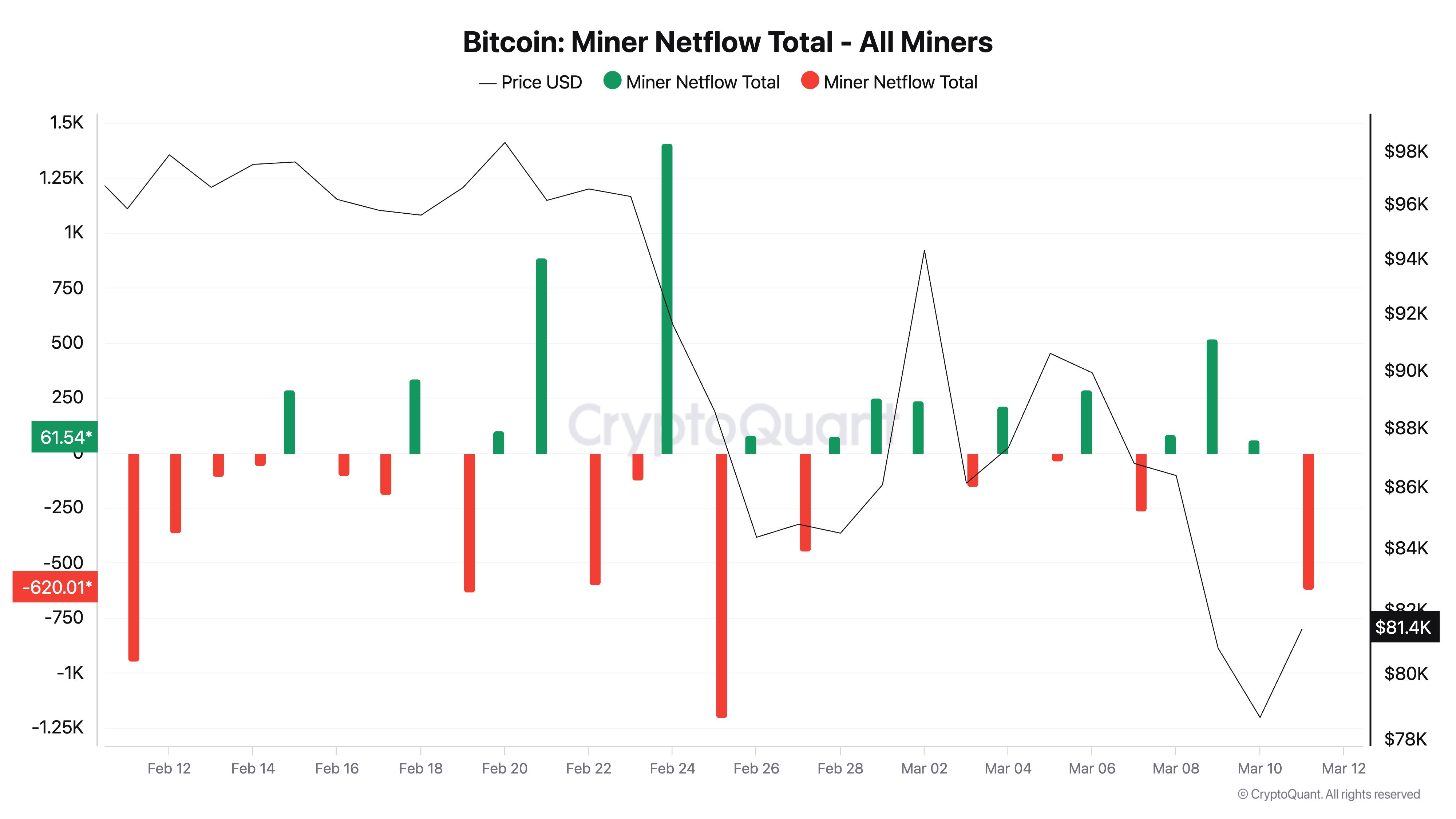
Further, today’s drop in BTC miner netflow confirms the coin sell-off trend among miners on the Bitcoin network. At press time, the metric’s value is negative at -620.01.
 Bitcoin Miner Netflow. Source:
CryptoQuant
Miner netflow tracks the net amount of coins that miners are buying or selling. It is calculated by subtracting the amount of BTC miners are selling from the amount they are buying.
When it is negative like this, it indicates that miners are selling more coins than they are buying. This is a bearish signal and often a precursor to an extended downward trend in the coin’s price.
BTC Struggles at $80K Amid Heavy Selling
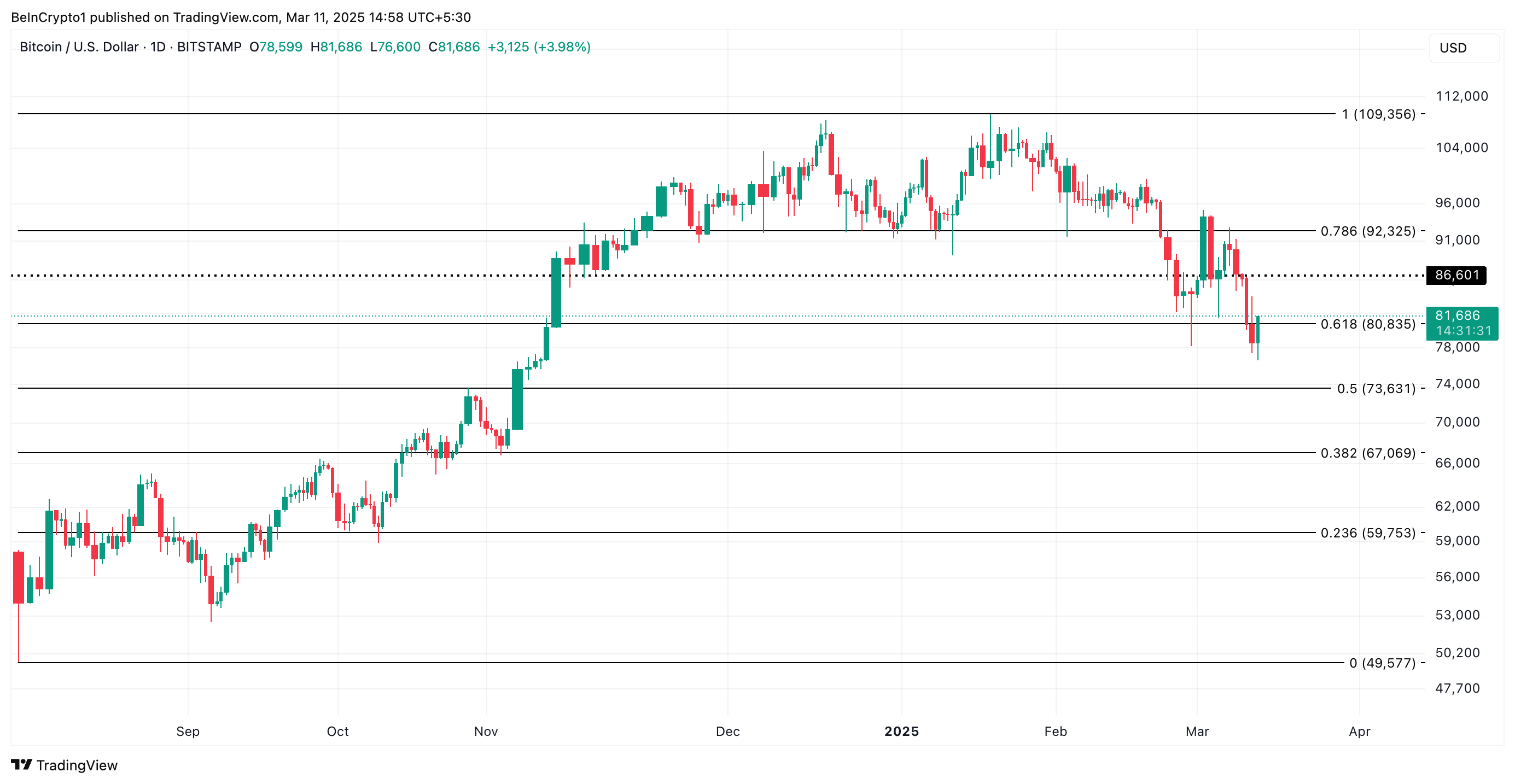
Historically, miners tend to sell more during price declines to cover operational expenses, which adds to selling pressure and can accelerate market downturns. BTC currently trades at $81,686, shedding 1% of its value over the past 24 hours.
During that period, its trading volume has rocketed over 50%, reflecting the high selling activity in the market. If this selling trend continues, it could hinder BTC’s near-term recovery, as the coin could drop below $80,000 again to trade at $73,631.
 Bitcoin Price Analysis. Source:
TradingView
However, if strong demand steps in to absorb the additional supply, it could drive BTC’s value up to $86,601.
Disclaimer: The content of this article solely reflects the author's opinion and does not represent the platform in any capacity. This article is not intended to serve as a reference for making investment decisions.
You may also like
After announcing its performance, AppLovin (APP.US), the leading player in "AI + digital advertising," surged 50%! Citigroup bets the rally isn't over, targeting $500 and new opportunities in e-commerce
While tech stocks faced sell-offs, AppLovin stood out by delivering profit-driven gains. On November 5, the Nasdaq 100 Index dropped 6.36% and the Philadelphia Semiconductor Index plunged 12.25%, yet AppLovin surged 31.04% after its earnings report. The stock continued to rise over the next two trading days, closing at $410 on November 9, marking an approximate 50.9% increase since its earnings announcement.

Confidence at Zero! Goldman Sachs Interprets Hedge Fund Positions: "Capitulation Liquidation," Largest Loss Since the Pandemic
Goldman Sachs' prime brokerage data reveals that hedge funds’ net leverage rate plummeted last week to the lowest percentile in five years, with the scale of deleveraging reaching the highest level since the March 2020 pandemic. The long-short ratio hit a five-year low. Tech stocks saw net selling of over $30 billion, far exceeding the turbulence in July. CTA quantitative strategies are expected to continue selling regardless of market movements in the coming week, with maximum selling pressure potentially reaching $48.7 billion. Currently, only mutual funds and corporate buybacks are providing counterflow liquidity, and a true market bottom may require further clearing of quantitative selling pressure.

New Zealand Dollar steadies as Iran talks fails to lift NZD/USD

Crypto prices
More


