

Last updated: February 10, 2025 00:04 EST
Crypto Prices Dip as Trump’s Metal Trade Tariffs Weigh on Markets
By:Shalini Nagarajan
Trump's tariff pledge on all steel and aluminum imports drove crypto prices lower amid heightened trade tensions.
Bitget offers one-stop trading for cryptocurrencies, stocks, and gold. Trade now!
A welcome pack worth 6200 USDT for new users! Sign up now!
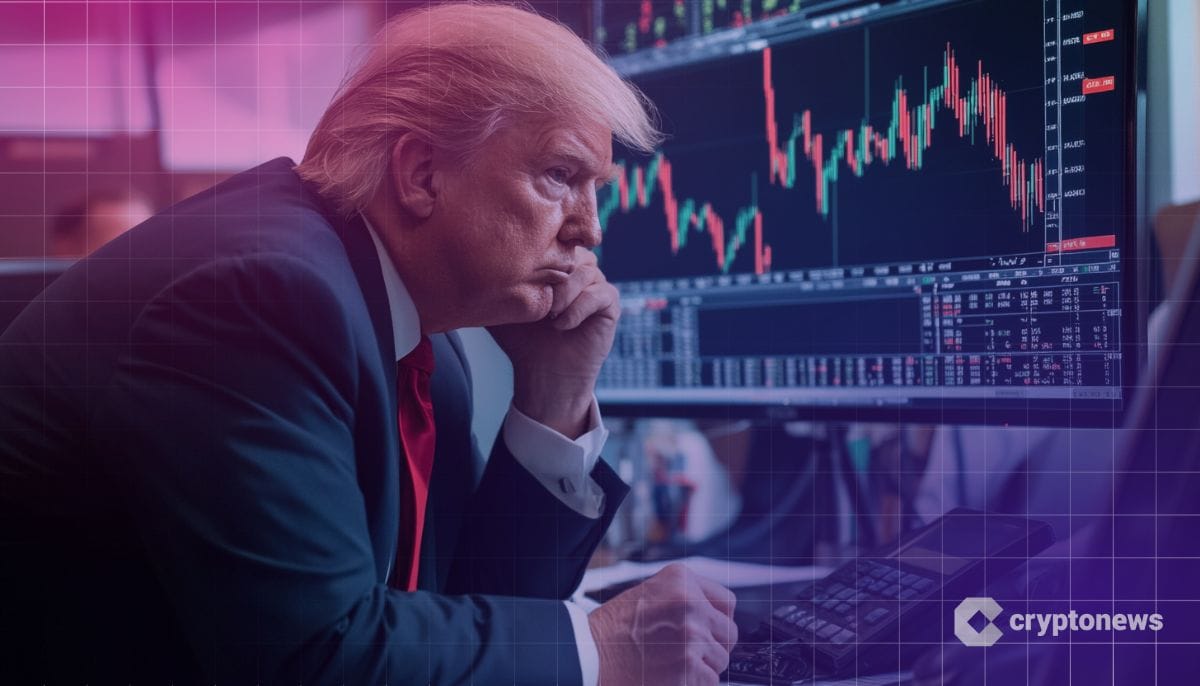
The total crypto market cap tumbled by 3% on Monday after President Donald Trump announced he would impose new 25% tariffs on all steel and aluminum imports , adding to the existing metals duties.
Speaking to reporters Sunday on his way to the NFL Super Bowl, Trump stated that he planned to announce the new metals tariffs on Monday as part of a significant escalation in his trade policy overhaul.
He further stated that he would announce reciprocal tariffs on Tuesday or Wednesday, with the measures taking effect almost immediately. Moreover, these tariffs will apply to all countries and mirror the rates each nation levies.
The US is said to import most of its steel from Canada, Brazil and Mexico. Meanwhile, South Korea and Vietnam serve as additional key sources.
Bitcoin dropped 0.5%, settling at $96,871, while Ether fell 1.5% to $2,627. XRP lost 4.2%, reaching $2.39 and Dogecoin similarly fell 4.2%, now priced at $0.2486.
Crypto Trading Volumes Fall to Pre-Trump Levels
10X Research reported that trading volumes have dropped sharply to levels last seen before the Trump election. Moreover, it could take up to six months to clarify the Bitcoin Strategic Reserve announcement.
Despite this uncertainty, sophisticated traders have shifted their focus from altcoins to Bitcoin, keeping its dominance above 60%. Consequently, the recent rally in altcoins and memecoins quickly faded, underscoring a broader market rotation toward Bitcoin.
Last week too proved difficult for digital asset market participants as broad-based declines affected the entire sector .
Tariffs Trigger Economic Slowdowns That Shake Crypto Markets
James Toledano, COO at Unity Wallet, noted that cryptocurrencies—especially Bitcoin—react strongly to macroeconomic disruptions.
“Tariff announcements signal potential economic slowdowns, which reduces investor risk appetite and triggers sell-offs in both traditional and digital assets,” he said.
Foreign policy decisions frequently trigger crypto market volatility as they shape global economic sentiment, liquidity conditions and investor behavior. Further, he explained that uncertainty tends to fuel market turbulence, while clear policies—whether positive or negative—help stabilize the markets. He stressed that clarity is essential.
“It is really important to note that we have been here before under Trump’s first administration. Remember, the implementation of tariffs frequently contributes to inflationary pressures by increasing the cost of imported goods. Interestingly, between 2018 and 2019, Trump’s policies didn’t trigger inflation but did significantly impact financial markets and crypto (especially Bitcoin) in almost the same way we are seeing now.”
“Analysts suggest that Bitcoin’s current price consolidation may persist until a significant event shifts market dynamics. Potential triggers for a breakout include major regulatory announcements, technological advancements within the Bitcoin network, or macroeconomic changes affecting investor sentiment and events that can also greatly impact consumer sentiment i.e. private speculator apathy.”
“But, crypto today is a $3.2T juggernaut and, at this time last year, a single Bitcoin cost c. $47,000 — the going is pretty good right now.”
0
0
Disclaimer: The content of this article solely reflects the author's opinion and does not represent the platform in any capacity. This article is not intended to serve as a reference for making investment decisions.
Understand the market, then trade.
Bitget offers one-stop trading for cryptocurrencies, stocks, and gold.
Trade now!
You may also like
US Data Center Regulation Tightening Hits AI Infrastructure Stocks? Morgan Stanley: Limited Impact in 2027, Risks More Concentrated in 2028
Morgan Stanley believes that the sell-off of AI infrastructure stocks triggered by the U.S. midterm elections may be an overreaction. The risk of data center expansion in 2027 is limited, AI computing power demand remains strong, and some tech stocks are already showing investment opportunities, with Microsoft still being the top pick.
智通财经•2026/11/09 16:15

Investor in UXLINK-linked wallet starts closing $148 million Hyperliquid positions
Cointurk•2026/11/09 15:42

Grayscale and a16z Flag AI Compute as the Next Major Derivatives Market
Coinsprobe•2026/11/09 14:42
Goldman Sachs Identifies Key Trend Lines; Nasdaq's Last Line of Defense Is in Jeopardy
The Nasdaq 100 Index has declined for four consecutive weeks and is currently testing a key trend line connecting the 2025 and 2026 lows at 26,630 points. Despite strong third-quarter earnings, heightened risk aversion and surging panic indicators have led investors to factor in potential slowdown expectations for 2028, causing stock prices to continue falling. With significant outflows of foreign capital and sharp valuation divergences, the market is awaiting the test of this week's CPI data and chip giant earnings reports.
华尔街见闻•2026/11/09 13:36

Crypto prices
More
Bitcoin
BTC
$74,850.02
-1.41%

Ethereum
ETH
$2,129.32
-4.78%

Tether USDt
USDT
$0.9988
+0.02%

BNB
BNB
$685.92
-1.67%

USDC
USDC
$0.9998
+0.01%

XRP
XRP
$1.1
-4.85%

Solana
SOL
$86.71
-3.06%

TRON
TRX
$0.3173
-0.89%

Zcash
ZEC
$1,189.79
-5.54%

Hyperliquid
HYPE
$74.66
-3.32%
How to buy BTC
Bitget lists BTC – Buy or sell BTC quickly on Bitget!
Trade now
Become a trader now?A welcome pack worth 6200 USDT for new users!
Sign up now