
3 crisp charts to celebrate a legendary month of bitcoin ETFs

Billions of dollars have piled into spot bitcoin ETFs in their first month and there’s little sign of slowing down
First-day buyers of spot bitcoin ETFs have been left holding the bag over the last month. But no longer.
Anyone who bought and held shares in any of the spot bitcoin ETFs before today would be in the green.
Bitcoin spiked to $48,000 as the ETFs opened trade on Jan. 11 — two year highs — before retracting more than 20% over the following two weeks.
Now, on the first day of their second month of trade, bitcoin ( BTC ) threatens to blast past $50,000 and is up 13% year to date .
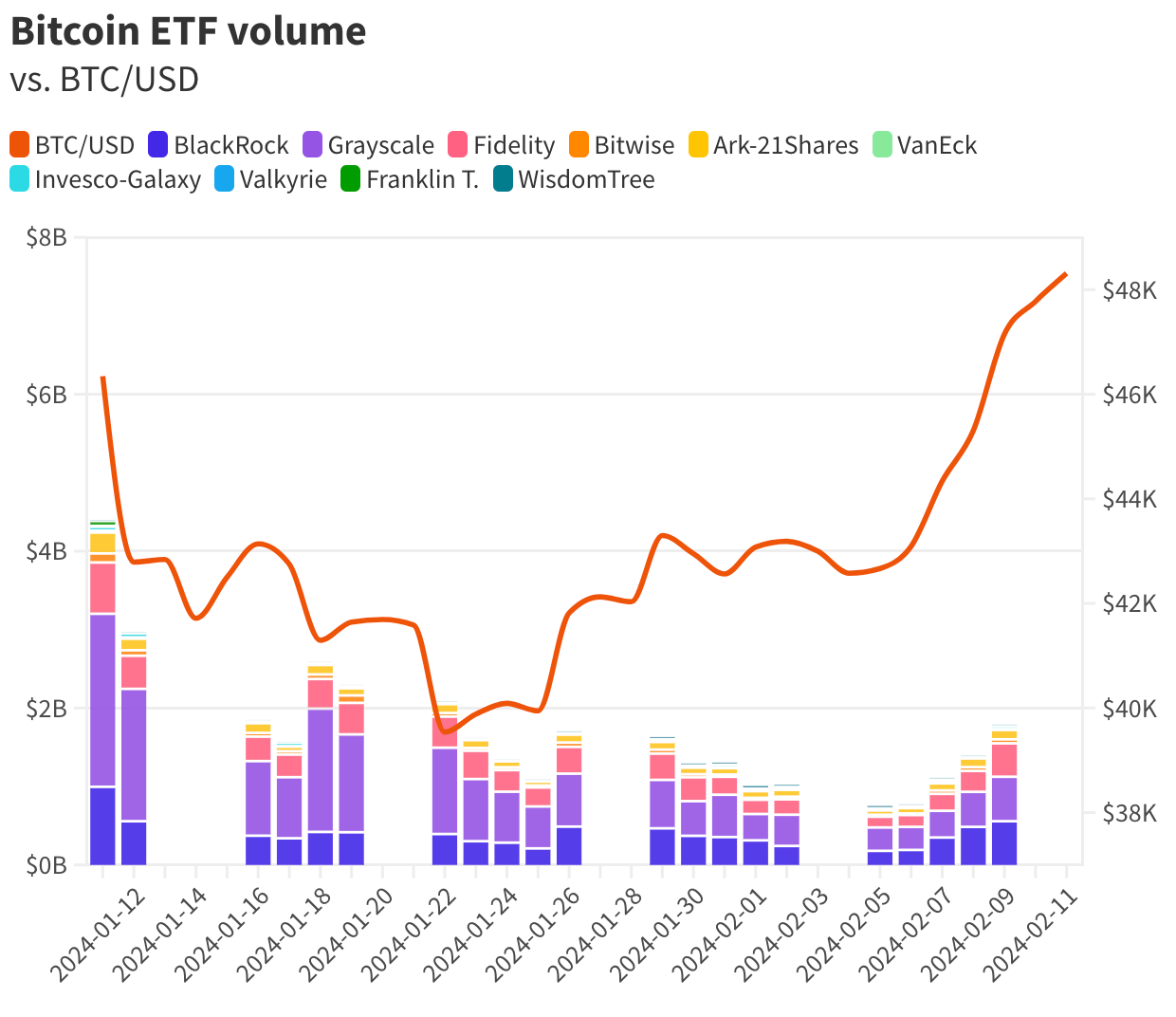
The 10 physically-backed bitcoin funds altogether saw almost $36 billion in trade in their first month, according to market data compiled by Blockworks.
Grayscale’s bitcoin trust ( GBTC ) made up more than half of those volumes, perhaps boosted by the closure of its nagging NAV discount presenting a final arbitrage opportunity.
BlackRock and Fidelity’s offerings followed with $8.31 billion and $6.53 billion, respectively.
Volumes only tell us roughly how popular shares are among traders, who may only be interested in capitalizing on bitcoin’s trademark volatility rather than holding the ETFs long-term.
The dollar value of funds flowing in and out of each ETF is a better indicator of investor sentiment.
- Not counting GBTC, investors piled more than $9 billion into US-listed spot ETFs in their first month.
- GBTC shareholders pulled $6.38 billion from the former closed-ended fund over that time.
- Spot ETFs overall have seen net inflows of $2.63 billion to date.
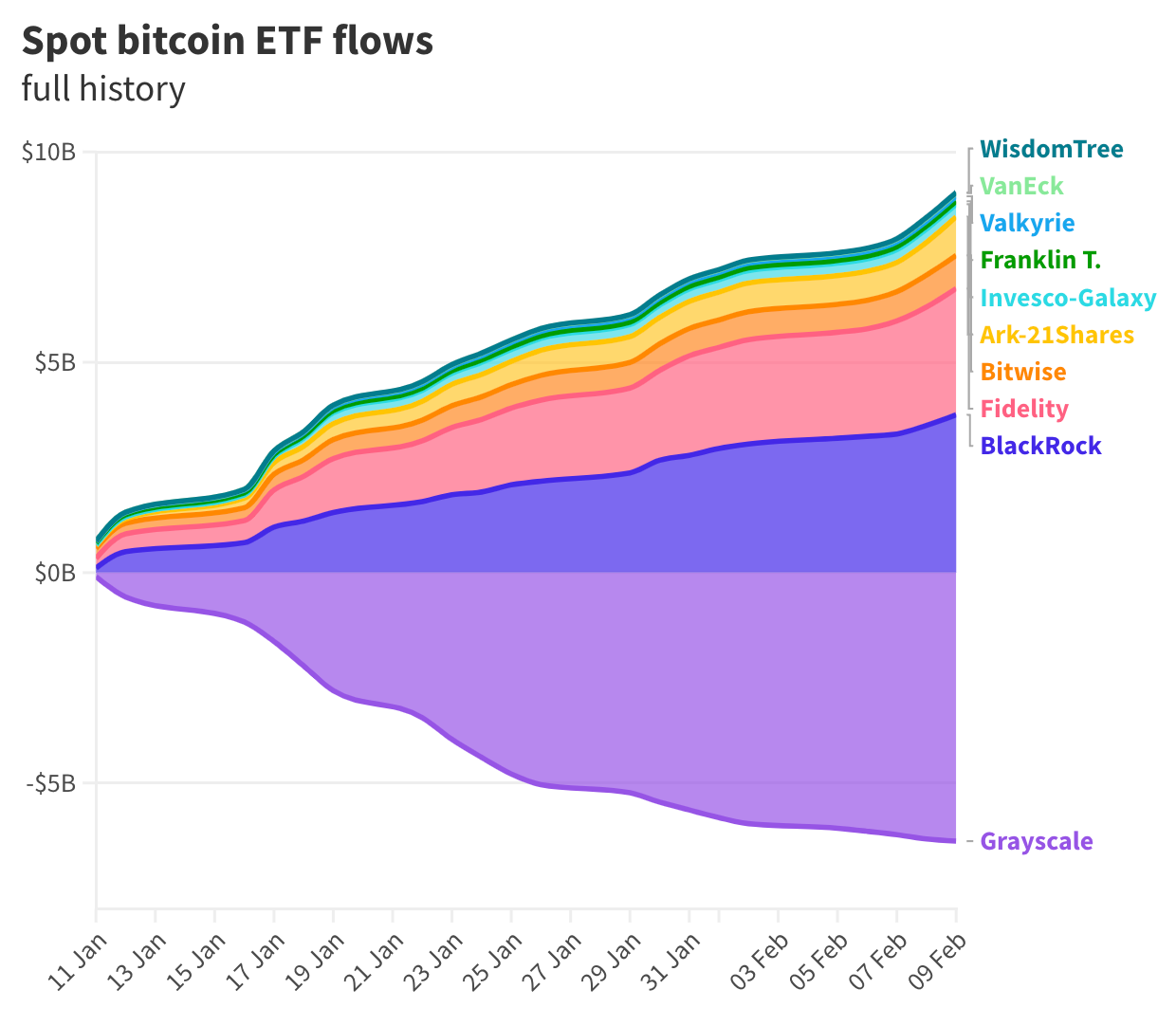
BlackRock and Fidelity’s products are some of the most popular in ETF history , while GBTC outflows have largely been attributed to its high management fee relative to its rivals, 1.5% compared to 0.25% from BlackRock and Fidelity.
BlackRock and Fidelity so far lead the pack for inflows, having respectively pulled in $3.75 billion and $3.5 billion.
Altogether (and excluding GBTC), the spot ETFs held 206,155 BTC ($10.25 billion) as of Monday morning, per CoinGlass.
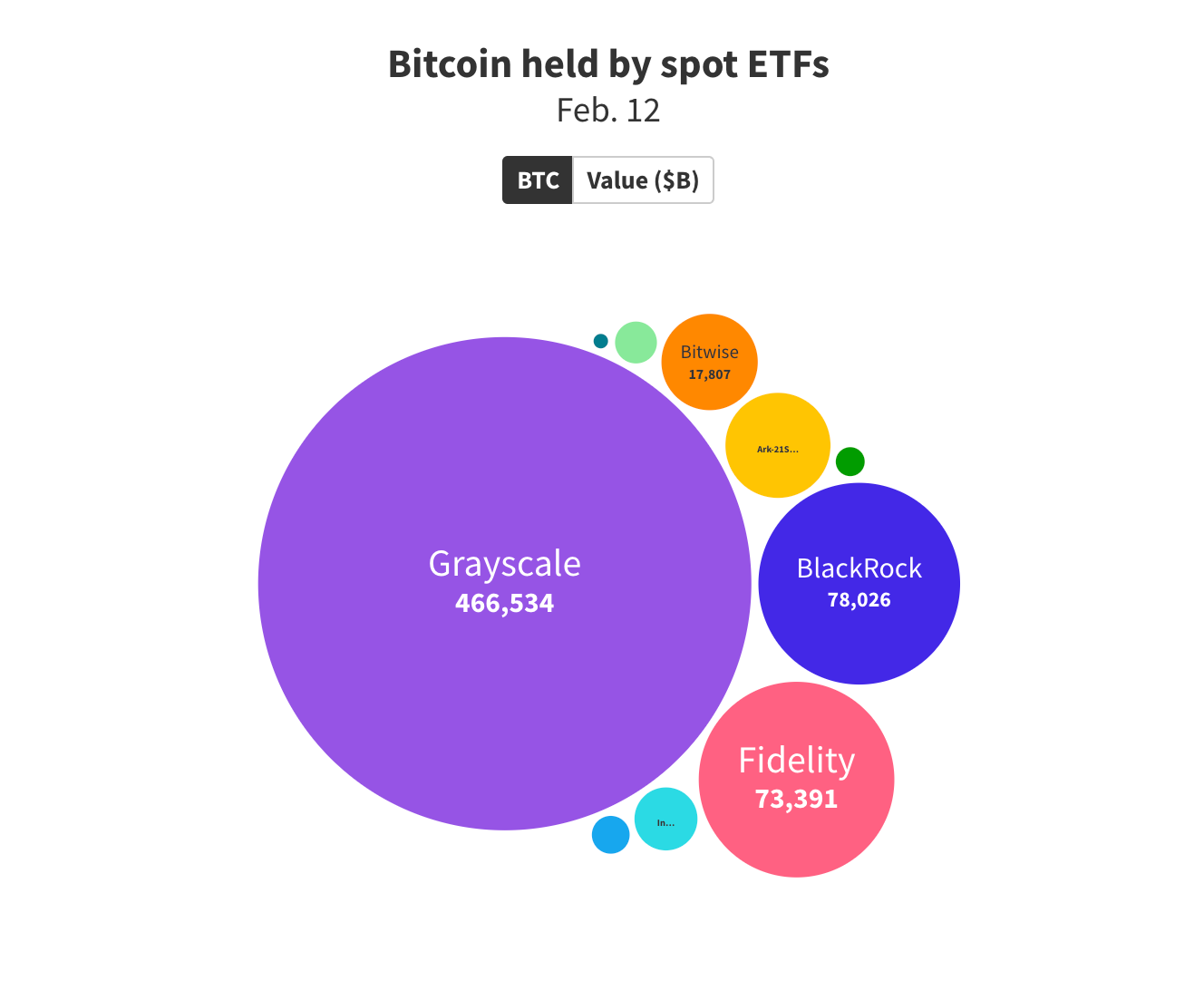
Those funds manage about 1% of bitcoin’s circulating supply, slightly more than MicroStrategy .
GBTC meanwhile still holds more than 466,000 BTC ($23.2 billion) — more than double all the other US spot ETFs combined.
Disclaimer: The content of this article solely reflects the author's opinion and does not represent the platform in any capacity. This article is not intended to serve as a reference for making investment decisions.
You may also like
US Treasury "Liquidity Drain" Starts Again: Treasury Department Aggressively Issues Short-term Debt—Can Fragile AI Trading Withstand the Storm?
As artificial intelligence (AI) trading faces significant challenges, another liquidity “drain” triggered by U.S. Treasury issuance appears poised to impact the entire U.S. stock market.

Goldman Sachs: The U.S. stock market will have a "final surge" in 2027, but what follows may resemble the period just before the 2000 bubble burst
Goldman Sachs warns that the three core variables driving the strong performance of U.S. stocks over the past four years—earnings growth, capital flows, and the AI narrative—have all deteriorated at the margin. It is expected that the S&P 500 will complete its last round of gains, after which, in 2027, it will face the largest net equity supply shock since the bursting of the internet bubble in 2000.
Nvidia (NVDA.US) stock plunges in after-hours trading amid Jensen Huang’s personal scandal and internal investigation
Due to personal scandals involving CEO Jensen Huang and the company's initiation of an independent investigation, Nvidia's stock price plummeted by over 4% during after-hours trading on November 8.

Tech stocks experience their worst week since the pandemic; Morgan Stanley: AI trading hits the "wall" moment in the marathon.
After more than two years of a strong bull run, the market once believed that the AI narrative was already more than halfway completed and victory was within reach. However, last week’s crash suggests that the real test may have only just begun.
Crypto prices
More


